Choosing the right galvanized sheet for roofing is often a balance between upfront cost and long-term performance. For business decision-makers, the real question is not just price, but how well the material resists corrosion, reduces maintenance, and supports project durability over time. In this article, we explore whether to prioritize cost, service life, or both, helping you make a smarter roofing procurement decision for commercial and industrial projects.
The roofing market is shifting from lowest price to lifecycle value
Across commercial, industrial, and infrastructure projects, roofing buyers are becoming more selective. The old approach of comparing only unit price is losing ground to a more practical question: what will the roof cost over its full service life? A galvanized sheet for roofing is no longer judged only by the purchase order. Buyers now look at corrosion resistance, installation efficiency, repair frequency, and how well the roof performs under local weather conditions.
This shift is being driven by tighter project budgets, higher labor costs, and stronger expectations for asset reliability. For factories, warehouses, logistics parks, and agricultural buildings, a roof failure can interrupt operations and create hidden losses far greater than the original material savings. As a result, procurement teams are paying more attention to durability-based sourcing and predictable performance.
What is driving the change in roofing decisions?
Several forces are reshaping buyer behavior. First, climate stress is becoming more visible. Stronger UV exposure, humidity, salt spray, and seasonal rainfall all increase the demand for a more reliable galvanized sheet for roofing. Second, project owners want fewer maintenance interruptions. A material that can extend repainting cycles or reduce leak risk is often more valuable than a cheaper sheet with a shorter life.
Third, global sourcing teams are under pressure to standardize quality across multiple sites. They need materials that meet consistent specifications, arrive on time, and support cross-border compliance. In this environment, roofing material is being evaluated not only as a commodity, but as a risk-control item.
Where product selection is becoming more strategic
In many procurement teams, the conversation now includes material grade, forming performance, and replacement risk. That is why some buyers compare roofing sheets with other stainless or coated steel options when evaluating long-term value. For example, a product such as 304 Stainless Steel Plate is often discussed in the broader context of durability, corrosion resistance, and total cost of ownership, especially when projects require stronger performance in demanding environments.
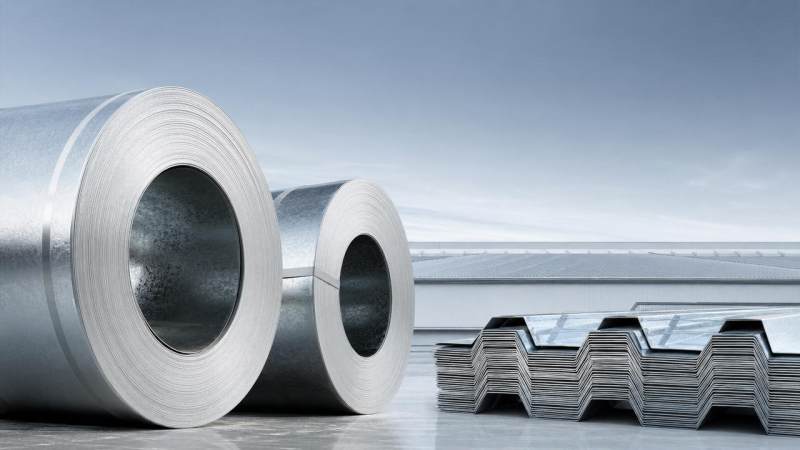
At the specification level, decision-makers are also paying more attention to thickness range, surface finish, and compliance standards. In industrial procurement, the actual question is not whether a material is popular, but whether it can meet the design load, weather exposure, and maintenance target of the project. That is where a galvanized sheet for roofing remains attractive: it can offer a practical balance between affordability and protection when selected correctly.
Cost versus life: how different buyers should judge it
For budget-sensitive projects, low initial cost may still matter most, but it should never be the only factor. A cheaper sheet can become expensive if it requires early replacement, more frequent sealing, or repeated site repairs. For owners of industrial parks, cold storage buildings, or export-oriented facilities, service life often creates more value than short-term savings.
The best procurement model is to match the roof specification to the expected operating life of the asset. Temporary structures may justify a lower-cost option. Critical facilities, however, usually benefit from stronger corrosion resistance and a longer replacement cycle. In other words, cost and life should not be treated as opposites; they should be weighed together through the lens of project risk.
What decision-makers should watch next
The next stage of roofing procurement will likely favor suppliers who can prove stable quality and customization capability. Buyers should monitor three signals: coating performance in real site conditions, supplier response to specification changes, and the total cost impact of maintenance over time. If these three factors are clear, the purchasing decision becomes much easier.
For companies sourcing galvanized sheet for roofing, it is also wise to compare not only material price, but also fabrication flexibility, batch consistency, and international standard compliance. This is especially important for projects spread across multiple regions, where climate, code requirements, and logistics conditions may differ.
Conclusion: cost, life, or both?
The answer is usually both, but not in equal weight for every project. A galvanized sheet for roofing should be judged by how well it balances initial investment with the service life required by the asset. The more demanding the environment, the more important durability becomes. The more important uptime and maintenance control are, the more valuable lifecycle thinking becomes.
If your team is evaluating roofing materials for a commercial or industrial project, start by confirming the expected exposure, target service life, maintenance tolerance, and supplier reliability. Those four questions will help you choose a roof that protects both the building and the business case behind it.
Please give us a message


Please enter what you want to find