Galvanized Channel Steel vs U Channel Steel: where does the real cost difference come from?
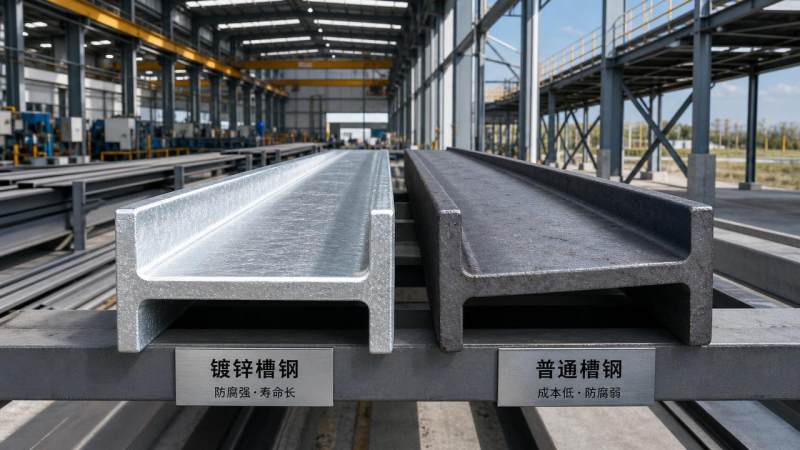
When comparing galvanized channel steel with standard U channel steel, the visible unit price is only the starting point.
In actual projects, corrosion exposure, maintenance intervals, coating quality, and replacement risk often change the final budget more than the first quotation.
That is why galvanized channel steel is often evaluated through total service value, not only purchase cost.
For construction, industrial supports, outdoor frames, and equipment structures, a wrong material choice can create hidden spending later.
A more practical question is this: in your environment, does the zinc coating prevent enough future loss to justify the higher upfront price?
Suppliers with stable production and export experience usually help by matching grade, coating, and standards to real conditions.
Hongteng Fengda, a structural steel manufacturer and exporter from China, works with ASTM, EN, JIS, and GB requirements, which matters when projects need consistent quality across markets.
Is galvanized channel steel always more expensive than U channel steel?
Usually yes, at least on the purchase order.
The extra cost comes from zinc coating, surface preparation, galvanizing process control, and inspection requirements.
However, the price gap is not fixed.
It changes with steel size, coating thickness, standard, order volume, destination, and whether fabrication happens before or after galvanizing.
Standard U channel steel may look cheaper because it is often supplied in black steel or lightly treated form.
If the project later needs painting, touch-up work, shutdown maintenance, or early replacement, the cost advantage can narrow quickly.
A simple comparison table helps clarify that difference.
So the better question is not which section is cheaper today, but which option stays economical through the project life.
How much longer can galvanized channel steel last in service?
There is no single answer because service life depends heavily on environment.
Indoors, dry, and low-pollution conditions may allow both materials to perform well for long periods.
Outdoors, coastal air, chemical exposure, water splash, and poor drainage change the picture.
In those cases, galvanized channel steel usually lasts much longer because the zinc layer sacrifices itself before the base steel corrodes.
That sacrificial protection is the main reason buyers choose it for external steel frames, cable supports, walkways, storage racks, and utility structures.
A common mistake is assuming all galvanized products perform equally.
Coating thickness, adhesion, edge coverage, and fabrication details matter just as much as the steel section itself.
If holes, cut edges, or welded zones are handled poorly, the expected life can drop even when galvanized channel steel is specified.
This is why experienced exporters focus on process consistency, not only tonnage.
When is standard U channel steel still the smarter buy?
It remains a sensible choice in controlled environments.
If the steel will stay indoors, away from moisture, or inside finished assemblies, standard U channel steel can meet structural needs without paying for unnecessary coating.
It also fits projects with very short service cycles, temporary installations, or components scheduled for later finishing within a larger production line.
In practical sourcing, three checks usually decide the answer:
- Whether the steel faces rain, humidity, chemicals, or salt.
- Whether future maintenance access is easy or expensive.
- Whether replacement would interrupt production or site operations.
If exposure is low and replacement risk is manageable, the lower initial cost of standard U channel steel may be fully justified.
That said, the final comparison should still include painting, labor, and future inspections.
A cheap line item can become an expensive installed solution.
What should be checked before placing an order for galvanized channel steel?
This is where many sourcing problems begin.
Buyers often compare only size and price, while missing details that affect fit, compliance, and field performance.
A better review list includes the following points.
- Confirm the steel grade and applicable standard, such as ASTM, EN, JIS, or GB.
- Check section dimensions, tolerances, and length requirements.
- Ask for galvanizing method and expected coating thickness.
- Review whether cutting, punching, or welding occurs before delivery.
- Verify packing, marking, and shipment protection for export handling.
For mixed structural packages, it can also help to align channel steel with other load-bearing sections in the same supply plan.
For example, some projects combine channels with H Girder sections where strong bending resistance, light weight, and efficient installation are needed.
That option is often used in steel structures, bridging, shipbuilding, and machinery frames, with grades such as Q235, Q345B, SS400, S275JR, A572, and A992.
When supply comes from a manufacturer with modern facilities and strict quality control, it becomes easier to keep dimensions, lead time, and compliance under control.
Are there common mistakes when comparing cost and service life?
Yes, and most of them happen before the order is issued.
The first mistake is using only ton price to compare galvanized channel steel and U channel steel.
Installed cost and operating cost often tell a different story.
The second mistake is ignoring the environment classification.
Mild indoor exposure and coastal industrial exposure should never be treated the same.
The third mistake is skipping quality records.
Without mill certificates, dimensional checks, and coating confirmation, later claims become harder to resolve.
The final mistake is separating material choice from project schedule.
If repainting or replacement causes downtime, even a small corrosion issue can become a serious cost event.
So which option makes more sense for long-term value?
If exposure is real and maintenance is difficult, galvanized channel steel usually delivers stronger long-term value.
If the application stays dry, protected, and easy to inspect, standard U channel steel may be the more efficient decision.
The key is to compare total ownership cost, not just quotation price.
A reliable sourcing process should match material grade, coating, fabrication, and standards to the real working environment.
For steel supply programs covering channel steel, beams, cold formed profiles, and custom components, stable production capacity and dependable lead time also affect cost control.
The next useful step is to list the service environment, target life, maintenance limits, required standards, and fabrication needs before comparing offers.
That approach makes it easier to judge whether galvanized channel steel is a premium cost or a practical safeguard.
Please give us a message


Please enter what you want to find