Choosing the right gal steel sheet means balancing thickness, coating weight, durability, and cost for your project. For procurement teams, understanding these specifications is essential to avoid quality risks, control budgets, and meet international standards. This guide explains how to select the most suitable gal steel sheet for construction and industrial applications with confidence.
For buyers in construction, industrial fabrication, and equipment manufacturing, gal steel sheet is not just a commodity item. Thickness tolerance, zinc coating level, forming performance, and supply consistency directly affect service life, downstream processing, and total procurement cost.
When sourcing from global suppliers, procurement teams usually compare 4 core factors: base steel grade, sheet thickness, coating weight, and compliance documents. A small mismatch in any one of these can lead to corrosion claims, fabrication delays, or rejection at the project site.
Understanding Gal Steel Sheet Specifications
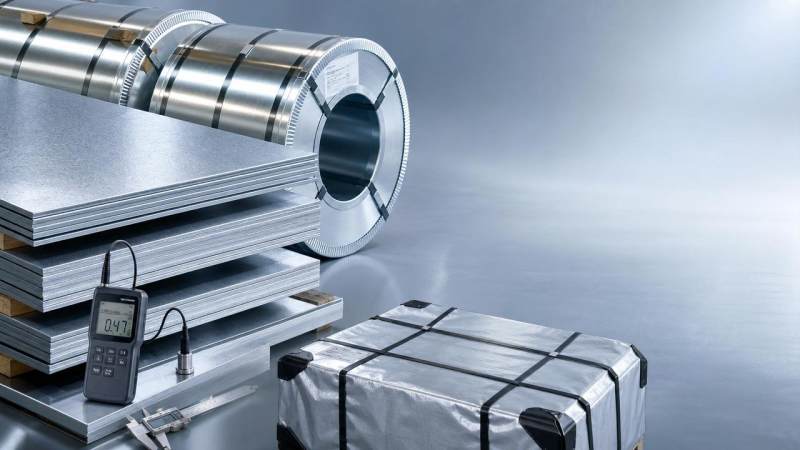
In practical purchasing terms, gal steel sheet usually refers to galvanized steel sheet, where a zinc coating protects the base steel from corrosion. The two most important technical variables are thickness and coating weight, but buyers should also review width, surface finish, mechanical properties, and applicable standards.
Why thickness matters in procurement
Thickness affects structural behavior, forming performance, welding suitability, and shipping weight. In many supply contracts, common sheet thickness ranges from 0.3 mm to 3.0 mm for light fabrication, while heavier industrial uses may require 4.0 mm to 12.0 mm or more depending on design load and fabrication method.
For procurement teams, the key issue is not only nominal thickness but also tolerance. A deviation of even ±0.03 mm to ±0.10 mm can affect bending accuracy, panel fit, and coating performance. This is especially important for roll forming, punching, and precision assemblies.
How coating weight influences durability
The zinc layer is commonly specified by coating mass, often expressed as g/m². Typical commercial levels include Z60, Z80, Z120, Z180, and Z275. Higher coating weight generally improves corrosion resistance, but it also increases cost and may influence surface appearance or forming behavior in some applications.
In indoor dry environments, a lower coating level may be acceptable. In coastal zones, humid regions, or industrial atmospheres, buyers usually prefer heavier coatings such as Z180 or Z275 to extend service life and reduce maintenance frequency over 5 to 15 years.
Key specification points to confirm
- Base steel grade and mechanical requirements
- Thickness range and tolerance, such as 0.5 mm, 1.2 mm, or 2.0 mm
- Coating weight, for example Z120 or Z275
- Surface condition: regular spangle, minimized spangle, oiled, dry, or passivated
- Coil or sheet dimensions, packing method, and inspection documents
The table below helps procurement personnel compare common gal steel sheet options by application, coating expectation, and sourcing focus.
This comparison shows that the right gal steel sheet specification depends on exposure condition, fabrication route, and lifecycle expectations. Buyers should avoid choosing by price per ton alone, because lower coating or unstable tolerance often creates higher downstream cost.
How Procurement Teams Select the Right Thickness and Coating
A reliable sourcing process usually follows 5 steps: define end use, confirm drawings and loads, match thickness to fabrication, choose coating by environment, and verify inspection documents before shipment. This reduces disputes and shortens approval cycles by 1 to 2 rounds in many B2B projects.
Step 1: Match thickness to application and forming method
If the sheet will be bent, roll formed, or punched, buyers need a balance between stiffness and workability. Thinner material from 0.4 mm to 1.0 mm is easier to form but less resistant to denting. Material above 2.0 mm offers more strength, yet requires stronger tooling and may increase scrap during shaping.
Common selection logic
- Use 0.3–0.8 mm for light enclosure and duct applications.
- Use 0.8–1.5 mm for building accessories, profiles, and general fabrication.
- Use 1.5–3.0 mm for equipment frames and reinforced panels.
- Use 3.0–12.0 mm where higher load or structural stability is required.
Step 2: Choose coating weight by service environment
The coating decision should be linked to real exposure. For indoor dry applications, Z60 or Z80 may be sufficient. For standard outdoor use, many buyers prefer Z120 or Z180. In aggressive coastal, rainy, or industrial environments, Z275 is often considered when long-term corrosion resistance matters.
It is also important to define whether both sides require equal coating and whether passivation, oiling, or painting preparation is needed. These details influence storage stability, further processing, and appearance after delivery.
Step 3: Review standards and test documents
Procurement contracts should clearly state the governing standard, such as ASTM, EN, JIS, or GB. Along with the standard, buyers should request MTC, coating test records, dimensional inspection, and if necessary third-party checks from ISO, SGS, or BV-related inspection workflows.
For international sourcing, this point is critical. A supplier may quote the same gal steel sheet size, but without equivalent testing scope. Document review can prevent quality gaps before the cargo leaves port, which is much less costly than resolving claims after arrival.
The following table provides a practical decision framework for purchasing teams evaluating gal steel sheet against project conditions.
This matrix makes one point clear: selecting gal steel sheet is a specification task, not a simple price comparison. Procurement teams get better results when technical, environmental, and processing requirements are aligned at the RFQ stage.
Mid-Project Material Options for Fabrication and Structural Use
In some projects, buyers source gal steel sheet together with other carbon steel products for frames, formed sections, or machinery parts. This is common when one supplier can support both corrosion-protected sheet and structural processing requirements under coordinated production and quality control.
For applications such as construction machinery, building structures, and pressure vessels, a related option is Steel Cold Rolled Coil. In Q355 carbon steel, it is available in thicknesses from 0.12 mm to 12 mm, widths from 600 mm to 2000 mm, and coil weights of 3 to 20 tons.
This material is often selected when buyers need high strength, enhanced toughness, good workability, and reliable weldability in one procurement package. Processing capabilities may include bending, welding, decoiling, cutting, punching, perforation, special size cutting, flatness control, and surface treatment, with finish options such as black, galvanized, coat, oiled, or painting.
Where project specifications require compliance with multiple market standards, suppliers may align production and documentation with ASTM A36/A36M-08, JIS G3101-2004, EN 10025-2, GB/T 700-2006, DIN 17100-80, and BS 4360-90, supported by MTC and inspection workflows. For procurement teams, this helps reduce supplier fragmentation and simplifies technical review.
When mixed sourcing makes sense
- When a project needs both gal steel sheet and formed structural components
- When fabrication includes cutting, punching, and welding in the same delivery cycle
- When buyers want 1 supplier to manage quality consistency across multiple steel categories
- When OEM dimensions or special processing can reduce secondary workshop time by 1 to 3 days
Common Risks When Buying Gal Steel Sheet Internationally
Global sourcing offers cost and capacity advantages, but it also brings specification and delivery risks. In many steel transactions, claims do not come from major defects alone. They often start with small mismatches in tolerance, coating, packaging, or paperwork.
Risk 1: Confusing nominal thickness with actual delivered thickness
Some buyers focus on quoted thickness without defining tolerance standard or minimum actual value. This can create problems in roll forming, installation fit, and weight reconciliation. Always confirm whether the thickness is base metal thickness, finished thickness, or nominal trade thickness.
Risk 2: Coating claims without test clarity
A gal steel sheet quote may mention Z120 or Z180, but buyers should confirm the test method and whether the value applies to total both-side coating. If this is not defined in the PO and inspection sheet, disputes can arise after unloading or fabrication.
Risk 3: Packaging and storage damage
Even compliant material can be damaged by poor moisture protection during sea transport of 20 to 40 days. Water exposure may cause white rust, edge corrosion, or staining. Buyers should specify export packing, desiccant use where needed, and warehouse inspection within 48 hours of arrival.
A simple 6-point supplier review checklist
- Confirm standard, grade, thickness, width, and coating in writing.
- Request MTC and pre-shipment inspection records.
- Verify tolerance, flatness, and coil weight range.
- Check processing capability if slit, cut-to-length, or punched parts are required.
- Review export packing details and shipping lead time, often 2 to 6 weeks.
- Define claim handling terms before order confirmation.
Why Buyers Work with an Experienced Structural Steel Exporter
For procurement teams managing cross-border projects, supplier capability is often as important as product price. A professional structural steel manufacturer and exporter can support not only gal steel sheet sourcing, but also coordinated supply of angle steel, channel steel, steel beams, cold formed profiles, and custom structural components.
Hongteng Fengda serves buyers across North America, Europe, the Middle East, and Southeast Asia with standard and OEM steel solutions. With modern manufacturing facilities and strict quality control, the company supports compliance with major standards such as ASTM, EN, JIS, and GB while helping customers manage lead times, quality consistency, and sourcing risk.
This matters when procurement decisions involve more than one product line. Combining gal steel sheet purchasing with structural steel supply from the same qualified exporter can improve communication efficiency, reduce vendor coordination steps, and support more predictable project scheduling.
What procurement teams should ask before ordering
- Can the supplier provide both standard sizes and OEM processing?
- What are the usual production and shipment lead times for the required quantity?
- Which standards and inspection documents can be supplied with the cargo?
- Is there experience supporting construction, industrial, or manufacturing projects in overseas markets?
- Can the supplier coordinate mixed steel product orders under one delivery plan?
The most suitable gal steel sheet is the one matched to actual use conditions, processing methods, budget targets, and compliance needs. Thickness and coating weight should be selected together, not in isolation, and every PO should clearly define tolerance, coating level, surface condition, and inspection requirements.
If you are sourcing gal steel sheet for construction or industrial applications and need dependable support from a China-based structural steel manufacturer and exporter, Hongteng Fengda can help you compare specifications, reduce procurement risk, and build a practical supply plan. Contact us now to get customized recommendations, discuss product details, or learn more solutions for your next steel project.
Please give us a message


Please enter what you want to find