GI Coil Manufacturers: What Matters Most in Supplier Evaluation
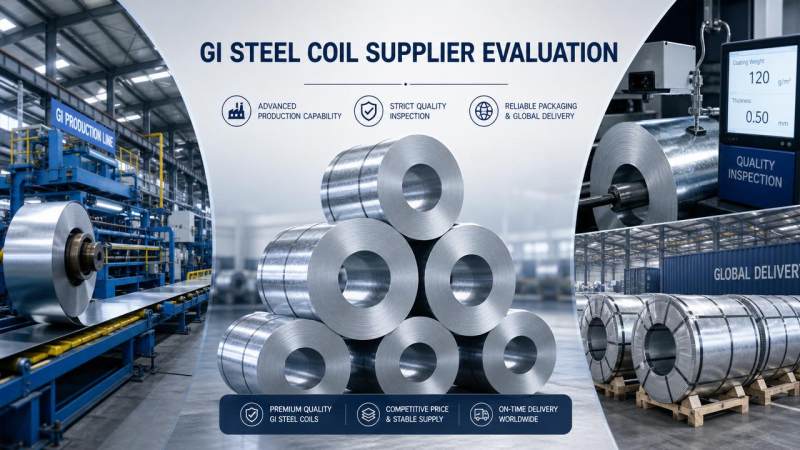
Choosing among gi coil manufacturers is not only a price discussion. It shapes quality stability, delivery performance, and overall sourcing risk.
When steel purchasing supports production, construction, or distribution, supplier mistakes become expensive very quickly. Delays, coating issues, and inconsistent dimensions can disrupt downstream plans.
That is why serious buyers compare gi coil manufacturers through a wider lens. Production strength, quality systems, export experience, and service response often matter more than the lowest quote.
In practical terms, the best supplier is the one that helps control risk. A reliable partner protects schedules, reduces claims, and makes future purchasing easier.
This guide explains how to evaluate gi coil manufacturers in a structured way. It focuses on the factors that support better procurement decisions.
Start with Manufacturing Capability
Not all gi coil manufacturers operate at the same level. Some trade products from multiple mills, while others control production directly.
That difference affects consistency. A manufacturer with modern lines and stable process control usually delivers more predictable results.
Ask clear questions about annual capacity, galvanizing line capability, thickness range, width range, and coating control. These details show whether the supplier can truly support your volume.
It also helps to understand their upstream material sourcing. If the base steel quality changes often, the finished coil quality may vary as well.
- Check production equipment age and automation level.
- Confirm monthly output and peak season flexibility.
- Review available sizes, zinc coating options, and tolerance control.
- Ask whether the supplier is a factory, trader, or mixed model.
In actual sourcing, strong manufacturing capability usually translates into fewer surprises. That becomes even more important for repeat orders.
Check Standards, Testing, and Traceability
A supplier may look competitive on paper, but compliance is where real screening begins. Good gi coil manufacturers can show how they meet target standards.
For international buyers, common references include ASTM, EN, JIS, and GB. The key point is not just naming a standard, but proving consistent execution.
Request mill test certificates, coating thickness records, mechanical property reports, and inspection procedures. These documents reveal whether quality management is systematic or reactive.
Traceability matters too. If an issue appears after delivery, you need fast access to batch information and production history.
The stronger the testing and traceability system, the easier it is to trust the supplier over time.
Evaluate Export Experience and Delivery Reliability
Many buyers underestimate the logistics side when assessing gi coil manufacturers. Yet export execution often decides whether a good order stays a good order.
A supplier with broad overseas experience usually handles packaging, loading plans, shipping documents, and destination requirements more smoothly.
This is especially relevant for projects with strict timelines. Even small document errors can delay customs clearance and increase costs.
Reliable exporters also communicate lead times more honestly. Instead of offering unrealistic promises, they explain raw material timing, production schedules, and shipment windows.
- Review export markets and shipment history.
- Ask about packing standards for sea transport.
- Confirm document accuracy for customs and inspection.
- Check how delays are communicated and managed.
Companies like Hongteng Fengda, as a structural steel manufacturer and exporter from China, are often evaluated positively when they combine stable capacity with dependable lead times.
That kind of operating discipline helps buyers reduce sourcing uncertainty across global projects.
Look Beyond Price to Total Procurement Cost
Price always matters, but it should not stand alone. The real question is total procurement cost over the full order cycle.
A cheaper quote can become expensive if it leads to rework, coating complaints, late delivery, or unexpected replacements. That pattern is common when buyers select gi coil manufacturers using price only.
A better comparison model includes product quality, usable yield, logistics cost, payment terms, service speed, and risk exposure. This creates a more realistic basis for decision-making.
From recent market shifts, the clearer signal is this: buyers increasingly value suppliers who help avoid hidden costs, not just lower invoice prices.
That also applies across related steel categories. For corrosive environments in petroleum, chemical industry, or mechanical equipment, buyers may evaluate materials such as 316L stainless steel pipe when application demands exceed galvanized solutions.
The lesson is simple. Material choice and supplier choice should both match service conditions, not only the initial budget.
Assess Customization and Technical Support
Not every order is standard. Many projects need special thicknesses, coil widths, slit specifications, packaging formats, or private label support.
That is where the gap between average and strong gi coil manufacturers becomes obvious. A capable supplier can adapt without losing control of quality or delivery.
Technical support is equally important. Buyers should be able to discuss application needs, coating recommendations, processing requirements, and specification alternatives with confidence.
For broader steel procurement, this service mindset also matters in adjacent products. Some manufacturers that handle structural steel, beams, channels, and pipes can support bundled sourcing more efficiently.
That can simplify supplier management and improve purchasing coordination, especially for project-based demand.
- Ask whether OEM and custom specs are accepted.
- Review drawing confirmation and sample approval steps.
- Confirm response speed for technical questions.
- Check whether the supplier supports mixed steel procurement.
Use a Practical Supplier Evaluation Checklist
A structured checklist makes supplier selection more objective. It also helps internal teams align on what matters most before placing volume orders.
When comparing gi coil manufacturers, focus on evidence rather than sales language. Documents, samples, communication quality, and delivery records usually tell the real story.
- Verify factory capability, equipment, and capacity.
- Review standards compliance and inspection records.
- Check export experience and destination market familiarity.
- Compare true landed cost, not quote only.
- Test responsiveness on technical and commercial questions.
- Request samples or trial orders before long contracts.
- Assess dispute handling and after-sales follow-up.
This kind of evaluation process creates better visibility. It also lowers the chance of selecting gi coil manufacturers that perform well only during quotation.
In real business, consistency wins. A supplier that keeps quality, timing, and communication stable often creates more value than one with the lowest first offer.
Make the Final Decision with Long-Term Value in Mind
The best gi coil manufacturers are not simply the cheapest or the largest. They are the ones that fit your specifications, manage risk well, and support reliable execution.
A smart evaluation process looks at manufacturing strength, quality systems, export ability, customization support, and total cost impact together.
This approach leads to better procurement outcomes. It helps avoid quality disputes, keeps delivery plans realistic, and supports stronger supplier relationships.
If you are screening gi coil manufacturers for upcoming orders, start with a technical checklist, ask for verifiable records, and compare suppliers on long-term operating value.
That final step often separates routine purchasing from strategic sourcing, and it is usually where the best decisions are made.
Please give us a message


Please enter what you want to find