Choosing reliable gi coil manufacturers is essential for distributors who need stable coating quality, predictable coil weight, and dependable delivery schedules.
In a competitive steel supply chain, small differences in zinc coating control, packaging accuracy, and lead time management can directly affect resale margins and customer trust.
This guide highlights the key checks buyers should make before placing orders, helping distributors reduce sourcing risks and build stronger long-term supply partnerships.
What Distributors Really Need to Verify First
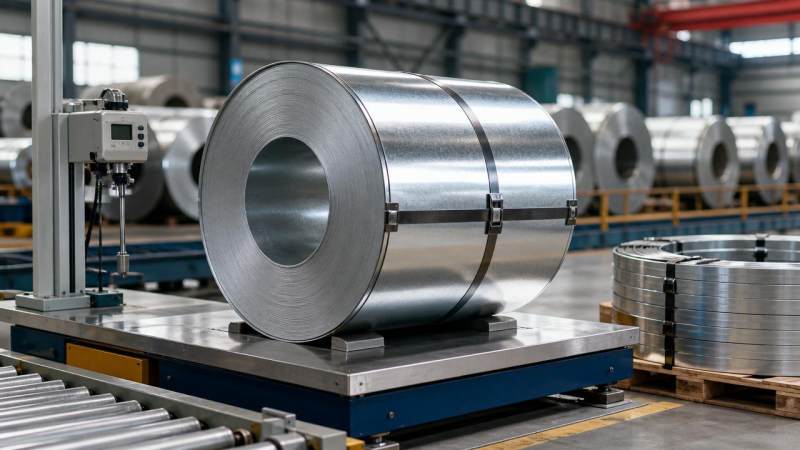
Most distributors are not simply searching for the lowest coil price. They need a supplier who can protect their downstream commitments.
The real buying question is whether a manufacturer can deliver repeatable quality, accurate tonnage, compliant documents, and realistic shipment timing.
For GI coil, problems usually appear in three areas: zinc coating variation, coil weight mismatch, and delivery delays after deposit payment.
These issues can create complaints from fabricators, stock shortages in warehouses, and unexpected cost gaps in resale contracts.
Reliable gi coil manufacturers should therefore be evaluated by process control, order discipline, and export communication, not only by quotation price.
Coating Control Is the First Quality Signal
Galvanized iron coil value depends heavily on zinc coating consistency. A low price becomes meaningless if coating thickness cannot meet contract requirements.
Distributors should confirm whether the supplier can provide regular coating options, such as Z40, Z60, Z80, Z120, or higher specifications.
The correct coating depends on the final market. Indoor light fabrication may need less zinc, while humid or coastal markets require stronger protection.
Ask the manufacturer how coating weight is tested, how frequently samples are taken, and whether results are recorded by production batch.
A professional mill should provide inspection records, mill test certificates, and clear tolerance ranges before shipment documents are finalized.
Visual appearance also matters. Check for white rust, uneven spangle, oil stains, black spots, scratches, edge cracks, and surface waviness.
For distributors, surface defects are not minor details. They influence customer acceptance, warehouse reputation, and the speed of inventory turnover.
If possible, request pre-shipment photos, video inspection, or third-party testing for large orders or first cooperation with new suppliers.
Do Not Treat Coil Weight as a Small Detail
Coil weight affects logistics cost, warehouse handling, resale calculation, and customer cutting efficiency. It should be confirmed before production starts.
Many buyers focus on total tons but overlook single coil weight, inner diameter, outer diameter, and packing method.
For distributors, standard and predictable coil weight helps simplify stock registration, container loading, and onward delivery to local customers.
If single coils are too heavy, some customers may lack suitable decoiling equipment. If too light, logistics efficiency may decline.
Before ordering, define acceptable coil weight range clearly, such as three to five tons per coil, depending on customer requirements.
Also confirm whether weight is calculated by theoretical weight, actual scale weight, or both shown on the packing list.
Serious gi coil manufacturers should provide clear labels, coil numbers, heat numbers where applicable, and matching details on commercial documents.
Weight accuracy protects distributor margins. Even small repeated deviations can become significant losses across multiple containers or annual contracts.
Lead Time Checks Should Start Before the Deposit
Lead time is not only a production promise. It includes raw material preparation, rolling schedule, galvanizing capacity, inspection, packing, and port delivery.
Distributors should ask whether the quoted lead time begins after deposit, after technical confirmation, or after material availability is secured.
A supplier saying “fast delivery” without a production schedule may create risk, especially during peak demand or raw material price fluctuations.
Request a practical timeline showing order confirmation, production start, quality inspection, packing date, customs documents, and estimated vessel schedule.
For repeat orders, confirm whether the manufacturer can reserve capacity or maintain rolling inventory for standard sizes and coating grades.
Stable lead time allows distributors to promise customers more confidently, avoid emergency purchases, and reduce pressure on working capital.
When comparing gi coil manufacturers, a realistic twenty-day delivery promise is often better than an unrealistic ten-day quotation that changes later.
Documentation and Standards Reduce Import Risk
Import distributors must ensure the product can pass local customs, project acceptance, and customer audits without document confusion.
Common references may include ASTM, EN, JIS, GB, or other market-specific standards depending on destination and application.
Before placing orders, confirm grade, coating designation, thickness tolerance, width tolerance, spangle type, passivation, oiling, and packing requirements.
The sales contract should match the proforma invoice, mill test certificate, packing list, bill of lading, and certificate of origin.
Any mismatch between product description and shipping documents may delay customs clearance or create disputes with downstream buyers.
Distributors should also check whether the supplier can support third-party inspection from SGS, BV, or other recognized agencies.
Strong documentation is not paperwork for its own sake. It is a commercial tool that protects resale claims and long-term customer confidence.
Packaging Quality Protects Coils During Export
GI coil may travel through inland trucking, port handling, ocean shipping, and warehouse unloading before reaching the final buyer.
Poor packaging can cause edge damage, water exposure, rust marks, and customer complaints even when production quality is acceptable.
Distributors should confirm whether coils are protected with waterproof paper, steel sheets, edge protectors, inner sleeves, and secure steel strapping.
For long-distance export, vertical or horizontal packaging should be selected according to loading method and customer handling equipment.
Clear labels are also important. They should show coil number, size, coating, net weight, gross weight, and order reference.
Good packaging reduces hidden costs. It lowers claims, improves warehouse efficiency, and helps distributors resell coils with stronger presentation value.
Price Comparison Must Include Hidden Variables
When distributors compare quotations, the cheapest unit price may not represent the lowest total sourcing cost.
Important variables include zinc coating weight, tolerance control, coil weight range, packaging standard, payment terms, port charges, and lead time reliability.
A slightly higher price may be justified if the manufacturer provides stable coating, accurate tonnage, compliant documents, and predictable shipment.
Distributors should ask for quotations in a structured format, including grade, coating, thickness, width, coil weight, packaging, and trade term.
FOB, CFR, and CIF comparisons should be handled carefully because freight timing and port cost changes can affect final landed cost.
Payment terms also matter. Common structures include deposit with balance before shipment or letter of credit at sight.
The best supplier is not always the lowest bidder. It is the partner who keeps your resale risk under control.
Factory Capability Beyond GI Coil Supply
Many distributors prefer working with steel manufacturers that can support broader product categories and project-based sourcing needs.
This is especially useful when customers require galvanized coil, structural steel profiles, and processed components from a coordinated supply source.
Hongteng Fengda manufactures and exports structural steel products from China, supporting buyers in construction, industrial, and manufacturing markets.
Its supply range includes angle steel, channel steel, steel beams, cold formed profiles, and customized structural steel components.
For buyers serving steel structure projects, the C Channel Beam can support purlins, wall beams, light roof trusses, brackets, and mechanical frames.
This galvanized coated C-shaped product is available in common lengths such as 6m, 9m, and 12m, with thickness from 1mm to 12mm.
Material options include Q195, Q235, Q345, A36, SS400, and S235JR, with standards covering ASTM, EN, JIS, GB, DIN, and BS.
Processing services may include bending, welding, punching, decoiling, and cutting, helping distributors respond to customers needing customized steel solutions.
Such broader capability can reduce supplier fragmentation, simplify communication, and improve order coordination for distributors managing multiple steel categories.
How to Screen GI Coil Manufacturers Before Ordering
A practical supplier review should begin with business verification, production capability, export experience, and technical communication speed.
Ask for company registration, factory photos, production line details, previous export markets, and examples of shipping documents.
Then move to product verification. Request thickness tolerance, coating standard, testing method, packaging photos, and sample mill certificates.
For first orders, avoid overly complex specifications unless the manufacturer has already proven production discipline and export reliability.
Start with a manageable trial order, inspect actual coil quality, and evaluate whether documents match the agreed contract.
During negotiation, observe whether the supplier answers technical questions clearly or only responds with general promises and price discounts.
Good gi coil manufacturers usually explain limitations honestly, confirm details in writing, and help buyers prevent avoidable specification mistakes.
Red Flags Distributors Should Take Seriously
Some warning signs appear before payment. Vague specifications, unclear coating claims, and unwillingness to provide inspection records deserve caution.
Be careful when a supplier quotes far below market level without explaining material source, coating level, or production schedule.
Another red flag is inconsistent communication between the quotation, proforma invoice, contract, and final packing details.
If the manufacturer cannot define tolerance, coil weight range, or shipment date, downstream problems are likely to appear later.
Distributors should also avoid suppliers who resist third-party inspection, reject pre-shipment photos, or change terms after deposit payment.
A professional supplier may not promise everything, but it should provide clear answers, stable terms, and traceable order information.
Building a Long-Term Supply Partnership
Once a distributor identifies a reliable manufacturer, the next goal is to improve cooperation efficiency over repeated orders.
Create a standard purchasing file covering grade, coating, thickness, width, coil weight, inner diameter, packaging, labels, and document requirements.
Share customer feedback with the supplier after each shipment, especially regarding coating appearance, decoiling performance, packaging condition, and delivery timing.
For high-volume markets, distributors can discuss annual price mechanisms, capacity planning, and preferred production windows.
This approach helps both sides reduce uncertainty and respond faster when market demand changes or urgent orders appear.
Long-term cooperation is built on measurable performance. Track claims, delivery accuracy, weight deviation, document quality, and communication response time.
Over time, a stable supply partner becomes more valuable than short-term savings from frequently changing suppliers.
Final Takeaway for Distributors
Selecting gi coil manufacturers should be treated as a risk-control decision, not only a purchasing task.
The most important checks are coating consistency, coil weight accuracy, lead time reliability, packaging protection, and document compliance.
Distributors who verify these areas before ordering can protect margins, reduce claims, and serve downstream customers more confidently.
A dependable manufacturer should combine production capability with clear communication, realistic scheduling, and export-ready documentation.
By applying these checks consistently, distributors can build stronger supply chains and turn steel sourcing into a competitive advantage.
Please give us a message


Please enter what you want to find