When comparing equal angle bars with unequal sections, the right choice depends on load distribution, structural design, and cost efficiency.
For steel structures, the section shape affects stiffness, connection layout, and fabrication efficiency.
This guide explains how equal angle bars and unequal sections differ in practice.
It also shows where each profile works better in construction and industrial steel applications.
What are equal angle bars and unequal sections?
Equal angle bars are L-shaped steel profiles with two legs of the same length.
Their symmetry makes layout, detailing, and standard connection work relatively straightforward.
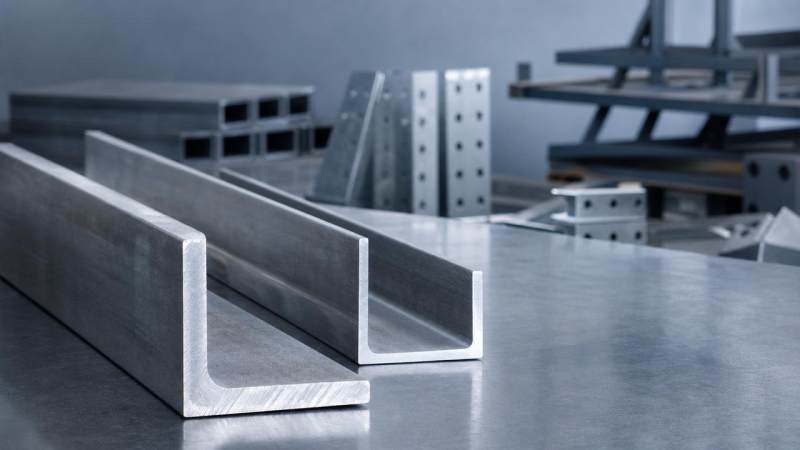
Unequal sections are also L-shaped profiles, but one leg is longer than the other.
That asymmetry changes the section properties and often improves fit in directional loading conditions.
In structural steel design, both profiles are common in frames, towers, supports, racks, and bracing systems.
The best option depends on geometry, load path, connection design, and required performance.
Basic profile difference
- Equal angle bars: same leg dimensions, balanced appearance, simpler symmetry.
- Unequal sections: different leg dimensions, directional strength advantages in some layouts.
- Both can be supplied to ASTM, EN, JIS, and GB related standards.
How do equal angle bars perform in structural applications?
Equal angle bars are often preferred where balanced geometry supports simple design assumptions.
They are widely used for trusses, general bracing, frames, shelves, supports, and fabricated assemblies.
Because both legs match, bolt placement and orientation can be easier during workshop fabrication.
This reduces drawing complexity in many standard steel detailing situations.
Main advantages of equal angle bars
- Good for uniform or near-uniform load conditions.
- Simplifies stock management for repetitive projects.
- Supports faster fabrication for common welded or bolted parts.
- Often easier to inspect and align during installation.
For many general-purpose steel projects, equal angle bars provide a practical balance of availability and performance.
They are especially effective when the design does not require directional section optimization.
When do unequal sections work better than equal angle bars?
Unequal sections work better when one direction needs more reach, stiffness, or connection space.
The longer leg can improve attachment flexibility against plates, columns, walls, or equipment bases.
This often helps in retrofits, non-symmetrical bracing, edge framing, and constrained installations.
Typical cases where unequal sections are preferred
- Loads are eccentric or mainly directional.
- One leg must support larger bolt spacing.
- Connection geometry is limited by adjacent members.
- Space-saving design requires an optimized footprint.
In these situations, unequal sections may reduce unnecessary steel mass while preserving function.
That can improve material efficiency, especially in projects with many repeated supports.
Still, equal angle bars remain competitive when the structure benefits from simpler standardization.
How should you compare load behavior, fabrication, and cost?
Choosing between equal angle bars and unequal sections should never rely on shape alone.
A practical comparison should consider mechanical behavior, fabrication steps, and total installed cost.
1. Load behavior
Equal angle bars provide more balanced section geometry for general axial and bracing applications.
Unequal sections can better match directional moments or offset connections.
2. Fabrication complexity
Equal angle bars usually simplify cutting lists, nesting, welding jigs, and repeated hole positioning.
Unequal sections may require more attention during orientation and assembly checks.
3. Cost efficiency
The cheaper profile is not always the best value after fabrication and installation are included.
Equal angle bars may lower processing time, while unequal sections may save weight in optimized designs.
Some projects also combine angle profiles with coated sheet systems for enclosure or secondary steel packages.
For corrosion-focused applications, DX52D Galvalume Steel Coil may support cold forming components.
Its low-carbon steel base offers elongation of no less than 28% and strong forming adaptability.
It is also available with ISO 9001, SGS, and BV related assurance support.
What common mistakes happen when specifying equal angle bars?
A frequent mistake is selecting equal angle bars only because they are familiar and widely stocked.
Availability matters, but section suitability matters more for long-term performance.
Common specification risks
- Ignoring eccentric loading and connection offset.
- Choosing size by habit rather than calculated section properties.
- Overlooking bolt edge distance and practical drilling space.
- Assuming lower unit price means lower project cost.
- Not checking coating, standard, and tolerances for service conditions.
Another issue is treating equal angle bars and unequal sections as interchangeable in every drawing condition.
Even small geometry changes can affect fit-up, stiffness, and fabrication sequence.
Where corrosion resistance is critical, material selection should extend beyond shape alone.
In enclosure, roofing, or formed accessory packages, DX52D Galvalume Steel Coil can complement structural systems.
Its corrosion resistance can exceed galvanized coating by 2 to 6 times in suitable environments.
How do you decide which section works better for your project?
The best decision starts with the load path, not the stock list.
Equal angle bars are often the better choice for simple, repeatable, balanced framing conditions.
Unequal sections often work better when one leg must do more structural or connection work.
Quick decision checklist
- Review whether loads are balanced or directional.
- Check available connection space and bolt layout.
- Compare weight, stiffness, and fabrication time together.
- Confirm required standards, tolerances, and corrosion protection.
- Choose the section that lowers total project risk, not only purchase price.
In summary, equal angle bars are reliable, versatile, and efficient for many standard steel applications.
Unequal sections become stronger candidates when loading and geometry are less symmetrical.
A good specification compares performance, fabrication, corrosion needs, and delivered cost together.
For better results, review drawings, loads, standards, and application details before final section selection.
That approach helps equal angle bars deliver the right value where they truly work best.
Please give us a message


Please enter what you want to find