For quality control and safety teams, buying electrogalvanized wire is not only about price but also about coating consistency, corrosion resistance, and process stability. A reliable supplier should provide clear coating specifications, traceable quality records, and compliance with international standards. Understanding these key checkpoints helps buyers reduce sourcing risks, prevent performance issues, and ensure stable results in demanding industrial and construction applications.
Why coating stability matters when buying electrogalvanized wire
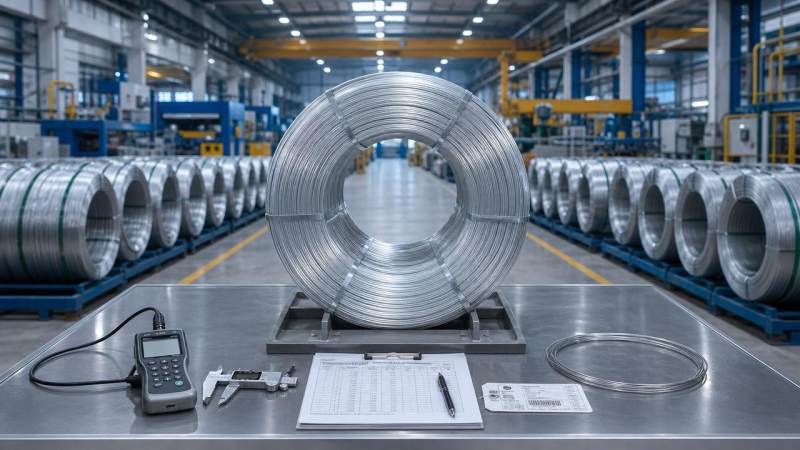
For QC managers and safety officers, unstable zinc coating is one of the fastest ways to turn a low unit price into a high total cost. Electrogalvanized wire may look similar across suppliers, but small differences in coating thickness, adhesion, surface cleanliness, and wire diameter control can create major downstream risks.
In construction, industrial fastening, mesh production, cable support, and general fabrication, the wire often works in contact with moisture, chemicals, or mechanical stress. If the coating is uneven, weak points can corrode early. If the wire surface has burrs, powdering, or poor adhesion, safety incidents and product rejection become more likely.
This is why experienced buyers do not evaluate electrogalvanized wire by appearance alone. They verify process consistency, specification clarity, and batch traceability before approving a supplier.
- Uneven coating can reduce corrosion resistance in localized areas and shorten service life.
- Poor diameter tolerance may affect tensile behavior, automated feeding, or downstream forming accuracy.
- Weak process control can lead to unstable lot-to-lot quality, which is a serious risk for repeat projects.
- Missing test records makes root cause analysis difficult when field complaints occur.
What quality control teams should check before approving a supplier
A practical procurement review for electrogalvanized wire should cover more than coating type. The supplier must define the base steel chemistry or grade, wire diameter range, zinc coating range, tolerance, packing method, and inspection documents. If these details are vague, quality risk usually appears later in production or on site.
The table below summarizes the checkpoints that matter most when evaluating electrogalvanized wire for stable coating quality.
For safety-sensitive applications, this checklist should be part of supplier approval, incoming inspection, and routine batch review. It helps teams move from reactive complaint handling to preventive quality control.
Key documents buyers should request
- Mill test certificate or equivalent production quality record.
- Coating thickness inspection report with sampling method.
- Dimensional inspection data, especially for critical wire diameters.
- Packing list and batch labels that match shipment and test records.
- Declared standards used for material, coating, and tolerance control.
Electrogalvanized wire vs hot dip galvanized wire: which is better for your use
Many buyers compare electrogalvanized wire with hot dip galvanized wire during sourcing. The correct choice depends on exposure conditions, forming needs, appearance requirements, and project life expectation. One is not universally better than the other.
The comparison below can help QC and procurement teams align specification with actual service conditions.
If your project requires a smooth finish, controlled dimensions, and moderate corrosion protection, electrogalvanized wire can be a practical choice. If exposure is severe, buyers should review whether hot dip galvanized alternatives are more appropriate.
How to judge process stability, not just a single good sample
A common sourcing mistake is approving electrogalvanized wire based on one sample coil. Sample quality can be good, while full production remains unstable. Process stability means the supplier can repeat the same coating and dimensional performance across multiple lots and shipment dates.
Ask these process questions before placing volume orders
- How is wire rod prepared before plating, and how is surface cleanliness controlled?
- How is plating bath condition monitored to reduce coating fluctuation?
- What is the supplier’s routine for measuring coating thickness and diameter by batch?
- How are nonconforming coils identified, segregated, and recorded?
- Can the supplier support repeat orders with the same specification and packing format?
Suppliers with modern manufacturing facilities and disciplined quality control are usually better positioned to answer these questions clearly. For international buyers, consistent documentation is just as important as production capability.
Hongteng Fengda supports global construction and industrial buyers with stable production management, strict quality control, and experience across ASTM, EN, JIS, and GB related supply environments. That matters when your team needs repeatability, not just one acceptable batch.
Mid-project material coordination: when wire sourcing connects with coated steel products
In many steel procurement programs, electrogalvanized wire is not purchased alone. QC and safety teams often review multiple coated steel items in the same project, especially where corrosion control, traceability, and standard alignment matter across assemblies, supports, or fluid systems.
For example, buyers managing construction, machinery, oil transport, agricultural equipment, or industrial building packages may also need Galvanized Pipe in parallel with wire products. When selecting related coated materials, it helps to compare standard coverage, application environment, and coating purpose early in the procurement cycle.
A galvanized steel pipe solution based on DX52D can be used in construction, machinery, coal mining, chemical industry, electric power, highways, bridges, containers, agricultural machinery, petroleum machinery, industrial and civil buildings, and low-pressure fluid pipelines such as water, gas, and oil. Common specification systems include AISI, ASTM, DIN, JIS, GB, SUS, and EN, with dimensions such as length 1-12m, width 0.6m-3m, and thickness 0.1mm-300mm according to project needs.
For QC teams, the value is not only corrosion resistance. It is also about whether the supplier can align coating control, tolerance management, documentation, packing, and delivery across multiple product categories. That reduces communication gaps and simplifies inspection planning.
Which standards and compliance points should buyers pay attention to
When sourcing electrogalvanized wire for export or regulated industrial use, compliance should be treated as a practical control tool, not just a paperwork requirement. Different markets may specify different standards, but the core issue is whether the product specification, inspection method, and records are consistent and auditable.
The table below gives a working framework for compliance review.
A supplier serving North America, Europe, the Middle East, and Southeast Asia should understand that compliance needs vary by project. Buyers benefit when the supplier can discuss these standards clearly and adapt documentation to contract requirements without confusion.
Common buying mistakes that lead to coating complaints
Many electrogalvanized wire complaints can be traced back to the purchasing stage. The problem often starts with an incomplete specification or an approval process that focuses too much on price and not enough on measurable risk.
- Buying by nominal diameter only without defining zinc coating requirement or tolerance.
- Approving a supplier without reviewing batch records or routine inspection frequency.
- Ignoring storage and transport conditions that may affect surface condition before use.
- Assuming all bright-looking wire has equivalent corrosion performance.
- Failing to distinguish indoor service conditions from humid, chemical, or outdoor exposure.
For safety managers, these mistakes are not minor commercial issues. Premature corrosion, broken ties, unstable mesh performance, or installation defects can affect worker safety, maintenance burden, and project reputation.
FAQ: practical questions about electrogalvanized wire sourcing
How should I specify electrogalvanized wire on a purchase order?
State the wire diameter, tolerance, zinc coating requirement, surface condition, coil weight range, intended application, and requested inspection documents. If the product will be bent, woven, tied, or machine-fed, note those conditions. A clear purchase order reduces dispute risk and makes incoming inspection more objective.
Is brighter surface appearance always a sign of better electrogalvanized wire?
No. Brightness alone does not confirm coating weight, adhesion, or corrosion durability. Some visually attractive batches may still have weak spots, poor pretreatment, or inconsistent thickness. QC teams should rely on test records and sampling results, not appearance only.
What is the most important test for stable coating quality?
There is no single test that covers everything. In practice, coating thickness measurement, adhesion-related checks, diameter verification, and surface inspection should be combined. For recurring orders, lot-to-lot trend review is also valuable because it reveals process stability over time.
When should I consider an alternative to electrogalvanized wire?
If the wire will operate in marine, heavily humid, chemically aggressive, or long outdoor exposure conditions, you should review whether a thicker protective system is needed. In those cases, hot dip galvanized or other corrosion-control options may be more suitable than standard electrogalvanized wire.
Why choose us for steel sourcing and quality-focused project support
For buyers who need more than a simple price quote, Hongteng Fengda offers practical support based on structural steel manufacturing and export experience. Our team understands that QC personnel and safety managers need stable specifications, consistent production, clear documentation, and dependable delivery planning.
We supply structural steel products and customized solutions for global construction, industrial, and manufacturing projects, with production management aligned to commonly requested standards such as ASTM, EN, JIS, and GB. This helps procurement teams coordinate quality expectations across different steel categories and project packages.
- Confirm electrogalvanized wire parameters, coating expectations, and application conditions before order placement.
- Discuss related coated steel products, including specification matching for project packages.
- Review delivery schedules, packing requirements, and batch traceability needs for export projects.
- Request support for product selection, standard reference, sample arrangement, and quotation planning.
If your team is evaluating electrogalvanized wire for stable coating quality, or coordinating it with other galvanized steel materials, contact us to discuss specification confirmation, supplier assessment points, delivery lead time, custom solutions, documentation needs, sample support, and quotation details for your project.
Please give us a message


Please enter what you want to find