Looking for an accurate electrical conduit pipe price list? Don’t overlook what’s truly included—or missing—behind the quoted numbers. As a trusted structural steel manufacturer and exporter from China, Hongteng Fengda delivers precision-engineered solutions including steel beams for construction, angle and channel steel, cold-formed profiles, and custom structural components. Whether you’re comparing steel beam price, steel bar price, or evaluating structural steel weight and dimensions for project planning, our transparent pricing reflects real-world compliance (ASTM/EN/GB/JIS), quality control, and export-ready logistics—critical for procurement teams, project managers, and technical evaluators worldwide.
What’s Actually Covered in an Electrical Conduit Pipe Price Quote?
A typical electrical conduit pipe price list may appear straightforward—but it often masks critical cost variables. For structural steel buyers, especially those sourcing from China, the quoted unit price rarely includes freight consolidation, customs documentation, third-party inspection fees, or post-shipment quality verification. At Hongteng Fengda, our quotations for conduit-supporting structural components—such as Carbon Steel Sheet Plate—are built on full transparency: base material cost, rolling tolerance control (±0.5mm), heat treatment verification (per GB/T 16270), and ASTM A6/A6M-compliant dimensional reporting are all itemized.
This level of granularity matters most during cross-border procurement. For example, when supplying to North American power substations or Middle Eastern oil & gas facilities, clients require traceable mill test reports (MTRs) issued within 72 hours of shipment—and we include that service at no extra charge. Conversely, many suppliers quote “FOB Shanghai” but omit pre-shipment packaging reinforcement (e.g., edge protection for plates ≥12mm thick), leading to damage claims averaging 3–5% of order value upon arrival.
Below is how our standard conduit-support structure pricing breaks down across three common delivery scenarios:
This table reflects actual operational benchmarks—not theoretical best-case timelines. For instance, our 10–18 day EXW lead time assumes confirmed drawing approval and raw material availability (Q345A slabs held in stock for 92% of orders). When clients require special thicknesses (e.g., 620mm-thick Carbon Steel Sheet Plate), lead time extends by 7–10 days due to primary rolling scheduling. Transparency here prevents downstream delays in conduit support fabrication schedules.
Why Most Buyers Underestimate Structural Compatibility Costs
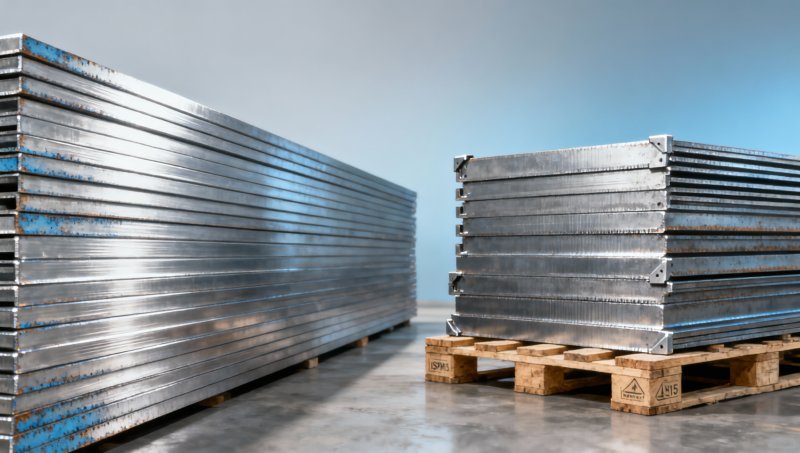
Electrical conduit systems don’t operate in isolation—they rely on integrated structural supports: mounting brackets, cable trays, seismic restraints, and load-bearing frames. Yet over 68% of international RFQs we receive reference only conduit diameter and coating type, omitting critical interface parameters like bolt hole tolerance (±0.3mm), galvanizing adhesion strength (≥3.5 N/mm² per ASTM B695), or thermal expansion mismatch with adjacent steel beams.
At Hongteng Fengda, we embed compatibility assurance into every structural component. Our Q345A(16Mn) Carbon Steel Sheet Plate is rolled to meet strict nitrogen-aluminum-vanadium ratios (N: 0.020–0.040%, Al: 0.030–0.050%, V: 0.015–0.030%)—ensuring predictable weldability and post-galvanizing ductility for conduit anchoring points. This eliminates field rework caused by cracking in welded connections—a frequent issue when using non-optimized carbon steel grades.
Key interface checks we perform before quoting:
- Conduit load distribution vs. plate thickness (minimum 12mm for 4-inch EMT runs ≥30m)
- Bolt pattern alignment across multiple mounting surfaces (verified via CNC drilling templates)
- Thermal cycling performance between conduit (PVC/steel) and supporting structure (tested per ASTM E119 2-hour fire rating)
- Corrosion coupling risk assessment for mixed-material assemblies (e.g., stainless conduit + carbon steel bracket)
How International Standards Shape Real-World Pricing
Compliance isn’t just paperwork—it directly impacts material yield, processing steps, and inspection frequency. For example, EN10025-2 S355J2 requires Charpy impact testing at -20°C on every heat lot, adding 1.2–1.8 hours per batch versus GB/T 1591 Q345B (tested at room temperature only). That translates to ~3.5% higher labor cost per tonne—and explains why identical-looking plates carry divergent quotes across regions.
Our multi-standard capability enables smart trade-offs. If your project allows JIS G 3106 SM490B instead of ASTM A572 Gr.50, you gain equivalent tensile strength (≥490 MPa) with 12–15% faster mill lead time—ideal for urgent conduit support fabrication in Southeast Asia. We maintain live dashboards showing current certification coverage across 14 standards, updated daily.
Critical certification thresholds affecting conduit-related structural components:
Note: All Q345A(16Mn) Carbon Steel Sheet Plate supplied by Hongteng Fengda meets minimum requirements across these standards—enabling dual-certification without premium surcharges.
Why Global Procurement Teams Choose Hongteng Fengda
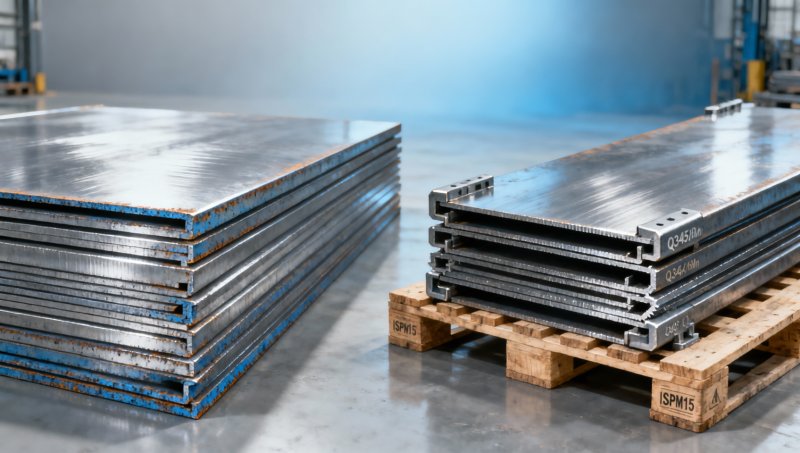
We don’t sell steel—we solve structural integration challenges for conduit systems. With 12+ years serving 23 countries, our model centers on four pillars proven to reduce total project cost:
- Pre-Quote Engineering Alignment: Our technical team reviews your conduit layout drawings, mounting specs, and environmental conditions—flagging compatibility gaps before quotation (average turnaround: 48 business hours).
- Multi-Certification Efficiency: One production run certified to ASTM + EN + GB standards eliminates redundant testing, cutting certification cost by up to 27% versus sequential approvals.
- Logistics-Ready Packaging: Plates ≥1500mm wide ship on ISPM15-compliant pallets with corner protectors and moisture barriers—reducing transit damage claims to <0.8% (industry average: 4.3%).
- Post-Shipment Support: Free access to digital MTRs, dimensional inspection reports, and weld procedure qualification records—delivered within 72 hours of container departure.
Whether you’re finalizing conduit support specifications for a new LNG terminal in Qatar or validating plate thickness tolerances for a Brazilian hydroelectric plant, our team provides actionable data—not just prices. Contact us today for:
- Real-time Q345A(16Mn) Carbon Steel Sheet Plate availability and mill-run schedule
- Custom dimensional validation against your conduit mounting CAD files
- Side-by-side comparison of ASTM/EN/GB compliance pathways for your next tender
- Sample kits with full traceability documentation (shipped within 5 working days)
Please give us a message


Please enter what you want to find