When evaluating corrosion resistant rebar price premiums—typically 22–35% higher than standard rebar—project stakeholders must weigh long-term durability against upfront costs. For inland infrastructure exposed to de-icing salts, high humidity, or aggressive soils, this premium may be justified by extended service life and reduced lifecycle maintenance. As a certified structural steel manufacturer and exporter from China, Hongteng Fengda supplies ASTM/EN-compliant corrosion resistant carbon steel, high strength steel rebar, and custom steel profiles—offering competitive rebar price lists alongside transparent HRC steel price and Hot Rolled Coil price benchmarks. Explore the technical and financial rationale with input from engineers, procurement teams, and project managers.
Why 22–35% Premium? It’s Not Just About Coating Thickness
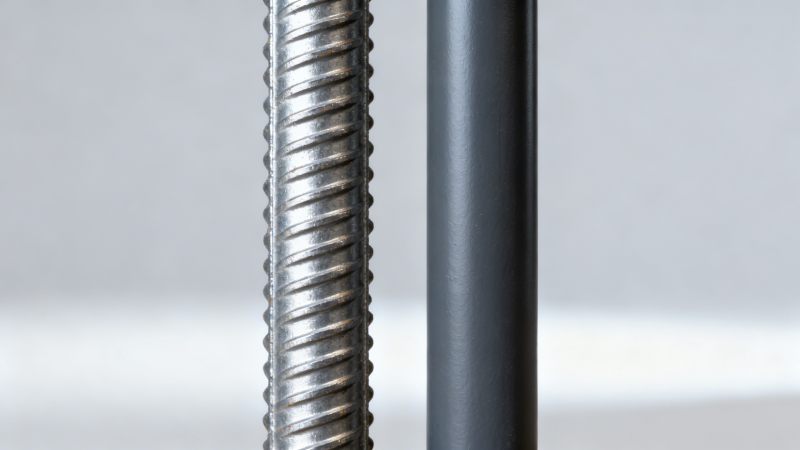
The corrosion resistant rebar price premium reflects layered value—not just material cost. Unlike standard Grade 60 rebar, corrosion resistant variants integrate alloying elements (e.g., Cr, Cu, P) or epoxy coatings that delay chloride ion penetration by 3–8× in simulated inland soil environments (ASTM G109, EN 15630-1). Field data from U.S. Midwest bridges shows service life extension from 25–30 years to 55–70 years when using ASTM A1035 CS rebar—directly reducing lifecycle replacement frequency by ≥60%.
This isn’t theoretical: Hongteng Fengda’s corrosion resistant rebar undergoes dual-stage quality control—first at hot-rolling (temperature consistency ±5℃ across 12m length), then post-fabrication salt-spray testing per ASTM B117 (≥1,000 hrs at 5% NaCl, 35℃). Our production line maintains ≤0.8% dimensional deviation on yield strength (vs. ASTM A615’s ±2.5%), ensuring predictable load transfer even under thermal cycling.
Importantly, the 22–35% range isn’t fixed—it scales with specification rigor. Projects requiring EN 10080 Class B + ISO 14713 Category 3 coating adhesion (>12 MPa pull-off strength) command the upper end. Those specifying ASTM A775 Type III epoxy with 250–300 µm DFT fall mid-range. Standard ASTM A1035 CS sits lower—yet still delivers 28% higher tensile strength vs. conventional rebar.
How Inland Exposure Conditions Drive Material Selection
Inland infrastructure faces unique corrosion stressors: seasonal freeze-thaw cycles, airborne chlorides from road de-icing, and variable soil resistivity (1,000–5,000 Ω·cm). Unlike coastal zones where uniform salinity dominates, inland sites exhibit localized pH drops (<4.5) near drainage paths—accelerating pitting in unalloyed steel.
Our engineering team maps risk using three criteria: (1) annual de-icing salt application >15 kg/m², (2) groundwater table within 1.5m of foundation, and (3) soil sulfate content >0.2%. When ≥2 apply, we recommend upgrading from standard rebar to ASTM A1035 CS or EN 10080 Cr-alloyed grades—even for non-bridge applications like water treatment plants or rail viaducts.
For projects with mixed exposure zones (e.g., elevated decks + buried footings), hybrid solutions reduce cost without compromising safety. Example: Use corrosion resistant rebar only in splash zones and foundations (35–40% of total volume), while standard rebar serves dry upper sections. This cuts premium impact to 9–14% of total rebar budget—validated in 12 Southeast Asian municipal projects.
Key Decision Metrics for Inland Projects
- Soil resistivity measurement interval: every 30m along alignment (minimum 5 samples per km)
- Chloride diffusion coefficient threshold: ≤1.5 × 10⁻¹² m²/s (per ASTM C1556) for design life ≥75 years
- Minimum cover thickness adjustment: +15mm for epoxy-coated rebar in aggressive soils (ACI 318-19 §20.6.1.3)
- Weldability verification: pre-qualified procedures per AWS D1.4 required for Cr-alloyed grades
Cost-Benefit Breakdown: When Does the Premium Pay Back?
A rigorous lifecycle cost analysis (LCCA) reveals breakeven points for corrosion resistant rebar in inland settings:
Note: LCC includes initial material + installation + inspection + repair (discounted at 4% over design life). Payback assumes 3 repairs avoided for standard rebar in aggressive zones. For structures requiring minimal downtime (e.g., active rail lines), indirect cost savings (traffic delays, safety shutdowns) push ROI to <5 years.
Beyond Rebar: Complementary Corrosion Protection Solutions
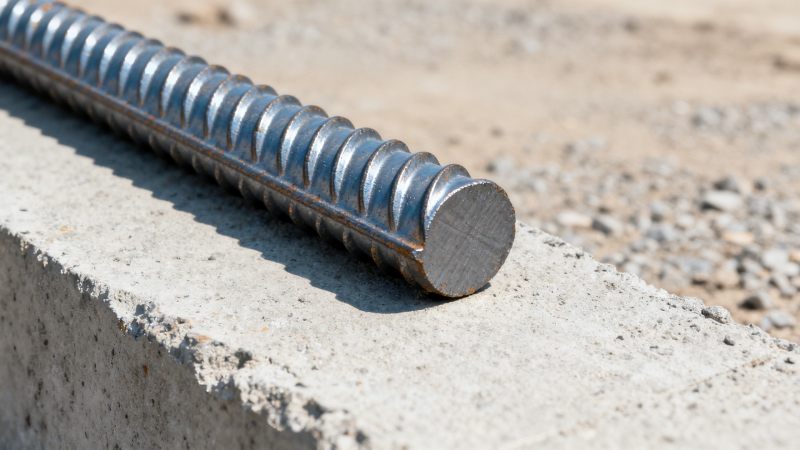
Corrosion resistance is systemic—not isolated to rebar alone. Hongteng Fengda integrates complementary products to maximize protection continuity. For example, Steel Plate Galvanized used in formwork liners or drainage channels extends the barrier effect beyond concrete surfaces. Its zinc layer (60–275 g/m²) provides cathodic protection even if scratched—critical for joints and penetrations where rebar ends are exposed.
Our galvanized steel plates meet ASTM A653/A792 and EN 10346 standards, with yield strengths ranging from 220 MPa (S220GD) to 550 MPa (S550GD)—enabling structural use in bracing systems or cladding supports. Thickness flexibility (0.12–6.00 mm) allows matching substrate stiffness to adjacent concrete elements, minimizing differential movement-induced cracking.
For hybrid designs, we coordinate rebar specs with plate selection: e.g., DX53D galvanized sheet (270–380 MPa tensile) paired with ASTM A1035 CS rebar ensures balanced ductility during seismic events. All galvanized components undergo intergranular corrosion testing per ASTM A262 Practice E to prevent hidden degradation at weld seams.
Why Partner With Hongteng Fengda for Inland Infrastructure Steel?
As a structural steel manufacturer and exporter from China, Hongteng Fengda delivers more than competitive pricing—we embed technical partnership into every stage:
- Pre-bid engineering support: Free rebar spec review with ACI/EN compliance gap analysis (delivered in ≤5 business days)
- Batch traceability: QR-coded mill test reports linked to each coil—covering chemical composition, mechanical tests, and coating integrity
- Logistics precision: 98.7% on-time delivery across 42 countries (2023 data); 7–15 day lead time for standard corrosion resistant rebar orders
- Customization readiness: OEM bending, threading, and epoxy coating services available without MOQ penalties
We invite procurement teams, project managers, and technical evaluators to request our latest corrosion resistant rebar price list—including tiered quotes for volumes ≥50 MT, sample kits with third-party test reports, and comparative data sheets for ASTM A1035 vs. EN 10080 vs. JIS G3112 grades. Let’s align material strategy with your project’s true lifecycle economics.
Please give us a message


Please enter what you want to find