Ordering ASTM A106 Grade B pipe often looks simple on paper, but in practice, many costly problems begin with incomplete specifications, wrong assumptions about equivalent materials, and weak verification of chemistry, testing, or supply scope. For buyers, engineers, project managers, and quality teams, the biggest risk is not just buying the wrong pipe—it is receiving material that creates delays, rework, documentation issues, or compliance exposure after delivery. The safest approach is to treat ASTM A106 Gr B purchasing as a technical and commercial control process, not a basic commodity order.
Ordering ASTM A106 Gr B pipe seems straightforward, but small mistakes in grade verification, ASTM A106 Gr.B specification review, and ASTM A106 Gr B chemical composition checks can lead to delays, extra costs, and compliance risks. This guide explains the most common buying errors, including confusion around ASTM A106 Gr.B equivalent materials, helping engineers, buyers, and project teams make safer and more cost-effective decisions.
Why do ASTM A106 Gr B pipe orders go wrong so often?
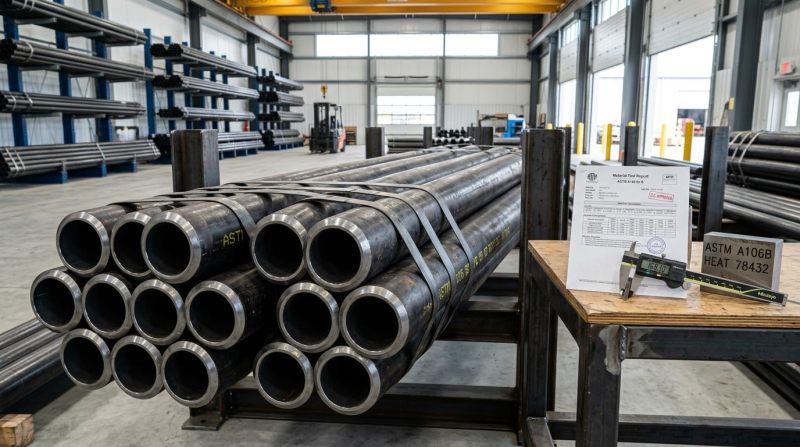
The most common reason is that different teams focus on different parts of the order. Procurement may focus on price and lead time, engineering may focus on pressure and temperature service, while quality teams focus on standards and documentation. If the purchase order does not align all three, mistakes happen.
ASTM A106 Grade B is commonly used for seamless carbon steel pipe for high-temperature service. Because it is widely available and often discussed alongside ASTM A53 or API pipe grades, many buyers assume substitution is easy. It is not always easy, and it is not always safe. A small wording issue in the RFQ or PO can result in the wrong manufacturing process, wrong test requirements, missing traceability, or a mismatch between project specification and supplied material.
For most buyers and technical evaluators, the priority should be this: confirm exactly what the project requires, then ensure the supplier quotation matches it line by line.
Mistake 1: Ordering by grade name only without checking the full ASTM A106 Gr.B specification
One of the most frequent errors is sending an inquiry that only says “ASTM A106 Gr B pipe” without full technical details. That is not enough to avoid risk.
A complete order should normally define:
- Standard: ASTM A106
- Grade: Grade B
- Manufacturing type: seamless
- Size: NPS, OD, wall thickness, or schedule
- Length requirements: random, double random, or fixed length
- Ends: plain end, beveled end, threaded if applicable
- Quantity by length, weight, or piece count
- Application conditions: temperature, pressure, fluid, service environment
- Testing and inspection requirements
- Documentation: MTC, third-party inspection, origin, marking, traceability
- Coating, packing, and shipping terms
When these details are missing, suppliers may quote based on different assumptions. That means the lowest quote may not actually be for the same product scope. A good procurement comparison should always be a like-for-like comparison.
Mistake 2: Confusing ASTM A106 Gr B with ASTM A53, API grades, or other “equivalent” materials
Many buyers search for ASTM A106 Gr.B equivalent materials to reduce cost or improve availability. This is understandable, especially when schedules are tight. But “equivalent” is one of the most dangerous words in steel purchasing if it is not confirmed by the project engineer or end user.
ASTM A106 Grade B is not automatically interchangeable with:
- ASTM A53 Grade B
- API 5L Grade B
- EN or JIS pipe grades with similar strength levels
These materials may overlap in some mechanical properties or application ranges, but they can differ in:
- Manufacturing method
- Intended service conditions
- Chemical limits
- Hydrostatic or NDT requirements
- Certification expectations
- Project code acceptance
If a supplier proposes an alternative, ask three direct questions:
- Is it formally allowed by the project specification?
- Does it match the required service condition, not just the strength level?
- Will the owner, EPC, inspector, or local authority accept it in documentation review?
If the answer to any of these is uncertain, substitution should not be treated as a simple commercial decision.
Mistake 3: Ignoring ASTM A106 Gr B chemical composition limits
Another common issue is focusing only on dimensions and price while overlooking ASTM A106 Gr B chemical composition. Buyers may assume chemistry is a routine matter, but it directly affects weldability, fabrication behavior, compliance, and service suitability.
Even when two materials look similar on a datasheet, chemistry differences can influence:
- Welding procedures
- Heat-affected zone performance
- Forming and machining response
- Compatibility with project material requirements
- Inspection and approval outcomes
For this reason, always request the mill test certificate and review actual heat analysis values rather than relying only on a supplier’s general product statement. If the project has additional restrictions on carbon equivalent, residual elements, or weldability performance, include those requirements in the order before production begins.
Mistake 4: Not confirming whether the pipe is seamless and fit for the actual service environment
ASTM A106 is specifically associated with seamless carbon steel pipe. Yet errors still happen when orders are transferred between sourcing teams, trading parties, or overseas supply chains. If the PO, technical datasheet, and quotation are not aligned, the wrong manufacturing route can enter the process.
Also, buyers sometimes specify ASTM A106 Gr B simply because it is familiar, not because it is the best fit for the service. Before finalizing the order, verify:
- Whether the project really requires seamless pipe
- Whether the service temperature justifies ASTM A106 selection
- Whether corrosion allowance, insulation, or coating has been considered
- Whether special testing is needed for critical service
This review is especially important for industrial and construction projects where different materials may be used together. For example, in broader structural packages, buyers may source pipe together with sections and supports from one vendor network. In such mixed procurement situations, keeping line-pipe, pressure-pipe, and structural-steel requirements clearly separated helps avoid major specification errors. Companies sourcing support components may also work with suppliers of sections such as Angle Steel Supplier products for framing, bracing, brackets, and reinforcements, so internal categorization of material standards becomes even more important.
Mistake 5: Ordering the right grade but the wrong dimensions, schedule, or tolerances
In many projects, dimensional mistakes create more real-world loss than grade mistakes. A106 Gr B pipe may be chemically correct but still unusable if the wall thickness, schedule, or end preparation does not match fabrication drawings.
Typical ordering problems include:
- Mixing nominal pipe size with actual OD requirements
- Confusing schedule with wall thickness in millimeters
- Missing minimum wall requirements
- Not defining tolerance expectations for critical installation work
- Ordering random lengths when fabrication needs fixed lengths
These issues can lead to site cutting losses, welding delays, spool mismatch, and unexpected scrap. A simple dimension verification sheet attached to the PO can prevent most of these problems.
Mistake 6: Treating testing and inspection as optional details
Many disputes happen not because the material is obviously bad, but because testing requirements were never clearly agreed. ASTM A106 Gr B orders should define the required level of inspection before manufacturing and shipment.
Depending on the project, buyers may need to clarify:
- Hydrostatic testing
- Nondestructive examination
- Mechanical testing
- Flattening or bend test requirements
- Third-party witness inspection
- PMI or additional customer tests
- Marking and traceability rules
If you wait until cargo is ready, changes become expensive. Good suppliers can usually support additional QA requirements, but only if these are agreed early enough to plan production and documentation.
Mistake 7: Overlooking documentation, traceability, and compliance records
For quality managers, project owners, and commercial approvers, paperwork is not secondary. Missing or inconsistent documents can stop payment, customs clearance, site acceptance, or final handover.
At minimum, confirm whether the order requires:
- Mill test certificates
- Heat number traceability
- Country of origin documents
- Packing list and weight list accuracy
- Inspection release note
- Compliance declaration to ASTM or project specification
It is also good practice to check whether the marking on the pipe matches the certificate exactly. A mismatch between physical marking and MTC details can create rejection risk even if the pipe itself is acceptable.
Mistake 8: Choosing the lowest quote without checking total procurement risk
Price matters, but total acquisition cost matters more. A lower-priced offer can become more expensive if it includes longer production time, poor packaging, incomplete certification, or weak dimensional consistency.
When evaluating suppliers, compare:
- Unit price versus full supply scope
- Lead time realism
- Inspection capability
- Export experience
- Packaging quality for international shipment
- Claims handling and after-sales responsiveness
This is especially important for overseas buyers. A reliable manufacturer or exporter reduces hidden cost by improving consistency, shipment planning, and document accuracy. For decision-makers and finance approvers, that usually matters more than a small nominal price difference.
How to place a safer ASTM A106 Gr B pipe order
If you want to reduce risk quickly, use a short control checklist before issuing the PO:
- Confirm end-use application and service conditions.
- Verify ASTM A106 Grade B is the correct standard and grade.
- Reject unapproved “equivalent” substitutions.
- Define size, schedule, length, ends, and quantity clearly.
- Specify required tests, inspection level, and third-party witness needs.
- Request MTCs and traceability requirements in advance.
- Align technical specification, quotation, and purchase order wording.
- Review supplier capability, not just price.
This process is simple, but it closes most of the common failure points seen in international pipe sourcing.
Final takeaway
The biggest ASTM A106 Gr B ordering mistakes usually come from assumption, not complexity. Buyers assume similar grades are interchangeable, assume the supplier understands the intended service, or assume testing and paperwork can be fixed later. In reality, these assumptions create the delays, extra costs, and compliance risks that projects want to avoid.
A strong order is clear in four areas: exact specification, verified chemistry and dimensions, approved testing and documentation, and supplier capability. If those four are controlled, ASTM A106 Grade B pipe procurement becomes much safer, more predictable, and more cost-effective for engineers, purchasers, QA teams, and business decision-makers alike.
Please give us a message


Please enter what you want to find