When precision fabrication demands tight dimensional tolerances, cold rolled steel outperforms hot rolled—especially for critical applications like L shape angles, 90 angle metal, and cold formed angle components. As a leading structural steel manufacturer & exporter from China, Hongteng Fengda supplies high-accuracy cold rolled steel, corrosion-resistant plate, ASTM stainless steel, and stainless steel sheet—including premium 316 angle and angle plate steel—for global construction and industrial projects. Whether you're a technical evaluator, procurement specialist, or project manager, understanding this distinction ensures optimal material selection, cost control, and compliance with ASTM, EN, and GB standards.
Dimensional Accuracy: Why Cold Rolled Steel Delivers Tighter Tolerances
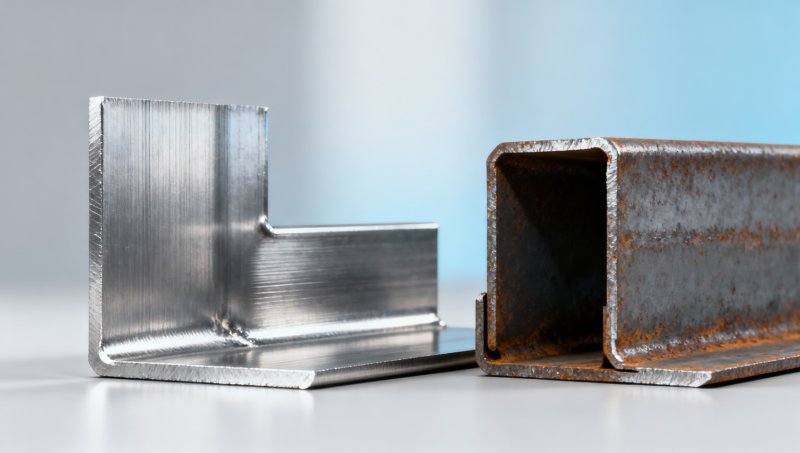
Cold rolled steel undergoes further processing at room temperature after initial hot rolling, involving pickling, cold reduction, annealing, and temper rolling. This sequence refines grain structure and eliminates thermal distortion, resulting in tighter dimensional control. Typical thickness tolerances for cold rolled products fall within ±0.05 mm for sheets up to 3 mm thick—up to 5× tighter than standard hot rolled equivalents (±0.25 mm).
For structural components requiring precise fit-up—such as laser-cut brackets, welded assemblies, or CNC-bent cold formed angle profiles—this consistency reduces rework by up to 40% and improves first-pass yield rates. At Hongteng Fengda, our cold rolled production line maintains flatness deviations under 0.3 mm/m² and camber limits of ≤0.15 mm/m, verified via automated optical metrology systems calibrated to ISO 17025 standards.
Hot rolled steel, while economical for large-scale load-bearing elements, cools unevenly during air cooling, introducing residual stresses and surface scale that affect machining accuracy. Its typical width tolerance is ±1.5 mm on a 150 mm wide section—making it unsuitable for applications where bolt-hole alignment or mating flange repeatability is mission-critical.
The table above highlights measurable advantages of cold rolled steel for high-precision fabrication. These tolerances directly impact downstream processes: tighter thickness control enables consistent weld penetration depth; superior flatness ensures uniform clamping pressure in press brakes; and smoother surfaces reduce tool wear during milling or drilling operations.
Application Fit: Matching Material Type to Structural Function
Material selection isn’t binary—it’s functional. Cold rolled steel excels where geometry fidelity drives performance: robotic welding jigs, modular building frames, railcar interior panels, and medical equipment supports all benefit from its repeatable dimensions. Conversely, hot rolled sections remain the preferred choice for primary structural members subject to axial compression or bending over long spans—like columns, crane rails, and bridge girders—where ultimate strength and cost efficiency outweigh micron-level variance.
For hybrid solutions, Hongteng Fengda integrates both processes intelligently. Our H-beam offerings include hot rolled variants (Q345B, S355JR, A992) for main load paths, and cold rolled versions (Q235, SS400, 316) for secondary framing or architectural façade components demanding exact edge definition. Flange width tolerances for our cold rolled H-beams are held to ±0.3 mm versus ±1.2 mm for hot rolled equivalents—a difference that eliminates shimming during multi-story steel erection.
In corrosive environments, cold rolled stainless grades such as 316 deliver not only dimensional stability but also enhanced pitting resistance (PREN ≥32). This dual advantage makes them ideal for offshore platforms, food-grade conveyors, and pharmaceutical cleanroom structures—applications where maintenance downtime carries high operational cost.
Procurement Considerations: Balancing Cost, Lead Time, and Compliance
Cold rolled steel typically commands a 15–25% price premium over hot rolled counterparts due to added processing steps and tighter quality controls. However, total cost of ownership often favors cold rolled when factoring in reduced scrap (average 8.2% vs. 14.6%), lower labor hours per assembly (up to 30% faster fit-up), and fewer non-conformance reports during third-party inspection.
Lead times reflect this complexity: standard cold rolled orders from Hongteng Fengda ship in 25–35 days, compared to 12–20 days for hot rolled stock. For urgent projects, we maintain strategic inventory of key cold rolled angles (L-shape, 90°), channel sections, and stainless 316 plates—enabling delivery within 10 working days for orders under 25 metric tons.
All cold rolled products comply with ASTM A108, EN 10131, and GB/T 708 standards. Certificates of Conformance (CoC) include full traceability to heat number, mechanical test results (tensile strength ≥370 MPa, elongation ≥15%), and dimensional verification reports signed by our in-house QA team certified to ISO 9001:2015.
This procurement matrix helps procurement specialists and financial approvers weigh trade-offs objectively. While hot rolled offers faster entry into production, cold rolled delivers higher predictability across the project lifecycle—reducing contingency budgets and improving ROI on automation investments.
Why Partner with Hongteng Fengda for Precision Steel Solutions
As a structural steel manufacturer & exporter from China with over 18 years’ experience, Hongteng Fengda bridges the gap between global specification requirements and localized manufacturing agility. We operate dual-certified facilities (ISO 9001 & ISO 14001) equipped with online thickness gauges, coordinate measuring machines (CMM), and spectral analyzers—all calibrated biannually to national metrology standards.
Our engineering support team collaborates directly with clients’ design departments to validate material suitability pre-order—reviewing GD&T callouts, weld joint preparations, and surface finish specifications. For OEM partners, we offer joint development of custom cold formed profiles with tolerance bands down to ±0.1 mm on critical features.
Whether sourcing cold rolled 316 angle for marine instrumentation enclosures or hot rolled H-beam for wind turbine foundations, our integrated logistics network ensures FOB Qingdao or CFR Dubai shipments with documentation compliant to U.S. CBP, EU REACH, and GCC Standardization Organization requirements.
Next Steps for Your Precision Fabrication Project
Selecting between cold rolled and hot rolled steel isn’t about choosing one over the other—it’s about aligning material properties with functional intent, budget constraints, and schedule realities. For applications demanding sub-millimeter repeatability, cold rolled remains unmatched. Where structural integrity and economy dominate, hot rolled delivers proven reliability.
Hongteng Fengda provides both options under unified quality governance, enabling seamless transitions across project phases—from prototype validation using cold rolled samples to mass production with hot rolled structural cores. Our technical sales engineers can help you benchmark tolerances against your CAD models, simulate cost implications of material switching, and generate compliant documentation packages for international approvals.
Ready to optimize your next steel procurement? Contact our engineering support team to request dimensional test reports, review application-specific grade recommendations, or schedule a virtual factory audit. Let’s build precision—right from the first cut.
Please give us a message


Please enter what you want to find