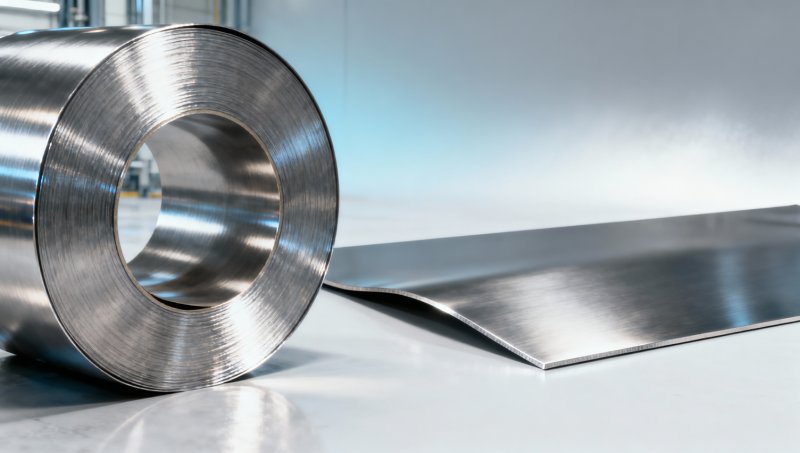
Cold rolled stainless steel coil offers superior surface finish and tighter thickness tolerances—ideal for precision applications like stainless steel sheeting for kitchens or high-spec structural components. But does that precision come with hidden trade-offs in cost, lead time, or formability? As a trusted stainless steel plate manufacturer and exporter, Hongteng Fengda compares cold rolled stainless steel coil against hot rolled stainless coil and 310s stainless steel strip—helping procurement teams, engineers, and project managers weigh performance against stainless steel plate prices, supply stability, and real-world fabrication needs. Whether you’re buying stainless steel plate for OEM structures or specifying stainless steel angle iron for industrial builds, understanding the full lifecycle impact is critical.
What Hidden Costs Come With Tighter Tolerances?
Cold rolling delivers dimensional accuracy down to ±0.02mm — significantly tighter than hot rolled coil’s typical ±0.15mm tolerance. This matters for laser-cut kitchen panels, precision conveyor belts, or welded structural frames where fit-up errors cascade into assembly delays. Yet achieving that precision demands extra processing steps: pickling, annealing, skin-pass rolling, and stringent in-line metrology — all adding 12–22% to base material cost versus equivalent hot rolled grades.
Lead time also extends: cold rolled coils typically require 4–6 weeks from order confirmation due to batch scheduling, furnace cycles, and quality gate checks. In contrast, hot rolled stainless coil can ship in as little as 7–15 days. For time-sensitive infrastructure projects across Southeast Asia or the Middle East, this delay may trigger penalty clauses or force costly air freight overrides.
Formability is another hidden constraint. Cold rolled material exhibits higher yield-to-tensile ratios (often >0.85), increasing springback during bending — especially problematic for cold-formed steel profiles used in modular construction. Engineers must adjust tooling clearances by +0.3–0.6mm and validate bend allowances per lot, adding 3–5 days to pre-production validation cycles.
How Does 316L Stainless Steel Plate Fit Into This Trade-Off?
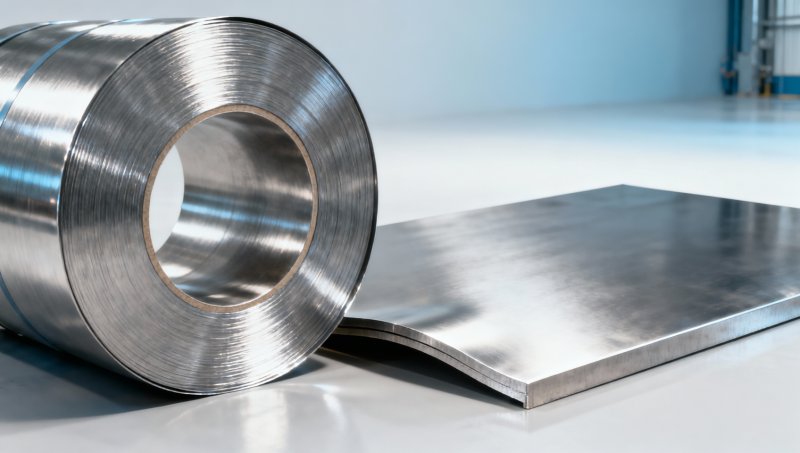
While cold rolled coil excels in thin-gauge flatness, many structural and industrial applications demand thicker, high-corrosion-resistant plates — where 316L Stainless Steel Plate becomes the optimal choice. Its low carbon content (<0.03%) prevents sensitization during welding — critical for large-gauge components like chemical reactor shells or food-grade conveyor supports exceeding 6mm thickness.
With tensile strength ≥520MPa and elongation ≥55%, 316L maintains ductility even after thermal cycling. Its thermal expansion coefficient (15.7×10⁻⁶/°C) ensures dimensional stability across operating ranges from -196°C to 870°C — making it suitable for cryogenic rail components and high-temperature agricultural dryers alike.
Available in thicknesses from 0.3mm to 200mm and widths up to 3500mm, it bridges the gap between coil-based efficiency and plate-level robustness. Surface finishes like BA, 2B, and NO.4 support both hygienic cleaning (food packaging lines) and aesthetic integration (architectural train interiors).
Key Performance Benchmarks vs. Cold Rolled Coil
The table highlights how 316L plate compensates for cold rolled coil’s limitations: broader thickness scalability, molybdenum-enhanced pitting resistance (critical in marine or fertilizer plant environments), and retained weld integrity without post-weld heat treatment.
Procurement Teams: What Should You Prioritize?
For procurement professionals evaluating cold rolled coil versus alternatives, focus on three decision dimensions:
- Application Criticality: If surface aesthetics or tight flatness govern end-use (e.g., stainless steel sheeting for premium kitchen cabinetry), cold rolled is justified. If corrosion resistance, weldability, or load-bearing capacity dominate (e.g., chemical tank supports), 316L plate reduces long-term maintenance costs by up to 40% over 10-year service life.
- Supply Chain Resilience: Cold rolled coil relies on fewer global producers — creating concentration risk. Hongteng Fengda maintains dual-sourced raw material channels and holds 30-day buffer stock for key grades, ensuring consistent delivery across North America and EU markets within 25–35 days — regardless of coil or plate format.
- Post-Processing Needs: Cold rolled coil often requires secondary slitting, leveling, or edge trimming before use. Our 316L plates ship with mill-certified edges and optional laser-cutting services — cutting fabrication lead time by 3–7 days per batch.
Why Partner With Hongteng Fengda for Structural Stainless Solutions?
As a certified ISO, SGS, and BV-compliant structural steel manufacturer, we don’t just supply materials — we de-risk your sourcing. Our integrated facility handles everything from hot rolling and cold rolling to precision plate cutting, bending, and OEM assembly — all under one quality management system aligned with ASTM A240, EN 10088, and GB/T 4237 standards.
We support global buyers with documented traceability (heat number tracking), third-party inspection options (including pre-shipment audits), and flexible MOQs — from 1-ton sample orders to 500+ ton monthly contracts. For urgent projects, our priority production lane guarantees 18-day turnaround on standard 316L plate sizes (e.g., 1219mm × 2438mm × 6mm).
Ready to compare cold rolled coil specs against 316L plate performance data? Contact us today for a customized technical datasheet, lead time confirmation, or mill test report review — all provided within 24 business hours.
Please give us a message


Please enter what you want to find