When evaluating suppliers, cold formed angle steel specifications are not just technical details—they directly affect load performance, fabrication efficiency, compliance, and total project cost. For global sourcing, understanding which cold formed angle steel specifications truly matter helps reduce mismatch risk, control downstream processing issues, and keep construction or industrial schedules on track.
Why cold formed angle steel specifications deserve a checklist
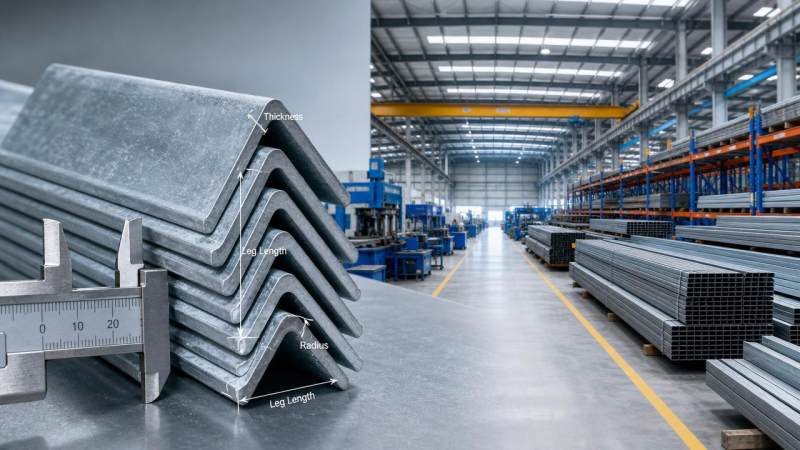
Cold formed angle steel looks simple, but specification gaps often appear after ordering, not before. Small differences in dimensions, corner radius, thickness tolerance, and coating can change fit-up, welding time, and installation speed.
A checklist approach makes cold formed angle steel specifications easier to compare across mills, standards, and quotations. It also helps verify whether a quoted section is suitable for structural support, framing, brackets, reinforcement, or equipment bases.
For structural steel supply, reliable documentation matters as much as the steel itself. Hongteng Fengda, a structural steel manufacturer and exporter from China, supports international projects with angle steel, channel steel, beams, cold formed profiles, and customized components produced under controlled quality systems.
Core checklist: cold formed angle steel specifications that really matter
Use the following checklist before confirming a drawing, purchase order, or mill production schedule. These points cover the cold formed angle steel specifications with the strongest impact on performance and supply reliability.
- Confirm leg dimensions exactly. Check equal or unequal angles, nominal leg length, and whether dimensions refer to outside leg size or finished formed size.
- Verify thickness and tolerance. Thin-gauge variations can affect load capacity, bolted connections, and assembly alignment in repetitive fabrication work.
- Check inside and outside corner radius. Cold forming creates radii that may interfere with tight connections, nesting, gusset plates, or flush mounting requirements.
- Review steel grade and yield strength. Do not assume dimensional compliance means mechanical compliance; grade selection must match design calculations and code needs.
- Match the governing standard. Confirm whether the product follows ASTM, EN, JIS, or GB requirements for dimensions, chemistry, mechanical values, and tolerances.
- Inspect straightness and twist limits. Even minor distortion can slow assembly, especially in long members used for frames, racks, supports, or modular systems.
- Specify length supply conditions. Decide between fixed length, random length, cut-to-size, and tolerance range to avoid jobsite cutting or material waste.
- Evaluate surface condition. Scale, oil, burrs, edge waviness, and scratches influence painting quality, galvanizing results, and visible finish acceptance.
- Define coating requirements early. Pre-galvanized, hot-dip galvanized, or bare steel options affect corrosion performance, lead time, and fabrication sequence.
- Request test certificates and traceability. Mill test reports, heat numbers, and inspection records reduce compliance disputes during project approval and delivery.
How to compare dimensional specifications correctly
The most misunderstood part of cold formed angle steel specifications is dimensions. Many quotations list only leg size and thickness, but omit radius, tolerance class, and sectional mass. That creates false price comparisons.
For example, a 50 × 50 × 5 mm angle from one supplier may not behave the same as a similar listing from another. The difference may come from actual thickness range, forming accuracy, or steel grade rather than nominal size.
Always ask for:
- Nominal section size and actual allowable dimensional tolerance.
- Unit weight per meter for cost and logistics planning.
- Corner radius information for connection detailing.
- Straightness, twist, and edge quality acceptance limits.
This level of detail turns cold formed angle steel specifications into practical purchasing data instead of incomplete catalog information.
Application-specific points that change the specification priority
Building frames and secondary structural members
For building frames, bracing, and secondary supports, focus on steel grade, dimensional tolerance, coating, and straightness. These applications often involve repetitive installation, where fit consistency saves labor.
If angles will be welded into assemblies, verify chemistry and weldability. If they will be bolted, hole alignment and flat bearing surfaces become more important than appearance alone.
Industrial supports and equipment structures
For machinery frames, racks, cable supports, and plant structures, cold formed angle steel specifications should emphasize tight dimensional control and cut-length precision. Fabrication errors multiply quickly in modular installations.
Corrosion exposure should also be defined clearly. Indoor dry environments may allow bare steel with later painting, while aggressive zones may require galvanized supply from the start.
Infrastructure and outdoor exposure
Outdoor brackets, fencing supports, utility structures, and road-related steel components depend heavily on coating thickness and long-term corrosion resistance. In these cases, coating requirements may be more critical than minimal base price.
Related outdoor systems often pair structural sections with corrosion-resistant accessories. In lifting, marine, or exposed industrial installations, products such as Galvanized Steel Wire Rope are selected by coating class, tensile strength, diameter range, and compliance standards in the same disciplined way.
Commonly overlooked risks in cold formed angle steel specifications
Several issues are frequently missed during sourcing, especially when comparing offers from different countries or standard systems.
Assuming all “equivalent” standards are interchangeable
ASTM, EN, JIS, and GB products may appear similar, but tolerances and mechanical requirements are not always directly interchangeable. Confirm actual equivalency rather than relying on generic statements.
Ignoring formed corner geometry
Cold formed angle steel specifications should always address radius if the section fits into tight fabricated assemblies. A radius conflict can cause rework, grinding, or redesign.
Treating coating as a simple add-on
Coating affects size, appearance, corrosion life, and delivery schedule. If galvanizing is added after forming and cutting, responsibility for dimensional changes and surface finish should be defined.
Missing documentation requirements
Without mill certificates, inspection records, and traceability, even compliant steel can become difficult to approve. Documentation should be part of the original specification, not an afterthought.
Practical execution steps before placing the order
To apply cold formed angle steel specifications effectively, use a simple execution routine:
- List the exact section size, grade, standard, and coating in one line item description.
- Attach drawings showing hole locations, cut lengths, and any radius-sensitive interfaces.
- Ask for tolerance sheets and sample mill certificates before bulk production.
- Confirm packaging, bundle marking, and export loading method to prevent mix-ups.
- Align inspection checkpoints for dimensions, coating, and quantity before shipment release.
This process is especially valuable for customized structural steel supply, where standard catalog data may not cover project-specific fabrication needs.
Final takeaway: focus on the specifications that protect the project
The best sourcing decisions do not come from comparing price per ton alone. They come from comparing complete cold formed angle steel specifications, including geometry, tolerances, grade, coating, standard compliance, and documentation.
When those details are defined clearly, fabrication becomes smoother, approvals move faster, and installation risk drops. For projects requiring dependable structural steel supply from China, stable production capability, international standard compliance, and consistent quality control remain essential selection factors.
Use this checklist to review every quotation, clarify missing data, and lock the correct cold formed angle steel specifications before production begins. That single step often saves far more than any short-term price concession.
Please give us a message


Please enter what you want to find