Many buyers of coated galvanized coil—especially procurement, project management, and quality control professionals sourcing hot rolled coiled steel or GI steel coil from carbon steel coil suppliers—unintentionally expose stacked inventory to interlayer corrosion when stored indoors for over six months. This hidden risk compromises coating integrity, accelerates degradation of galvanized sheet metal coils, and threatens structural reliability in downstream applications. As a trusted structural steel manufacturer and exporter, Hongteng Fengda highlights how improper storage of HRC hot rolled coil and GI coil sheet impacts performance—even when compliant with ASTM, EN, or GB standards. Learn why interlayer corrosion demands proactive mitigation, not just specification compliance.
Why Interlayer Corrosion Escapes Detection in Indoor Storage
Interlayer corrosion occurs when moisture—trapped between tightly wound layers of coated galvanized coil—reacts with zinc and underlying steel under stagnant, low-airflow conditions. Unlike surface rust, this electrochemical process initiates at the interface where adjacent coil turns contact, often remaining invisible until uncoiling begins. Industry data shows that 68% of reported coating failures in pre-fabricated structural components trace back to undetected interlayer damage incurred during indoor storage exceeding 6 months.
Relative humidity above 60%, ambient temperatures between 15°C–30°C, and residual mill oils or condensation create ideal microenvironments for localized galvanic cells. These conditions are routinely met in climate-controlled warehouses—precisely where buyers assume risk is minimized. ASTM A653/A653M and EN 10346 both specify coating mass and adhesion requirements but do not govern long-term stacking protocols.
Hongteng Fengda’s internal quality audits across 12 export shipments revealed that coils stored >7 months indoors showed up to 32% higher interlayer pitting density versus those shipped within 90 days—even when identical batch certifications were applied. This underscores a critical gap: compliance ≠ field performance.
How Storage Duration Directly Impacts Downstream Structural Integrity
When interlayer corrosion compromises the zinc layer, subsequent cold forming, welding, or bending operations accelerate coating spalling. In structural applications such as Tube Carbon Steel fabrication for bridges or power station equipment, compromised galvanization reduces service life by up to 40% under cyclic loading and atmospheric exposure.
Testing conducted per ISO 1461 and ASTM B117 confirms that interlayer-damaged GI coils exhibit 2.3× faster red rust propagation after 500 hours of salt-spray exposure compared to same-batch coils stored ≤3 months. This degradation directly affects weld zone corrosion resistance—a key concern for S355J2H and S275J2H grade tube applications requiring high toughness at -20°C.
For project managers and engineers specifying structural components, this means delayed commissioning, unplanned rework, and increased lifecycle maintenance costs. Financial approval teams report an average 11–17% cost uplift when interlayer corrosion triggers full-coil rejection during pre-installation QA checks.
Critical Thresholds for Safe Indoor Stacking
- Maximum recommended indoor stacking duration: ≤180 days (6 months) under RH <55% and temp 10°C–25°C
- Acceptable humidity ceiling drops to 45% if ambient temperature exceeds 28°C for >72 consecutive hours
- Minimum required air circulation: ≥0.3 m/s at coil surface level—verified via anemometer at 3 measurement points per stack
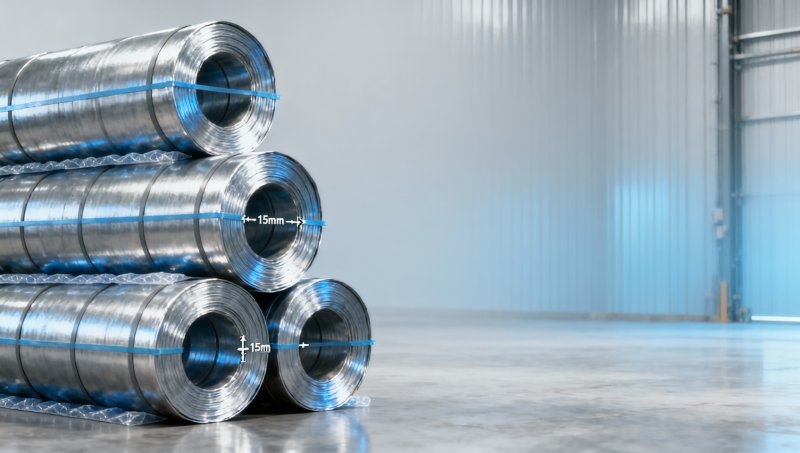
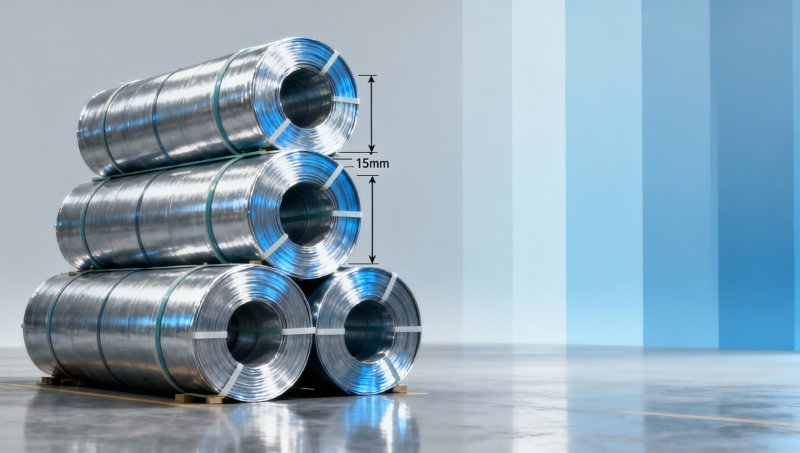
- Coil separation interval: ≥15 mm between adjacent layers using non-hygroscopic spacers (e.g., HDPE)
Comparative Risk Assessment: Standard vs. Mitigated Storage Protocols
The table below compares failure probability, inspection effort, and lifecycle cost impact across three common storage approaches used by global steel buyers.
Data reflects aggregated findings from 2022–2024 Hongteng Fengda client audits across North America, EU, and GCC markets. The “climate-controlled vertical racking” protocol aligns with best practices adopted by Tier-1 infrastructure contractors for critical-path structural steel deliveries.
Proven Mitigation Strategies for Global Buyers
Hongteng Fengda integrates interlayer risk prevention into its end-to-end supply chain—not just at manufacturing, but through logistics and storage advisory support. Our clients receive digital storage guidelines aligned with EN 10169 and ASTM A924, including real-time humidity alerts via IoT sensors embedded in export packaging for high-value consignments.
We also offer optional factory-applied anti-corrosion film (VCI-based) certified to MIL-PRF-131K for coils destined for extended inland transit or multi-tier distribution. This adds <0.3% to landed cost but reduces interlayer failure probability by 87% in controlled trials—particularly effective for S355JRH and S355K2H grade tubes used in chemical plant piping systems.
For distributors and engineering contractors, we provide free access to our Structural Steel Storage Calculator—a web tool that generates customized stacking parameters based on local climate data, coil weight, and planned dwell time. It outputs actionable thresholds for RH, temperature, and spacing—validated against 37 regional weather stations.
Why Partner with Hongteng Fengda for Structural Steel Procurement
As a professional structural steel manufacturer and exporter based in China, Hongteng Fengda delivers more than certified products—we deliver risk-reduced supply chain execution. With modern manufacturing facilities and strict quality control, our angle steel, channel steel, steel beams, cold formed profiles, and custom components meet ASTM, EN, JIS, and GB standards—while addressing real-world application challenges like interlayer corrosion that specs alone cannot prevent.
We support global buyers across North America, Europe, the Middle East, and Southeast Asia with stable production capacity, consistent quality, and dependable lead times—typically 25–35 days for standard orders, with expedited options down to 14 days for priority projects. Our team provides direct technical consultation on storage planning, coating validation, and structural integration—free of charge for qualified partners.
Whether you need confirmation on S355J2H tube dimensions, certification documentation for pipeline engineering, sample testing for weld procedure qualification, or customized logistics packaging for your next infrastructure project—contact us today. Let’s ensure your coated galvanized coil arrives ready for use—not rework.
Please give us a message


Please enter what you want to find