Choosing the right steel rod diameter is critical for technical evaluators who need to balance load requirements, safety margins, material efficiency, and cost control. An oversized selection can increase waste and project expense, while an undersized rod may compromise structural performance. This guide explains how to assess steel rod diameter more accurately to support reliable, standards-based decisions in construction and industrial applications.
What technical evaluators should decide first before selecting steel rod diameter
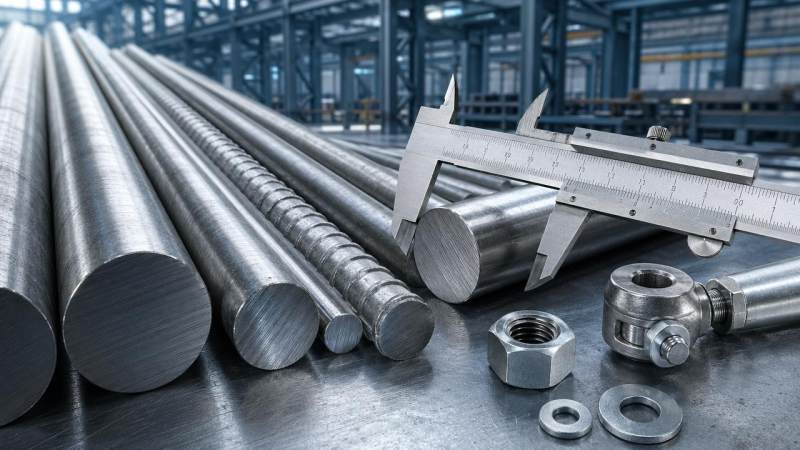
When people search for steel rod diameter, they are rarely looking for a simple size chart alone. In most technical reviews, the real question is how to choose a diameter that is safe, compliant, available, and cost-efficient without slipping into unnecessary conservatism. For evaluators in construction, fabrication, and industrial procurement, the key is not just the diameter itself, but the relationship between load, span, connection details, steel grade, manufacturing tolerances, and project risk.
The most practical starting point is to define the function of the rod in the assembly. A steel rod used as a tension member, hanger, anchor, tie, pin, or bracing element behaves differently under load and should not be assessed with a one-size-fits-all rule. A diameter that works well for a short, purely axial tension application may fail to perform economically or structurally if bending, buckling, fatigue, vibration, corrosion allowance, or installation misalignment are present.
For technical evaluators, the best decision process begins with three filters. First, determine the actual design demand, including static and dynamic loads. Second, identify the controlling failure mode, such as yielding, excessive deflection, buckling, thread reduction, or weld weakness. Third, compare the required cross-sectional capacity with standard available diameters and supply constraints. This approach avoids both underdesign and the common habit of adding too much diameter simply to feel safe.
Why overdesign happens so often in steel rod selection
Overdesign is usually not caused by lack of technical knowledge alone. In many projects, it comes from uncertainty. If the load path is not fully defined, if end conditions are not clear, or if fabrication tolerances are expected to vary, the evaluator may choose a larger steel rod diameter as a protective shortcut. That decision can reduce immediate review pressure, but it often shifts cost and operational inefficiency downstream.
A larger diameter means more steel consumption, higher transport weight, more difficult handling, and in some cases more expensive machining, threading, welding, or drilling. It can also create coordination issues with connection plates, bolt spacing, embedded parts, or surrounding members. In assemblies with many repeated rods, even a small increase in diameter can produce a meaningful material cost difference across the project.
Another reason overdesign happens is that evaluators sometimes rely on nominal diameter instead of effective section. For threaded rods, for example, the critical area may be the stress area at the thread root rather than the full shank diameter. If that distinction is ignored, teams may first underestimate true demand, then compensate by selecting an unnecessarily large nominal size. Accurate evaluation requires using the correct effective area for the actual load transfer condition.
How to determine the right steel rod diameter from a technical standpoint
The correct steel rod diameter should be derived from design action and allowable or design resistance, not from habit or rough comparison. Start by defining the factored or service load according to the governing code. Then establish whether the rod is carrying pure tension, combined tension and bending, compression, or fluctuating cyclic loads. Once that is known, calculate the required net area and convert that result into a practical nominal diameter range.
In pure tension applications, the basic check is often straightforward: required area equals design load divided by allowable stress or design strength after applying the relevant safety factors. However, the evaluator must still confirm whether threads, holes, couplers, or welded ends reduce effective capacity. Surface condition, galvanizing, and corrosion allowance may also influence the minimum acceptable diameter, especially in outdoor or marine service.
For compression or brace-type uses, diameter selection becomes more sensitive because slenderness can control performance before material strength does. A rod that appears adequate by area may still be vulnerable to buckling if the unsupported length is too large. In these cases, increasing diameter can improve stability, but the better answer may also involve reducing effective length, changing restraint conditions, or switching to a different profile if the application is not ideal for a simple round rod.
Technical evaluators should also check serviceability. In some industrial structures, excessive elongation, vibration, or connection rotation can affect equipment alignment even if ultimate strength is acceptable. That means the final steel rod diameter may be governed by stiffness or operational tolerances rather than by strength alone. Choosing diameter only from ultimate capacity can therefore create hidden performance issues.
Which inputs matter most when comparing one diameter against another
Several inputs have a direct effect on diameter choice, and they should be reviewed systematically. The first is steel grade. Higher-strength grades may allow smaller diameters for the same tensile demand, but this does not always produce the best project outcome. Availability, welding behavior, certification requirements, and regional code acceptance can make a more common grade the better option, even if the section needs to be slightly larger.
The second key input is connection detailing. End threading, nut engagement, clevis connections, welded tabs, anchor heads, and couplers all influence the usable strength of the rod system. Many practical failures begin at the connection, not in the middle of the bar. If the connection has lower capacity than the rod body, increasing the steel rod diameter alone will not solve the problem and may only mask a detailing weakness.
The third input is manufacturing tolerance and supply practicality. Technical reviewers should verify whether the specified diameter is a common production size and whether required tolerances are realistic. A theoretically optimized size that is difficult to source can delay the project or force substitutions later. Working with manufacturers that understand ASTM, EN, JIS, and GB requirements helps reduce that risk and gives evaluators better confidence in dimensional consistency and mechanical performance.
How to avoid waste without compromising safety margins
The most effective way to avoid waste is to optimize with a controlled margin instead of an arbitrary one. Many projects become inefficient because multiple parties each add their own extra allowance. The engineer adds reserve capacity, the checker prefers the next larger standard size, the buyer accepts a readily available heavier option, and the fabricator adjusts details for convenience. The final result may be much larger than the original technical need.
A better process is to document the governing assumptions clearly: design load, load combination, steel grade, effective area, environmental exposure, and connection reduction factors. Once these assumptions are visible, evaluators can justify a diameter that meets code and project reliability targets without relying on excessive oversizing. This is especially important in repetitive structural packages where a single optimized decision may apply to dozens or hundreds of members.
It is also useful to compare total installed cost instead of material weight alone. A slightly larger steel rod diameter may still be the best decision if it simplifies fabrication, improves robustness during handling, or reduces the chance of rework. On the other hand, if the increase creates heavier connectors, larger holes, and more welding time, the extra steel quickly becomes waste. Optimization should therefore include procurement, fabrication, and installation consequences, not only structural math.
Where rod sizing fits into the broader structural steel system
In many industrial projects, rods do not work alone. They interact with beams, channels, brackets, gusset plates, and support frames. That means the right diameter should be evaluated as part of the full load path. If adjacent members are too flexible, if connection plates are undersized, or if eccentricity is introduced at the support, the rod can experience secondary effects that were not obvious in a simplified calculation.
This system-level view is one reason technical evaluators often benefit from reviewing rod selection alongside other structural members. For example, in industrial structures that rely on primary framing, the choice of beam section can influence hanger spacing, bracing layout, and connection geometry. In such cases, integrating rod sizing with a compatible framing solution may improve both performance and sourcing efficiency.
For projects that also require main structural members, a product such as Structural I Beam may be relevant within the same evaluation package. This type of section is commonly used in industrial structure applications and is available in grades such as Q195-Q235, Q345, SS355JR, SS400, A36, ST37-2, S235J0, S235J2, and St52, with tolerance control of ±1% and compliance options including JIS, ASTM, DIN, GB, and EN.
From a technical evaluation perspective, beam selection and rod sizing often influence one another through connection design, flange width, web geometry, and fabrication methods such as cutting, punching, bending, and welding. When structural packages are reviewed together rather than in isolation, it becomes easier to avoid local overdesign in one component that was only compensating for uncertainty elsewhere in the frame.
Common mistakes that lead to wrong steel rod diameter decisions
One frequent mistake is using rule-of-thumb diameter tables without confirming the loading condition. Quick reference charts can be useful for preliminary screening, but they are not enough for final approval. Two rods with the same nominal diameter can perform very differently depending on steel grade, threaded length, unsupported span, end fixity, and exposure conditions. Technical evaluators should treat generic charts as a starting point, not a conclusion.
Another common mistake is ignoring installation reality. If a rod will be field-adjusted, tensioned after erection, or exposed to alignment deviations, the selected diameter should account for those practical demands. A theoretically sufficient rod may become problematic if installation introduces bending or local damage at the threads. Coordination with fabrication and site teams often reveals constraints that materially affect the correct size selection.
A third mistake is optimizing too narrowly for minimum weight. Material efficiency is important, but the smallest acceptable diameter is not always the best engineering choice. If the project environment is corrosive, if maintenance access is limited, or if future load uncertainty exists, a modest increase in diameter may be justified. The goal is not the thinnest rod possible. The goal is the most reliable and economical diameter for the actual service life and operating conditions.
A practical review checklist for technical evaluators
Before approving a steel rod diameter, confirm the following points. Identify the exact function of the rod and the governing load combinations. Verify the material grade and applicable standard. Check whether the controlling section is gross area, net area, or threaded stress area. Review connection details for capacity reductions. Confirm unsupported length and buckling risk where relevant. Assess serviceability requirements such as elongation, alignment, and vibration.
Next, compare the calculated need with standard market sizes. Ask whether the specified diameter is commonly available in the project region or through established export channels. Review whether coatings, machining, or galvanizing will affect tolerances or performance. Consider whether the chosen size will create unnecessary complexity in associated plates, holes, nuts, washers, or support members. A sound choice should work structurally and operationally.
Finally, document why the selected diameter is appropriate rather than simply acceptable. That record helps technical evaluators defend the decision during internal review, customer approval, or third-party inspection. It also reduces the chance of informal upsizing later in procurement. In international sourcing environments, clear specification backed by standards-based reasoning is one of the best tools for controlling quality, cost, and schedule at the same time.
Conclusion: choose steel rod diameter by verified demand, not by habit
The best steel rod diameter is the one that satisfies structural demand, service conditions, code requirements, and fabrication reality without adding unnecessary material or cost. For technical evaluators, that means focusing on effective section, connection behavior, buckling risk, serviceability, and supply practicality instead of relying on oversimplified diameter rules.
Overdesign may look safe at first, but it often introduces waste, heavier assemblies, and avoidable procurement cost. Undersizing, on the other hand, can compromise strength, stiffness, and long-term reliability. The most dependable path is a documented, standards-based review that connects the rod to the full structural system and to the realities of manufacturing and installation.
When steel rod diameter is selected through this balanced process, projects gain more than compliance. They gain better cost control, clearer technical justification, and lower sourcing risk. That is ultimately what technical evaluators need: a decision that is not just acceptable on paper, but genuinely efficient and reliable in practice.
Please give us a message


Please enter what you want to find