Choosing the right galvanized steel sheet supplier is critical for buyers who need stable quality, reliable delivery, and cost control in construction and manufacturing. Whether you compare hot dip galvanized steel price, review pre-galvanized sheet options, or check steel tube specifications and galvanized pipe specifications, a dependable partner helps reduce sourcing risks and improve project efficiency.
Why supplier selection matters more than price alone
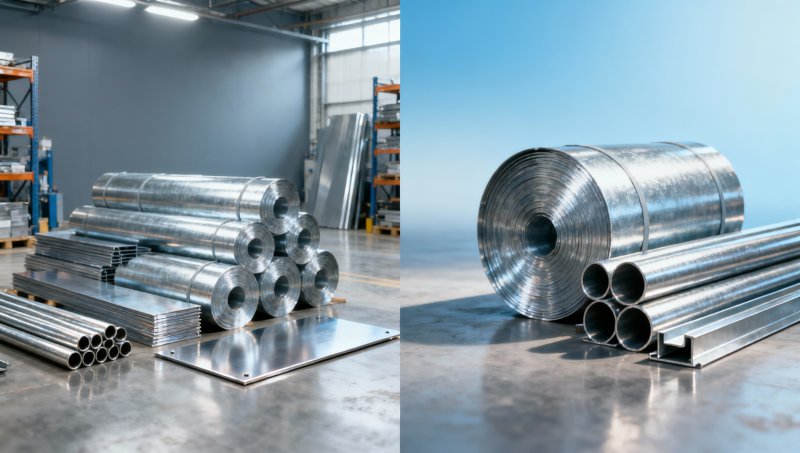
In steel sourcing, the lowest quoted number rarely represents the lowest total cost. A galvanized steel sheet supplier affects coating consistency, dimensional accuracy, packaging quality, shipment timing, and after-sales response. For procurement teams, technical evaluators, and project managers, these factors directly influence installation speed, scrap rate, and the risk of project delays across a 2–8 week procurement cycle.
Stable quality is especially important when galvanized sheet is used together with structural sections, steel tubes, and fabricated assemblies. If zinc coating, thickness tolerance, or flatness varies from batch to batch, downstream forming, welding, punching, and assembly become harder to control. Quality problems may not appear in the quotation stage, but they usually appear during fabrication, site installation, or incoming inspection.
For distributors and commercial reviewers, supplier stability also means predictable communication, document readiness, and compliance support. International buyers often need mill test certificates, coating information, packing lists, and standard references such as ASTM, EN, JIS, or GB. A supplier that can provide these in a consistent 3-step document process reduces approval friction for finance teams and quality departments.
Hongteng Fengda serves this need as a structural steel manufacturer and exporter from China with experience in standard steel sections and customized solutions. For buyers managing mixed steel procurement, it is valuable to work with a partner that understands not only galvanized products, but also angle steel, channel steel, steel beams, and cold formed profiles used in the same project environment.
The main risks buyers face when selecting a galvanized steel sheet supplier
- Price-driven decisions that ignore coating uniformity, resulting in inconsistent corrosion protection between batches.
- Lead time promises without verified production capacity, which can turn a 15-day estimate into a 4-week delay.
- Incomplete technical communication on thickness range, width, surface finish, and tolerances, causing procurement rework.
- Insufficient export packaging and loading control, leading to edge damage, moisture exposure, or handling deformation.
A dependable supplier should therefore be evaluated as a production and risk-control partner, not only as a quotation source. This view helps both end users and enterprise decision-makers compare suppliers on the basis of lifecycle value rather than unit price alone.
What should you check before approving a supplier?
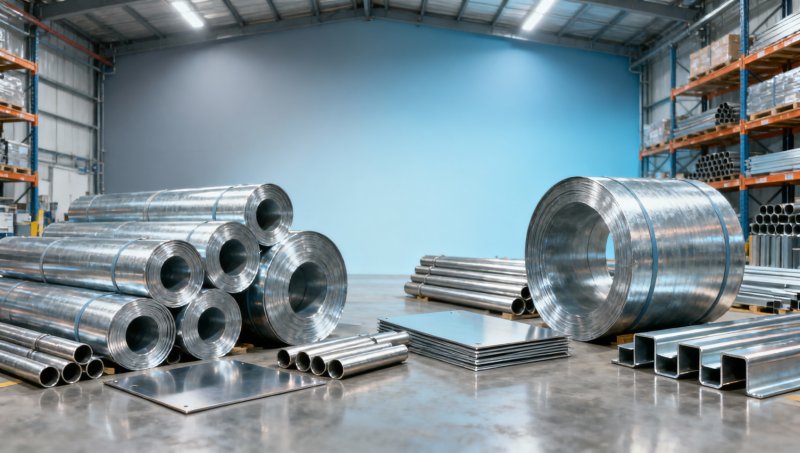
A practical supplier review should combine technical, commercial, and operational checks. In most B2B steel purchases, there are at least 5 key checkpoints: base material grade, zinc coating method, dimensional tolerance, delivery capability, and documentation support. When buyers compare hot dip galvanized steel price, they should first confirm whether the quoted product uses the same coating route and specification basis.
For technical teams, thickness range and tolerance control matter because they affect forming performance and fit-up. For project teams, delivery reliability matters because material arrival often connects to site sequencing. For finance and commercial teams, payment terms, packing scope, and claim handling matter because hidden costs can change the real procurement result by more than a small headline price difference.
The table below gives a clear framework for evaluating galvanized steel sheet suppliers in construction, industrial, and manufacturing projects. It can be used by sourcing teams, quality inspectors, and decision-makers as a shared review tool before RFQ approval.
This kind of evaluation prevents a common mistake: comparing unlike products as if they were the same. A lower hot dip galvanized steel price may reflect a different coating class, tolerance level, or packing standard. Without a like-for-like check, the quotation comparison is incomplete.
A 4-step approval process for procurement and engineering teams
- Confirm technical baseline: sheet type, thickness, coating route, end use, and applicable standards.
- Request manufacturing and quality details: tolerance control, inspection items, and packaging method.
- Review commercial terms: lead time, order quantity, shipment schedule, and claim response procedure.
- Run sample or first-batch validation: visual check, dimensional inspection, and document matching before volume release.
This process is useful for both first-time buyers and repeat importers. It also supports internal alignment between users, purchasers, QA personnel, and business approvers, which is often where steel buying delays occur.
How to compare galvanized sheet options, structural sections, and related specifications
Many buyers do not purchase galvanized sheet as a standalone item. They often source it together with structural profiles, tubes, or fabricated parts for a single project. In this context, supplier capability should include cross-product coordination. For example, a warehouse expansion, machinery frame, or prefabricated building may require galvanized sheet for cladding and cold-formed sections for support members within the same 1 procurement package.
At the mid-project stage, it is often efficient to integrate complementary profiles that match the same quality expectations. One example is C-Shaped Steel, widely used in construction frameworks, purlins, partition walls, storage racks, equipment housings, machinery frameworks, and renewable energy installations. Buyers value it for high load-bearing capacity, accurate dimensional control, and compatibility with galvanized, painted, or hot-dip finishes.
For technical evaluators, this type of profile is useful when a project needs lightweight yet robust support members with good resistance to deformation. Because it can be produced under common standards such as ASTM, EN, JIS, and GB, it fits international procurement environments where consistency across different steel categories matters. This is especially relevant when galvanized sheet, steel tube specifications, and support sections must be reviewed together.
The next table helps buyers compare common galvanized supply options and related steel components by purchase logic rather than by product name only. This is helpful for distributors, project engineers, and sourcing managers building a complete material package.
The key takeaway is that stable sourcing is rarely about one item alone. Suppliers with broader structural steel manufacturing experience can better coordinate tolerances, finishes, packing, and delivery windows across multiple product lines. That reduces communication loops and lowers the risk of mismatch on site.
When pre-galvanized sheet may be a better choice
Pre-galvanized sheet may fit projects that prioritize economy, controlled indoor use, and fast production for light-gauge fabrication. If the application is not highly exposed and the product will be formed into simple parts, it can be a practical option. However, buyers should still review edge exposure, post-processing method, and corrosion expectations over the intended service period.
This comparison also shows why quotations must reflect application conditions. An industrial enclosure, transport structure, or solar support system may require a different protection strategy than indoor shelving or light partition framing. The best supplier will help clarify this before order release, not after a claim occurs.
Standards, quality control, and delivery planning for stable results
Quality stability in steel supply depends on two linked systems: manufacturing control and delivery execution. Buyers should ask how raw material is managed, how dimensions are checked, how surface quality is reviewed, and how packaging is prepared for inland transport and export shipment. Even a technically acceptable batch can create problems if loading and packaging are not controlled carefully.
For internationally traded steel, standards such as ASTM, EN, JIS, and GB are often used as the baseline language between buyers and suppliers. These references do not eliminate the need for detailed technical confirmation, but they improve communication. A clear specification should define at least 6 points: product type, size range, tolerance expectation, coating route, applicable standard, and inspection document requirement.
Hongteng Fengda supports global customers across North America, Europe, the Middle East, and Southeast Asia with modern manufacturing facilities, strict quality control, and dependable lead times. This is particularly useful for buyers who need structural sections and customized steel components alongside galvanized products, because consistency across batches and shipments is often more important than a single low-price offer.
A realistic delivery plan should also be discussed early. Depending on order complexity, standard items may move on a shorter cycle, while customized profiles or mixed-product orders can require additional production coordination. For most project buyers, the more effective approach is to align 3 milestones in advance: drawing or specification confirmation, pre-shipment inspection readiness, and shipping document completion.
Common quality control points to review
- Appearance inspection for surface defects, edge condition, and visible coating irregularity before packing.
- Dimensional checks on thickness, width, length, and section accuracy with agreed tolerance references.
- Batch identification and document matching to reduce confusion during customs clearance and warehouse receiving.
- Export packing review for moisture protection, bundle integrity, labeling, and handling suitability.
Why delivery reliability affects total project cost
A delayed or mixed batch can interrupt fabrication schedules, crane booking, labor allocation, and site sequencing. In practice, one missed shipment window can affect several linked activities over 7–10 days. This is why experienced buyers often accept a reasonable market price from a proven supplier instead of chasing the lowest figure from an unverified source.
Stable delivery also helps financial approval. When schedules are predictable and documentation is clean, internal payment processing becomes easier. This benefits not only procurement staff but also finance reviewers and enterprise decision-makers who want lower operational uncertainty.
FAQ and practical advice before you send an inquiry
Before contacting a galvanized steel sheet supplier, buyers should prepare clear project information. This shortens the quotation cycle, improves technical accuracy, and reduces the chance of later changes. In many steel RFQs, 4 types of missing information cause delays: unclear specification, uncertain usage environment, incomplete quantity planning, and vague delivery expectations.
The questions below reflect what many information researchers, users, engineers, purchasing teams, and distributors ask during supplier screening. They can also be used internally as a checklist before commercial approval.
How do I compare hot dip galvanized steel price correctly?
Compare products on the same technical basis. Confirm sheet thickness, coating route, surface finish, dimensional tolerance, packing method, and delivery term. If one quote includes stronger packing, tighter tolerance, or more complete documents, the unit price may be higher but the total procurement risk may be lower. A valid comparison always starts with specification alignment.
When is pre-galvanized sheet suitable?
It is often suitable for light fabrication, indoor systems, and cost-sensitive projects where corrosion exposure is moderate and production speed matters. Buyers should still evaluate whether cut edges, formed corners, or post-processing steps will affect protection performance. If the environment is more demanding, a different galvanized approach may be more appropriate.
What should I confirm in steel tube specifications and galvanized pipe specifications?
Check outside dimensions, wall thickness, material basis, galvanizing method, end condition, and application scenario. Structural use, fluid service, support frames, and equipment fabrication may require different specification details. If tubes and sheets are purchased together, it is wise to confirm whether the same supplier can coordinate tolerances and delivery schedule across all items.
What information should be included in my inquiry?
Include product type, size or thickness range, estimated quantity, application, destination market, standard preference, coating requirement, and expected delivery window. If customization is needed, attach drawings or section details. With this information, a supplier can usually respond more efficiently on product selection, lead time, and quotation structure.
Why work with Hongteng Fengda for long-term steel sourcing
For buyers who need more than a simple transaction, Hongteng Fengda offers a practical sourcing advantage: structural steel manufacturing experience combined with export support for global markets. This means customers can discuss not only galvanized steel sheet supply, but also related structural sections, cold formed profiles, and customized steel components within one coordinated supply conversation.
Our strength is not only in manufacturing, but in helping customers reduce sourcing risks. We support projects that require standard specifications or OEM solutions, and we work to align quality control, production planning, and lead time expectations before shipment. For construction, industrial, manufacturing, warehousing, transport, and renewable energy applications, this coordination can save time across multiple approval stages.
If you are comparing suppliers now, you can contact us for specific support on 5 practical topics: parameter confirmation, product selection, lead time planning, customized structural steel solutions, and documentation or standard requirements. We can also discuss sample support, mixed steel orders, packaging expectations, and quotation details for international delivery.
A useful next step is to send your drawings, size list, coating expectations, target standard, and required delivery schedule. With that information, we can help you evaluate the right galvanized sheet option, review related structural components, and build a more stable sourcing plan for your project.
Please give us a message


Please enter what you want to find