For large-scale building works, selecting the right piping is critical to safety, cost control, and long-term durability. Working with reliable galvanized pipe manufacturers for construction projects helps secure stable quality, meet standards, and reduce costly delivery or performance risks.
This article explains what to check before buying galvanized steel pipe for demanding construction use. It also shows how supplier capability, coating quality, compliance, and logistics affect total project outcomes.
Why a structured selection process matters
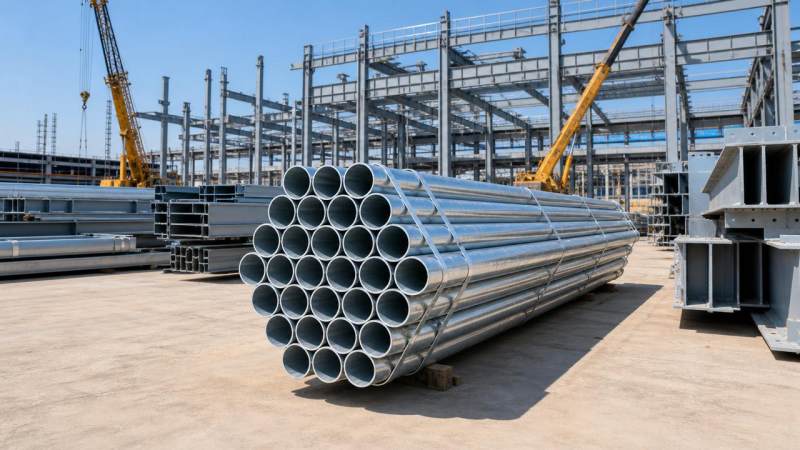
Large construction projects involve long schedules, multiple contractors, and strict inspection standards. A poor pipe decision can trigger corrosion issues, welding rework, schedule delays, and budget overruns.
That is why many buyers compare galvanized pipe manufacturers for construction projects using a practical checklist. A structured review makes technical decisions clearer and sourcing results more predictable.
It also helps separate low-price offers from truly dependable supply partners. In steel-intensive projects, consistency often matters more than the cheapest initial quotation.
Core checks when choosing galvanized pipe
Use the following points to evaluate galvanized pipe manufacturers for construction projects before confirming specifications, contracts, or shipment plans.
- Confirm base steel grade, pipe dimensions, wall thickness, and load requirements match the structural or utility design drawings and local construction code.
- Check whether the galvanizing method, zinc coating thickness, and surface finish fit the corrosion exposure level of the project environment.
- Verify compliance with ASTM, EN, JIS, or GB standards, and request mill test certificates plus third-party inspection reports before shipment.
- Review tolerance control for diameter, straightness, wall thickness, length, and thread accuracy to avoid installation delays on site.
- Assess welding quality, seam integrity, and cut-end condition, especially for pipe used in structural frames, supports, or exposed assemblies.
- Confirm production capacity, lead time stability, and export packaging strength so deliveries remain reliable across phased construction schedules.
- Compare total landed cost, not only unit price, including coating life, maintenance reduction, transport, customs, and replacement risk.
- Check whether the supplier can offer customized steel components alongside pipe to simplify procurement across the broader steel package.
Material and coating quality
Galvanized steel pipe performs well because zinc protects the steel substrate. However, performance varies widely with coating uniformity, adhesion, and processing control.
Ask for coating thickness data and corrosion test information. For outdoor structures or humid industrial zones, stronger coating control usually delivers better lifecycle value.
Standards and documentation
Reliable galvanized pipe manufacturers for construction projects should provide full documentation. This includes grade confirmation, mechanical properties, dimensions, coating details, and batch traceability.
Documentation matters during inspection, customs clearance, and final project handover. Missing records often create delays even when the product itself is acceptable.
Supply integration with structural steel
Many projects need more than pipe alone. Roof systems, wall members, brackets, and light structural components often come from the same steel package.
For example, when pipe is used with purlins or wall framing, integrated sourcing can reduce coordination problems. One practical option is Z-beam for steel structure construction, wall beams, lightweight roofs, brackets, and light manufacturing support members.
Available in Q235B, Q345B, S275, S355, A36, A572 and other grades, this profile supports thicknesses from 6-25mm, lengths from 2-12m or customized, and ±1% tolerance. CE, SGS, BV, and ISO certifications also support international project use.
How requirements change by construction application
Outdoor structural supports
For exposed supports, canopies, or utility frameworks, corrosion resistance becomes a primary concern. Coating consistency and cut-edge protection deserve close review.
Dimensional stability also matters because field alignment affects assembly speed. Pipes with poor straightness can create cumulative installation errors.
Water, drainage, and service systems
When galvanized pipe is used in service lines, internal cleanliness, threading quality, and pressure suitability should be checked carefully. Surface appearance alone is not enough.
Be sure the selected product matches connection methods and operating conditions. Temperature, pressure, and fluid characteristics all influence service life.
Industrial buildings and steel workshops
Industrial sites often combine pipe with channels, beams, angle steel, and cold formed profiles. Here, procurement efficiency can be as important as individual product pricing.
Suppliers with broader structural steel capability can simplify scheduling and quality coordination. This is useful when the pipe package links to roof, wall, and support systems.
Commonly overlooked risks
Some issues seem minor during quotation review, but they often become major site problems later. Watch for these frequent gaps when comparing galvanized pipe manufacturers for construction projects.
Unclear zinc coating specifications
General claims like “galvanized finish” are not enough. Without measurable coating requirements, quality comparisons become unreliable and disputes become harder to resolve.
Overlooking transport and storage protection
Even good pipe can arrive damaged through poor bundling, moisture exposure, or weak export packing. Packaging should match long-distance shipping conditions.
Ignoring production consistency
A good sample does not guarantee stable bulk supply. Ask about process control, inspection frequency, and how the supplier handles multi-batch orders.
Choosing by price alone
Low pricing may hide thinner coating, weak tolerances, or unstable delivery. Those issues usually cost more during installation and maintenance than initial savings justify.
Practical steps for better sourcing decisions
- Define the application clearly, including environment, loading, joining method, exposure level, and required service life.
- Prepare a technical comparison sheet covering grade, size range, coating, standard, tolerance, and inspection items.
- Request certificates, sample photos, testing records, and packing details before placing a bulk order.
- Compare delivery schedules against the construction sequence, especially for phased or multi-location projects.
- Favor suppliers with strong export experience and broader structural steel support if the project includes integrated steel products.
China-based structural steel exporters with modern facilities can offer an advantage when capacity, customization, and standard compliance are all required together.
Hongteng Fengda supplies structural steel products for global projects, including angle steel, channel steel, steel beams, cold formed profiles, and customized components. Compliance with ASTM, EN, JIS, and GB helps support diverse project specifications.
FAQ about galvanized pipe selection
How do I compare galvanized pipe manufacturers for construction projects fairly?
Use one specification sheet for all quotations. Compare steel grade, coating thickness, tolerances, standards, inspection scope, packaging, and delivery terms side by side.
What documents should always be requested?
Request mill test certificates, dimensional inspection results, coating data, origin information, and third-party reports when needed by the project or destination market.
Is galvanized pipe always the best option?
Not always. Suitability depends on corrosion environment, mechanical demand, connection method, and lifecycle budget. It is often a strong choice for many steel construction applications.
Final decision and next steps
Choosing the right galvanized pipe is not only about price or appearance. It requires careful review of steel grade, coating performance, standards, tolerances, delivery reliability, and project fit.
By evaluating galvanized pipe manufacturers for construction projects with a clear checklist, buyers can reduce sourcing risk and improve long-term project performance.
Start by confirming technical requirements, then shortlist suppliers with proven export capability, strong quality control, and coordinated structural steel support. That approach leads to safer, more efficient construction results.
Please give us a message


Please enter what you want to find