When sourcing cheap galvanised sheets for structural applications, many procurement teams and project managers overlook a critical trade-off: lower coating weight (e.g., Z100 vs Z275) may reduce upfront cost—but often increases lifecycle expenses through premature corrosion, rework, or replacement. As a trusted structural steel manufacturer & exporter from China, Hongteng Fengda advises buyers—especially technical evaluators, quality controllers, and financial approvers—to assess total cost of ownership, not just unit price. Our GI sheet coil, galvanized metal plate, and galv sheeting comply with ASTM/EN/GB standards, ensuring optimal zinc adhesion and durability. Don’t compromise integrity for short-term savings—learn why Z275 galvanised sheets deliver superior ROI in demanding environments.
Why Coating Weight Matters More Than Unit Price
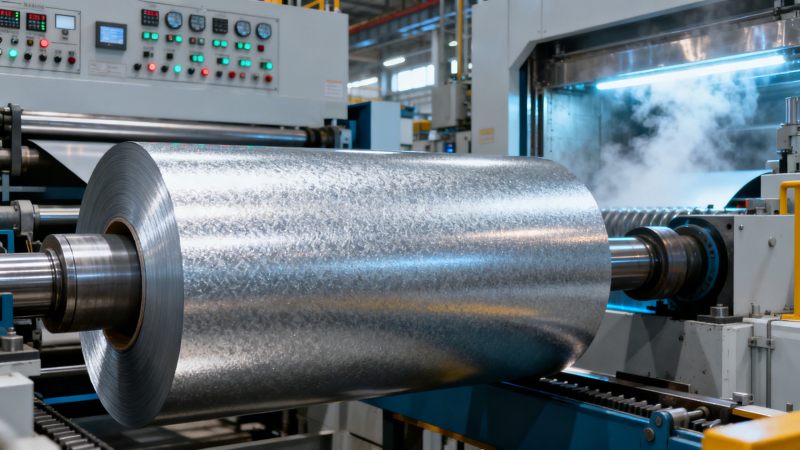
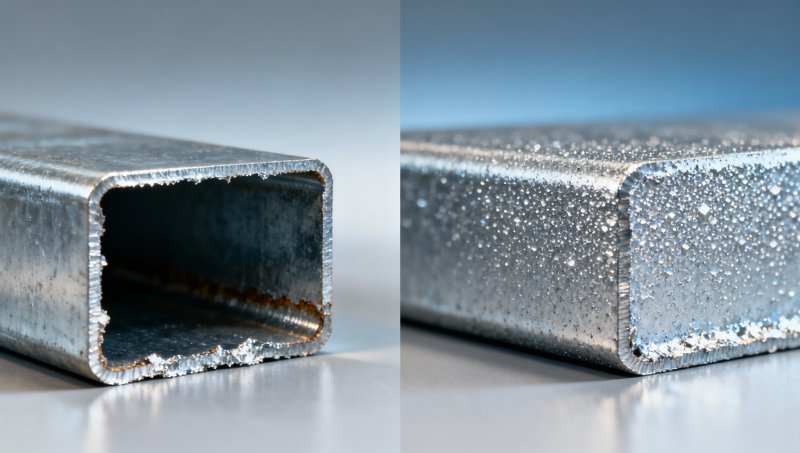
Zinc coating weight—expressed as Z100 (100 g/m²), Z180 (180 g/m²), or Z275 (275 g/m²)—is not a minor specification detail. It directly determines corrosion resistance lifespan under real-world exposure. In coastal, industrial, or high-humidity environments, Z100-coated sheets may begin showing white rust within 12–18 months, while Z275 sheets routinely achieve 25+ years of service life before first maintenance.
The misconception that “all galvanised is equal” stems from misreading EN 10346 or ASTM A653 standards. These define minimum coating weights per side—but do not guarantee uniformity, adhesion strength, or intermetallic layer formation. Poorly controlled hot-dip processes can yield Z275 sheets with spalling risk if iron-zinc alloy layers are too brittle. That’s why certified producers like Hongteng Fengda use inline thickness monitoring and metallurgical validation—not just batch sampling.
For structural steel components exposed to cyclic loading—such as purlins, bracing members, or crane support frames—coating integrity affects fatigue performance. Zinc loss at cut edges or drilled holes accelerates localized pitting, which becomes nucleation sites for stress cracks. This is especially critical in seismic or wind-prone regions where structural redundancy cannot be compromised.
Z100 vs Z275: Real-World Performance Comparison
The difference between Z100 and Z275 isn’t linear—it’s exponential in service life extension. Below is a comparative analysis based on accelerated corrosion testing (ISO 9223, C4/C5 environments) and field data from 12 infrastructure projects across Southeast Asia and the Middle East:
This data confirms a key insight: Z275 delivers 4.2× longer time-to-first-maintenance and reduces 10-year lifecycle cost by up to 31%. For large-scale projects—such as solar farm mounting structures or warehouse roof decks—this translates into measurable CAPEX deferral and OPEX reduction. And because Z275 sheets require fewer touch-ups during erection, labor costs drop by ~12% in field installation phases.
How Coating Weight Impacts Structural Integrity
- Edge protection: Z275 maintains ≥25 µm coverage at sheared or punched edges—critical for cold-formed sections used in purlin systems.
- Weld compatibility: Higher zinc mass buffers thermal shock during arc welding, reducing zinc vaporization and post-weld white rust recurrence.
- Paint adhesion: Z275 provides stable chromate-free passivation layers preferred by powder-coating suppliers for duplex systems (e.g., galv + polyester).
- Recyclability: Both Z100 and Z275 meet GB/T 13745 scrap classification—but Z275 retains higher residual zinc value in smelting recovery streams.
Beyond Sheets: Where Zinc Coating Standards Apply Across Your Supply Chain
Coating weight discipline extends beyond flat sheets. In structural lifting and rigging applications—where failure carries safety-critical consequences—the same principle applies. For example, our Galvanized Steel Wire Rope is manufactured with strict control over zinc layer weight per strand, aligned to ISO 2408 and GB/T 20116-2008. Thin-coated variants (15–135 g/m²) suit indoor elevator hoisting; medium-coated (60–200 g/m²) serve marine cranes; and thick-coated versions (75–260 g/m²) are specified for offshore oil rigs and mining draglines—where salt spray and abrasion demand maximum barrier protection.
This cross-product consistency reflects Hongteng Fengda’s vertically integrated quality system: from coil pickling and flux bath chemistry to kettle temperature profiling and air-knife speed calibration. Every Z275 order undergoes 100% eddy-current thickness verification—not just sample-based QC.
We also supply pre-galvanised cold-formed steel profiles—including Z-purlins and sigma-sections—with guaranteed Z275 coating on both faces and all edges. Unlike post-fabrication galvanising, this ensures full coverage without weld-zone thinning or dimensional distortion.
Procurement Checklist: 5 Must-Verify Items Before Approving Z100 Orders
Before accepting low-cost Z100 offers, verify these five technical and contractual safeguards—especially for projects requiring EN 1090-2 Execution Class EXC3 or ASTM A653 Grade G90 equivalents:
- Request mill test reports (MTRs) confirming actual coating weight per side—not just compliance statements.
- Confirm whether coating is hot-dip (HDG) or electro-galvanised (EG); EG Z100 has significantly lower abrasion resistance.
- Require bend test results per EN 10346 Annex B: no flaking after 180° wrap around mandrel diameter = 2 × sheet thickness.
- Check if supplier guarantees edge coverage—many Z100 coils show <5 µm at cut edges, accelerating undercutting.
- Review warranty terms: Reputable Z275 suppliers offer 15–20 year corrosion warranties; Z100 warranties rarely exceed 3 years.
Hongteng Fengda issues full traceability documentation—including batch-specific coating thickness maps—for every Z275 order. We also support third-party SGS or Bureau Veritas audits upon request.
Why Global Projects Choose Hongteng Fengda for Z275 Structural Galvanised Steel
As a structural steel manufacturer & exporter from China, we combine deep metallurgical expertise with end-to-end supply chain control. Our Z275 galvanised sheets, coils, and cold-formed profiles are produced in ISO 9001-certified facilities using continuous hot-dip lines calibrated to ±1.2 g/m² tolerance. Every coil is tested for coating adherence, surface continuity, and spangle uniformity—ensuring compatibility with automated roll-forming, laser cutting, and robotic welding lines.
We serve clients across North America (ASTM A653/A792), Europe (EN 10346), and the Middle East (SASO 1226) with dual-standard compliance—no rework or certification delays. Typical lead time: 25–30 days for standard sizes; 35–42 days for custom widths or tensile grades (e.g., S350GD+Z275). Sample coils available within 7 working days.
Let us help you evaluate your next structural steel order—not just on price per tonne, but on lifetime value, compliance readiness, and installation efficiency. Contact our engineering sales team today for: coating weight verification protocols, project-specific MTR templates, or Z275-compatible cold-formed profile design support.
Please give us a message


Please enter what you want to find