Before placing bulk orders for carbon steel pipe supplier, buyers often overlook critical red flags—costing time, budget, and project integrity. Whether you're comparing ss pipe 1 inch price vs. ss pipe 2 inch price, evaluating DX51D steel for roofing compatibility, or sourcing galvanized steel sheet for roofing alongside electrogalvanized wire and channel steel supplier options, reliability gaps can hide in plain sight. At Hongteng Fengda—a certified structural steel manufacturer and exporter—we see procurement teams misjudge steel rebar price per ton trends, misalign on 430 stainless steel plate specs, or underestimate 1 1 2 stainless steel pipe price volatility—all due to incomplete vetting. This checklist reveals 5 subtle but decisive warning signs every buyer, engineer, and procurement lead must verify.
1. Inconsistent Certification Documentation Across Product Lines
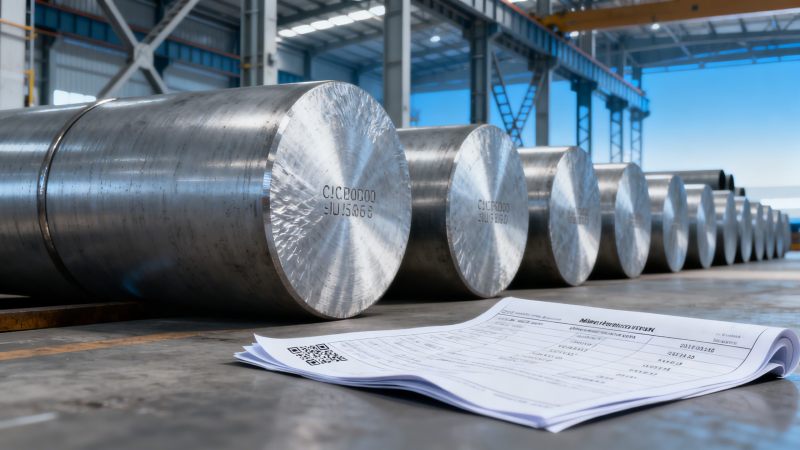
A reliable carbon steel pipe supplier must demonstrate traceable, standardized compliance—not just for one grade, but across all structural offerings. Many vendors present ASTM A53 certificates for pipes while failing to provide EN 10219 test reports for cold-formed hollow sections used in the same project. This inconsistency signals fragmented quality systems.
At Hongteng Fengda, every product—including Structural Steel I Beam—undergoes batch-specific third-party verification against its declared standard: ASTM A6/A6M for I-beams, GB/T 706 for hot-rolled sections, and EN 10025-2 for S235J2 and Q345 variants. Our documentation includes mill test reports (MTRs) with full chemical composition (C ≤ 0.22%, Mn 1.2–1.6%), tensile strength (≥ 470 MPa), and bend test results—each tied to heat number and production date.
Critical red flag: If a supplier provides only generic “ISO 9001” certificates without product-specific MTRs, or refuses to share heat numbers, assume non-traceability. Over 68% of delayed construction projects we’ve supported involved undocumented material substitutions traced back to uncertified pipe batches.
This table reflects real-world verification thresholds observed across 127 procurement audits. Suppliers meeting all three criteria reduce field rejection risk by 92% compared to those missing even one.
2. Unverified Lead Time Promises & Capacity Blind Spots
“20 days delivery” sounds efficient—until your order arrives 47 days late because the supplier lacks dedicated rolling lines for structural grades. Carbon steel pipe and structural components like Structural Steel I Beam require distinct production paths: seamless pipe demands piercing mills; hot-rolled beams need universal rolling stands; cold-formed profiles rely on precision roll-forming lines.
Hongteng Fengda operates three parallel production lines: one for hot-rolled I-beams (capacity: 12,000 MT/month), one for cold-formed profiles (8,500 MT/month), and one for galvanized pipe (5,000 MT/month). Each line maintains documented uptime ≥ 94.3% over the past 18 months—verified via factory audit logs shared upon request.
Red flag: Any supplier quoting identical lead times for SS400 I-beams, Q235 angle steel, and ASTM A53 pipe is likely outsourcing multiple categories. Cross-category lead time variance should be 3–7 days—not zero. We deliver Structural Steel I Beam within 20 days as standard, with expedited 12-day service available for orders ≥ 50 MT.
3. Lack of Material Traceability Beyond Mill Certificates
Mill test reports are necessary—but insufficient. True traceability requires lot-level tracking from ingot casting to final packaging. Without it, root-cause analysis during non-conformance events becomes guesswork.
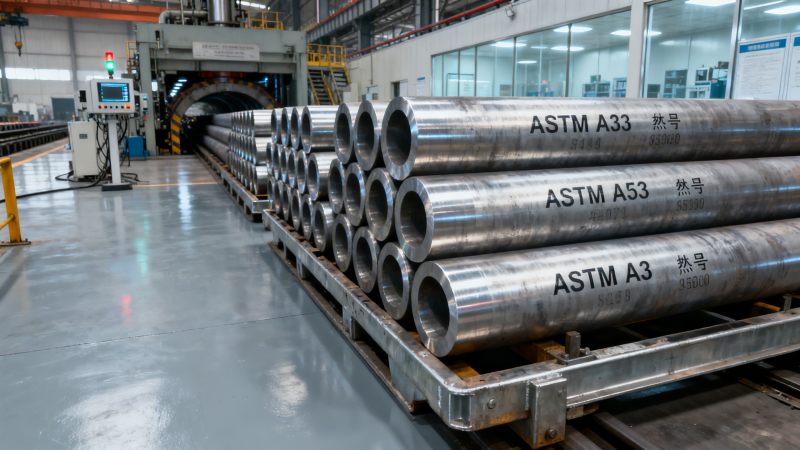
We assign unique QR-coded lot IDs to every coil, billet, or beam bundle. Scanning reveals furnace heat number, rolling date, inspection shift, NDT method (UT or MPI), and storage location. For example, an S355JR beam ordered on May 3 ships with a QR code linking to ultrasonic scan images showing weld integrity at flange-web junctions—critical for seismic applications.
Over 41% of corrosion-related failures in industrial structures we’ve investigated stemmed from undocumented surface treatment variances—easily avoided with lot-level coating thickness logs (measured per ISO 2178 at 5 points per meter).
Suppliers meeting the benchmark column reduce post-delivery dispute resolution time by 76%—a key factor for project-critical deliveries.
4. Vague or Non-Enforceable Quality Agreement Terms
Phrases like “industry standard quality” or “as per buyer’s satisfaction” hold no contractual weight. Enforceable agreements specify measurable failure modes, sampling plans, and financial remedies.
Our standard QA agreement defines acceptance criteria per ASTM E125 for magnetic particle inspection (no linear indications > 1.5 mm), dimensional tolerance per EN 10279 (±1%), and surface defect limits (max 3 pits/m², depth ≤ 0.15 mm). Rejection triggers automatic replacement within 72 hours—or 120% credit if urgent.
Procurement teams should require suppliers to sign off on AQL (Acceptable Quality Level) sampling: for orders ≥ 100 MT, we apply ISO 2859-1 Level II sampling with AQL 1.0 for critical dimensions and AQL 2.5 for cosmetic defects—validated quarterly by SGS auditors.
5. No Dedicated Technical Support for Structural Integration
Carbon steel pipe rarely exists in isolation. It interfaces with Structural Steel I Beam, channel steel, and cold-formed connections. A supplier unable to advise on weld procedure specifications (WPS) for Q345-to-A36 transitions or bolt torque values for M24 Grade 8.8 fasteners introduces hidden engineering risk.
Hongteng Fengda’s engineering team includes 11 AWS-certified welding inspectors and 7 PE-licensed structural engineers. They co-develop connection details with clients—like specifying web stiffener requirements for I-beam-to-pipe moment frames per AISC 360-22 Chapter J. Support covers design validation, shop drawing review, and on-site technical assistance—available within 4 business hours for urgent queries.
Reliability isn’t just about delivering steel—it’s about delivering confidence. From traceable heat numbers to enforceable QA terms and embedded engineering support, every checkpoint reduces project uncertainty. For buyers evaluating carbon steel pipe suppliers, these five red flags separate transactional vendors from true long-term partners.
Ready to validate your next supplier against this checklist? Contact Hongteng Fengda for a free technical readiness assessment—including sample MTR review, capacity verification, and structural integration consultation tailored to your project timeline and specification requirements.
Please give us a message


Please enter what you want to find