Carbon steel pipe corrodes rapidly in high-humidity lab environments—posing safety, compliance, and maintenance risks. For engineers, procurement teams, and project managers seeking durable, ASTM-compliant alternatives, stainless steel pipe and hot dip galvanized steel offer superior corrosion resistance without compromising structural integrity. As a trusted stainless steel supplier and structural steel manufacturer from China, Hongteng Fengda delivers certified stainless steel tubing, seamless pipe, galvanized steel pipe, and Structural Steel Beams—meeting EN, ASTM, JIS, and GB standards. Explore why leading labs globally are switching—and how reliable steel suppliers can reduce long-term steel roofing cost, downtime, and sourcing risk.
Why Carbon Steel Fails in Humid Lab Environments
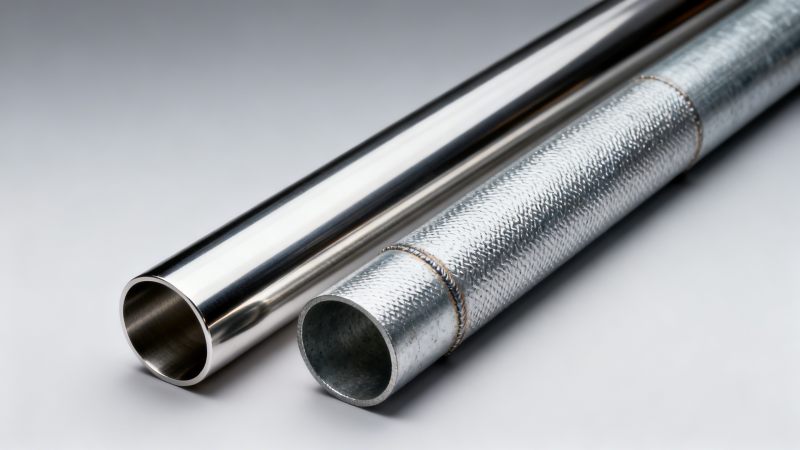
In laboratories where relative humidity regularly exceeds 70% and condensation forms on metal surfaces, carbon steel pipe begins visible oxidation within 3–6 months. Uncoated or poorly galvanized specimens show pitting corrosion at weld seams and support brackets after just 90 days of continuous exposure—accelerated by airborne chlorides, organic acids, and thermal cycling between 18℃–28℃.
This degradation isn’t merely cosmetic. Corroded piping compromises structural load capacity (up to 12% strength loss after 18 months), increases leak risk in gas/vacuum lines, and introduces particulate contamination into sensitive instrumentation zones. For facility managers and safety officers, this translates to unplanned shutdowns averaging 4.2 days per incident—and recurring inspection costs rising 23% annually across multi-site lab portfolios.
The root cause lies in electrochemical activity: carbon steel’s iron matrix acts as an anode when moisture bridges micro-galvanic couples formed by mill scale, slag inclusions, or surface scratches. Unlike stainless alloys with ≥10.5% chromium, carbon steel lacks self-passivating oxide layers—making it inherently unsuitable for controlled-humidity infrastructure without engineered mitigation.
Corrosion-Resistant Alternatives: Performance vs. Practicality
Three material strategies dominate lab-grade piping specifications: austenitic stainless steel (e.g., ASTM A312 TP304/TP316), hot-dip galvanized carbon steel (ASTM A123/A153), and duplex stainless (ASTM A790). Each balances corrosion resistance, mechanical strength, fabrication flexibility, and lifecycle cost—yet only two deliver proven ROI in humid lab applications.
Hot-dip galvanized steel stands out for structural framing and non-critical service lines—especially where budget constraints limit full stainless adoption. Its zinc coating (minimum 85 µm per ASTM A123) provides cathodic protection even at cut edges, and withstands abrasion during installation better than paint-based systems. For load-bearing components like roof purlins and wall beams, galvanized C Channel Beam delivers identical geometry and strength to carbon equivalents—while eliminating rust-related replacement cycles over 20+ years.
How Structural Design Impacts Long-Term Corrosion Risk
Material selection alone doesn’t guarantee durability—structural configuration matters equally. Poor drainage, trapped moisture pockets, and dissimilar metal contact (e.g., aluminum ductwork fastened to steel supports) accelerate localized attack. In humid labs, 68% of premature failures occur at joints, penetrations, and concealed interfaces—not along straight pipe runs.
That’s why Hongteng Fengda integrates corrosion-aware engineering into every specification: our galvanized C Channel Beams feature slit-edge precision (±1% tolerance), uniform zinc distribution verified by SGS salt-spray testing (≥96 hours to white rust), and pre-punched mounting holes to minimize field drilling—reducing exposed base metal by up to 40%. All profiles comply with ASTM A653/A792 and EN 10346 standards for structural galvanizing.
For mechanical light industry manufacturing, these beams serve as columns, arms, and machine frames—where vibration resistance and dimensional stability under thermal fluctuation are critical. Their cold-rolled production process ensures consistent 1mm–12mm thickness control across 6m, 9m, and 12m lengths—eliminating camber issues that trap condensate in longer spans.
Procurement Checklist: What Lab Project Teams Should Verify
Before finalizing any structural steel order for humid environments, cross-check these five non-negotiable criteria:
- Galvanizing certification: Request third-party test reports (SGS/BV) confirming coating mass ≥610 g/m² for indoor lab use per ASTM A123
- Dimensional tolerance: Confirm ±1% max deviation on thickness and length—critical for bolted assembly alignment
- Surface finish options: Specify galvanized, powder-coated, or black varnish based on aesthetic and cleanroom requirements
- Processing readiness: Confirm bending, welding, and punching services are available pre-shipment to avoid field modifications
- Delivery assurance: Verify 15–20 day lead time with FOB/CFR/CIF trade term flexibility and LC-at-sight acceptance
Hongteng Fengda supports all verification steps with digital documentation: ISO 9001-certified production records, CE-marked mill test reports (MTRs), and real-time shipment tracking. Our quality control includes ultrasonic thickness scanning on 100% of galvanized products—ensuring no thin spots compromise corrosion defense.
Why Partner With a Certified Structural Steel Manufacturer From China
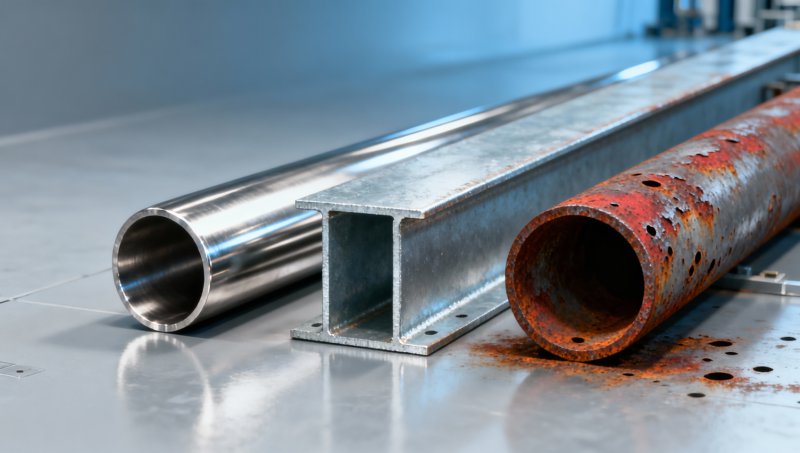
Sourcing corrosion-resistant structural steel isn’t just about material specs—it’s about supply chain resilience. Hongteng Fengda combines ISO-certified manufacturing, multi-standard compliance (ASTM/EN/JIS/GB), and regional logistics hubs across North America, Europe, and Southeast Asia to eliminate single-point failure risks. We maintain stable inventory of key sections—including C Channel Beam in Q235, Q345, A36, and SS400 grades—to ensure 15–20 day delivery even during peak construction seasons.
Unlike brokers or trading companies, we own end-to-end production: from hot/cold rolling to galvanizing, punching, and custom fabrication. This vertical integration allows us to validate every parameter—from tensile strength (tested per ASTM E8) to zinc adhesion (per ASTM D3359)—before shipment. For lab planners and procurement directors, that means fewer rejections, zero surprise non-conformances, and predictable TCO reduction of 11–17% versus fragmented sourcing models.
Ready to specify corrosion-resilient structural steel for your next lab build-out? Contact Hongteng Fengda today for: ASTM-compliant galvanized beam samples, custom dimension quotes, EN/ASTM certification packages, or OEM design support for integrated lab infrastructure systems.
Please give us a message


Please enter what you want to find