When sourcing hot rolled coiled steel or carbon steel coil suppliers, batch traceability is a critical—but often overlooked—quality safeguard. Yet many suppliers rarely disclose full traceability for hot rolled steel coils, HRC hot rolled coil, or GI steel coil batches. As a structural steel manufacturer and exporter, Hongteng Fengda ensures full lot-level traceability across all rolled coil steel, galvanized sheet metal coils, and coated galvanized coil shipments—backed by ASTM/EN/GB-compliant documentation. Before placing your first order, ask: Can you provide mill test reports, heat numbers, and origin logs? This guide helps procurement, QA, and project teams verify transparency—so you source with confidence, not compromise.
Why Batch Traceability Matters More Than You Think
In structural steel projects—especially those governed by ASTM A653, EN 10346, or GB/T 2518—the absence of verifiable batch traceability introduces real operational risk. A single non-conforming coil can delay fabrication by 7–15 days, trigger rework costing 12–18% of material value, or even invalidate third-party inspection approvals.
Unlike commodity-grade coils sold on open markets, certified structural-grade carbon steel coils require documented continuity from raw slab to finished coil: heat number → rolling batch → coating line log → packaging tag → shipping manifest. Without this chain, you lose the ability to isolate root cause during failure analysis—whether it’s weld cracking in cold-formed purlins or premature corrosion in roof cladding.
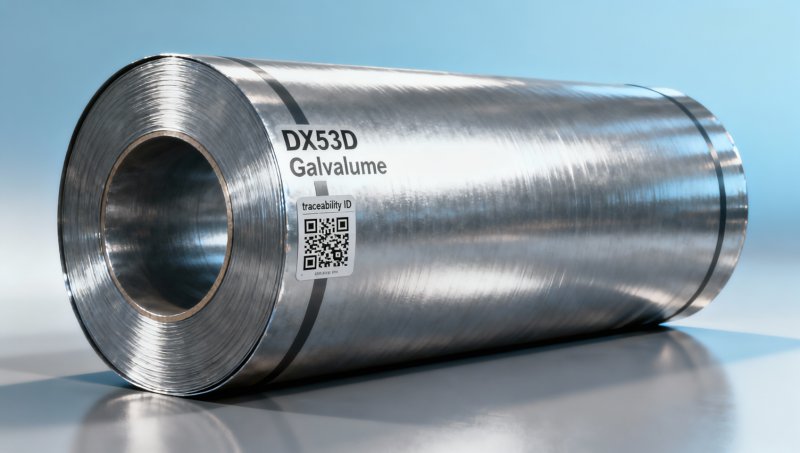
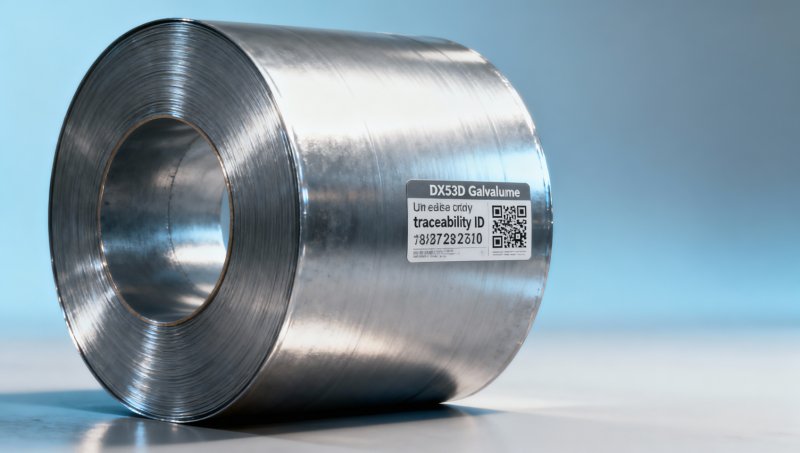
Hongteng Fengda assigns unique traceability IDs to every coil produced—covering DX53D Galvalume Steel Coil and all structural profiles—and provides full digital audit trails upon request. This isn’t just compliance—it’s built-in accountability.
What to Ask Before Your First Carbon Steel Coil Order
Procurement, QA, and engineering teams should treat traceability as a non-negotiable technical requirement—not an optional add-on. Here are five verification questions with actionable thresholds:
- Can you share the mill test report (MTR) before shipment? — It must include heat number, chemical composition (C ≤ 0.12%, Mn ≤ 0.60%), tensile/yield values, and surface inspection notes.
- Is each coil labeled with a permanent, scannable ID? — Labels must survive outdoor storage ≥90 days and remain legible after uncoiling.
- Do you retain production logs for ≥5 years? — Includes rolling temperature profiles, tension control data, and zinc/aluminum-zinc bath chemistry records.
- Can you trace back to the original steelmaking furnace batch? — Required for ASME Section II or nuclear-grade applications.
- Are MTRs issued per coil—or per heat? — Per-coil reporting eliminates blending risk; per-heat reporting only meets minimum ASTM A1008 requirements.
Failure to answer “yes” to at least four of these signals elevated supply chain exposure—particularly for projects requiring ISO 9001:2015 Clause 8.5.2 or EN 1090-1 EXC2 certification.
Traceability Compliance Across Key Standards
This granular documentation enables rapid root-cause resolution—if a DX53D Galvalume Steel Coil shows edge cracking during roll-forming, our system pinpoints whether the issue originated in hot strip mill tension control or final annealing parameters.
How Traceability Impacts Real-World Applications
For construction teams installing roofs, walls, or modular houses, traceability ensures consistent formability across 200–3000mm cut lengths. For automotive OEMs using muffler or exhaust pipe components, it validates that yield strength remains within 270–300 MPa—even after high-temperature bending cycles.
Without traceability, discrepancies compound: a coil marked “DX53D” may deliver 245 MPa yield instead of the guaranteed 270 MPa—causing springback in precision stamping lines or reduced fatigue life in HVAC ductwork. That’s why Hongteng Fengda tests 100% of coils for mechanical properties—not just sample lots—and archives results against each coil ID.
Our DX53D Galvalume Steel Coil also delivers higher heat reflectivity (≥65%) and superior adhesion (≥4.5 N/mm) versus standard DX51D—critical for solar-integrated roofing or food-grade appliance housings where coating integrity affects thermal efficiency and hygiene compliance.
Why Partner With Hongteng Fengda for Traceable Structural Steel
We’re not just coil suppliers—we’re structural steel partners embedded in your quality workflow. From initial RFQ to final delivery, we align with your internal controls:
- Pre-order verification: Free access to live traceability dashboard showing real-time coil status, MTR preview, and compliance flags.
- Custom labeling: QR-coded tags with bilingual (EN/ES/AR) metadata—compatible with SAP MM and Oracle SCM systems.
- Third-party validation: Option to schedule SGS/BV audits of traceability records prior to bulk shipment.
- Delivery certainty: 98.7% on-time dispatch rate across 12+ global ports, backed by 3-stage logistics monitoring (factory → port → vessel).
Whether you’re evaluating coil options for a 50,000-unit prefabricated housing project or sourcing for Tier-1 automotive component assembly, our traceability framework reduces decision latency, cuts inspection overhead by ~30%, and supports long-term warranty claims with auditable evidence.
Get Started Today
Request your free traceability checklist, sample MTR, or coil-specific compliance summary. We’ll help you validate specifications, confirm lead times (standard: 25–35 days; expedited: 14–21 days), and prepare custom documentation for your next audit cycle.
Please give us a message


Please enter what you want to find