Why does the quote from carbon steel tube suppliers vary so much?
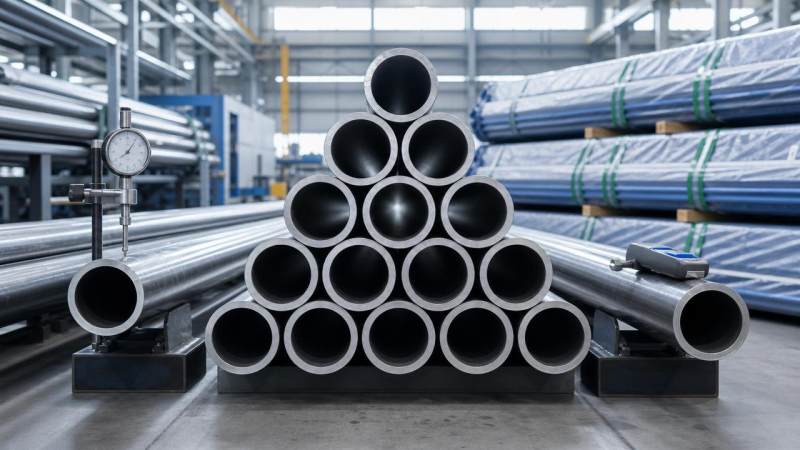
Price gaps usually come from more than raw material cost. They often reflect grade control, tube tolerance, testing scope, coating requirements, and delivery reliability.
That is why experienced buyers do not treat a quotation as a simple number. It is often a compressed summary of manufacturing capability.
When comparing carbon steel tube suppliers, the real question is not who is cheapest. The better question is what exactly is included, controlled, and guaranteed.
In practical sourcing, a lower offer can become expensive later through off-spec wall thickness, delayed shipment, or incomplete test documents.
For construction and industrial projects, this matters even more. Tubes often connect with larger structural steel systems, where one missing detail can slow installation.
A reliable Chinese exporter with broad steel experience usually understands this chain effect. Companies such as Hongteng Fengda, known for structural steel supply and export, support buyers by combining production stability, standard compliance, and consistent lead time control.
Before requesting a quote, what should be defined first?
Many sourcing problems start before the inquiry is sent. If the request is vague, even strong carbon steel tube suppliers can only return rough pricing.
A useful RFQ should clarify the tube’s application, because a structural support line, mechanical assembly, and fluid system need different controls.
It also helps to state the standard clearly. ASTM, EN, JIS, and GB may look comparable on paper, but acceptance rules can differ.
The same applies to dimensions. Outer diameter, wall thickness, length, and tolerance range should be listed with no room for interpretation.
If surface treatment is required, include it early. Black, oiled, painted, galvanized, or further fabricated finishes can change both cost and production timing.
This is also where related product experience matters. For example, suppliers handling items like Premium Galvanized Cold Drawn Steel Wire Rod (1.6mm - 6mm) often show stronger control over zinc coating, dimensional consistency, and export packaging across steel categories.
- State grade, standard, and end use.
- Confirm OD, wall thickness, length, and tolerance.
- Specify quantity by size, not only total tonnage.
- Add testing, coating, packing, and shipment terms.
The clearer the RFQ, the easier it becomes to compare carbon steel tube suppliers on equal terms.
How can you tell whether a supplier is a trader, a mill, or a capable export partner?
This is one of the most common search questions, and for good reason. The answer affects price, flexibility, and problem-solving speed.
A mill usually offers better control over production scheduling, raw material traceability, and process inspection. A trader may offer broader sourcing coverage, but sometimes with less process visibility.
The better choice depends on the project. What matters is whether the supplier can prove who makes the tube and who manages quality responsibility.
Ask for mill test reports, production photos, factory audit materials, and recent export records. These are harder to improvise than a polished website.
It is also useful to check whether the supplier already exports structural steel products to regions with strict documentation rules. That usually indicates more mature compliance habits.
A capable export partner is not only a factory. It is a supplier that can keep information, quality, and logistics aligned.
Which quality checks matter most before comparing carbon steel tube suppliers?
Quality control sounds broad, so it helps to narrow it down. In most tube purchases, seven checks are worth confirming before the first serious quote comparison.
- Raw material traceability and heat number control.
- Dimensional tolerance on diameter, wall, and length.
- Mechanical properties matching the requested grade.
- Weld seam quality or seamless process consistency.
- Surface condition, including rust, pits, or coating defects.
- Third-party or in-house inspection availability.
- Packing method for long-distance export shipment.
These points directly affect usability on site. A tube can pass basic appearance checks and still fail during fabrication or installation.
In actual projects, dimensional control causes many hidden losses. Small deviations can create cutting waste, welding delays, or fit-up problems.
The same logic applies to coated steel items across a supply portfolio. If a supplier can manage zinc coating from 40g/m² to 300g/m² on related steel products, that often suggests stronger process discipline overall.
So when reviewing carbon steel tube suppliers, ask not only for certification, but also for how those results are controlled batch by batch.
Is the lowest tube price really the lowest total cost?
Usually, no. The purchase price is only one part of the landed cost and not always the largest risk.
A lower quote can hide thinner actual wall thickness, reduced coating, looser packing, or longer production windows. Those items rarely look dramatic on paper.
More common is a mixed situation. One supplier offers a stronger unit price, while another offers lower waste, better documentation, and fewer delivery surprises.
That is why cost evaluation should include more than EXW or FOB figures. Freight readiness, customs documents, claim response, and replacement speed all matter.
If your project combines tubes with beams, channels, or cold formed sections, supplier coordination can reduce total sourcing friction. This is where broad structural steel exporters often have an advantage.
Hongteng Fengda, for example, operates across angle steel, channel steel, beams, cold formed steel profiles, and customized components. That wider capability can help align standards and shipment planning across one order schedule.
What delivery and document risks should be checked before placing the order?
Many sourcing issues appear after the quote is accepted. At that stage, changing suppliers is expensive, so pre-checking is essential.
Start with production lead time and ask whether it is based on rolling schedule, stock, or outsourced capacity. These are very different situations.
Then confirm export packing, marking, and document set. Mill test reports, packing lists, invoices, certificates of origin, and inspection reports should match the contract wording.
For galvanized or precision steel items, packaging quality matters more than many buyers expect. Moisture exposure and poor coil or bundle protection can damage otherwise acceptable material.
A relevant example is Premium Galvanized Cold Drawn Steel Wire Rod (1.6mm - 6mm), where coil weight, smooth finish, and protective zinc layer all require disciplined handling. The same export mindset benefits tube shipments.
- Ask for realistic lead time, not ideal lead time.
- Match every document to the PO and standard.
- Confirm packaging for sea freight and storage conditions.
- Define claim process before shipment, not after arrival.
So how do you shortlist carbon steel tube suppliers with more confidence?
A confident shortlist usually comes from structured comparison, not from instinct. Keep the process simple, but make it specific.
Use one RFQ format for all suppliers. Score each response on standard compliance, tolerance clarity, testing, lead time, packaging, and communication quality.
If two offers are close, the better option is often the supplier whose documents are clearer and whose exceptions are explained upfront.
This is especially true in cross-border steel sourcing. Stable production capacity and dependable export execution can save more money than a small unit-price reduction.
In the end, strong carbon steel tube suppliers should do three things well: quote accurately, manufacture consistently, and deliver with minimal surprises.
The next step is practical. List your required standards, dimensions, quantity split, testing scope, and delivery window. Then compare responses against those seven checks before moving forward.
Please give us a message


Please enter what you want to find