Why Manufacturer Selection Creates Real Procurement Risk
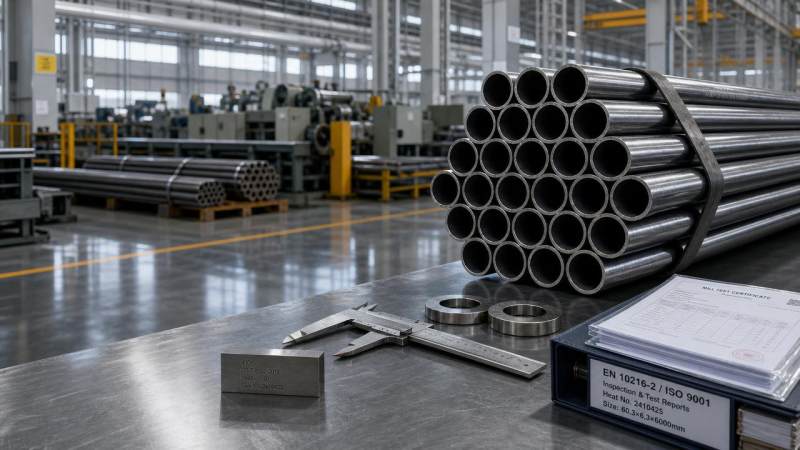
Choosing a carbon steel seamless pipe manufacturer is a high-impact sourcing decision for procurement teams, where inconsistent quality, unclear standards, delayed delivery, and weak documentation can create serious project risks. For global buyers in construction, industrial, and manufacturing sectors, understanding these risks early helps protect budgets, schedules, and compliance requirements. This guide explores the key factors procurement professionals should evaluate when selecting steel suppliers and how reliable manufacturing, strict quality control, and transparent export support can reduce uncertainty.
A carbon steel seamless pipe manufacturer is not only a source of steel pipes. It becomes part of a buyer’s risk chain, influencing inspection results, shipment timing, project installation, and long-term asset reliability.
Procurement teams usually compare 3 to 5 suppliers before confirming orders. However, price comparison alone rarely reveals production capability, traceability, standard compliance, or export execution strength.
In steel sourcing, small differences in chemical composition, wall thickness tolerance, heat treatment, and documentation can create measurable consequences. A single nonconforming batch may delay fabrication for 7 to 20 days.
Common Risk Sources in Seamless Pipe Procurement
The most frequent risks appear before shipment, not after installation. Buyers should check whether the supplier controls raw material, rolling process, finishing, inspection, packing, and export documents.
- Unclear standards, such as mixing ASTM, EN, JIS, and GB requirements without confirming project specifications.
- Inconsistent dimensional control, especially outside diameter, wall thickness, straightness, and end finishing.
- Incomplete inspection records, including missing mill test certificates, heat numbers, or third-party inspection reports.
- Unstable lead times caused by limited stock, outsourced processing, or weak production scheduling.
A reliable carbon steel seamless pipe manufacturer should explain these risks before the purchase order is signed. Transparent communication is often a stronger quality signal than aggressive pricing.
How Risk Impacts Buyers Across Industries
Construction buyers may face delayed site installation, while industrial buyers may face pressure testing failures. Manufacturing buyers may lose production continuity if replacement material takes 2 to 4 weeks.
For export projects, risk is multiplied by distance. Once goods are loaded, correcting specification problems may involve customs, port storage fees, replacement production, and new freight arrangements.
Quality, Standards, and Documentation Checks
When evaluating a carbon steel seamless pipe manufacturer, procurement teams should verify whether quality control is process-based or only shipment-based. Final inspection alone is not enough.
A stronger supplier usually controls at least 5 inspection points: raw material review, production monitoring, dimensional measurement, mechanical testing, and final packing confirmation.
The following table shows practical checkpoints that help buyers separate capable steel manufacturers from traders or underprepared mills during early qualification.
The key conclusion is simple: documents must match the physical goods. A carbon steel seamless pipe manufacturer with disciplined traceability reduces disputes during inspection, customs clearance, and installation.
Standards Must Be Confirmed Before Pricing
Many sourcing errors begin with incomplete inquiries. A request that only states “seamless carbon steel pipe” may produce quotations based on different grades, sizes, and test requirements.
Procurement teams should define at least 6 items: standard, grade, outside diameter, wall thickness, length, surface condition, and inspection requirement. Project drawings should be shared when possible.
Mill Test Certificates and Traceability
A mill test certificate should show chemical composition, mechanical properties, heat number, standard reference, and inspection result. These records are essential for regulated industrial projects.
If the carbon steel seamless pipe manufacturer cannot provide clear documentation before payment terms are finalized, buyers should treat the order as higher risk.
Capacity, Lead Time, and Export Execution
Delivery risk is not limited to production speed. It includes rolling schedule, inspection arrangement, port booking, export documents, container loading, and response time during exceptions.
For standard specifications, typical preparation may require 7 to 15 days if stock is available. Customized sizes, coating, cutting, or special testing may require 2 to 6 weeks.
A dependable carbon steel seamless pipe manufacturer should provide realistic lead times instead of optimistic promises. Procurement teams need schedules that match project milestones, not only commercial expectations.
Supplier Capability Beyond One Product Category
Many steel projects require multiple structural components in one purchasing cycle. Working with a broader structural steel manufacturer can simplify coordination and reduce multi-supplier communication gaps.
Hongteng Fengda manufactures and exports structural steel from China, supplying angle steel, channel steel, steel beams, cold formed profiles, and customized components for global projects.
For buyers combining pipe procurement with transportation, construction, or industrial support materials, related products such as Rail may also be evaluated within the same supplier review.
Available material options include carbon steel and medium manganese steel, with models such as U74, U71Mn, PD2, PD3, BNbRE, Q235, 55Q, 50Q, U71, and 45Mn.
Typical parameters include 12m to 30m length, 3mm to 24mm thickness, 134mm to 170mm height, 68mm to 73mm head width, and ±1% tolerance.
This type of product integration matters when buyers need consistent steel supply for railway, bridge handrail, deck handrail, and heavy-duty structural applications.
Export Support Should Be Measured, Not Assumed
Export ability should be confirmed through service details. Buyers should ask how the supplier handles packing lists, commercial invoices, certificates, loading photos, and shipping coordination.
- Confirm technical specifications and applicable standards before issuing a purchase order.
- Approve drawings, tolerances, marking requirements, and inspection plans within 2 to 5 working days.
- Monitor production progress through photos, inspection updates, or scheduled reporting.
- Review export documents before shipment to avoid customs delays.
- Check loading records and final packing status before balance payment or dispatch.
This 5-step process helps procurement teams avoid preventable delays. It also makes supplier performance easier to evaluate across repeated steel orders.
Commercial Risks: Price, Payment, and Hidden Costs
A low quotation from a carbon steel seamless pipe manufacturer may look attractive, but procurement teams should separate unit price from total landed cost.
Total cost includes steel price, inspection fees, inland transport, sea freight, insurance, customs charges, port handling, storage, and possible rework after delivery.
The table below outlines common commercial risks and the buyer-side controls that help keep sourcing decisions measurable and defensible.
The main lesson is that purchasing steel is a controlled process, not a single price negotiation. Good commercial controls protect both budget and schedule.
Avoiding the Lowest-Price Trap
A quotation that is 5% to 12% lower than comparable offers should be reviewed carefully. It may reflect different standards, shorter lengths, lower testing scope, or weaker packing.
A qualified carbon steel seamless pipe manufacturer should be able to explain cost differences clearly. Transparent pricing helps procurement teams justify supplier selection internally.
Contract Details That Reduce Disputes
Purchase contracts should include grade, standard, size tolerance, quantity tolerance, inspection method, packing requirements, delivery term, document list, and claim procedure.
For international projects, even a 1-page technical appendix can prevent confusion between engineering, purchasing, finance, freight forwarders, and receiving teams.
Supplier Qualification Framework for Procurement Teams
A structured qualification framework helps buyers compare suppliers objectively. It is especially useful when evaluating a carbon steel seamless pipe manufacturer for long-term cooperation.
Procurement teams can use a 100-point model, assigning 30 points to quality, 20 to delivery, 20 to documentation, 15 to price, and 15 to service responsiveness.
Recommended 6-Point Supplier Review
- Production capability: confirm equipment, capacity range, processing options, and ability to handle repeat orders.
- Standard compliance: verify ASTM, EN, JIS, GB, or project-specific requirements before contract approval.
- Quality inspection: review sampling rules, testing methods, dimensional checks, and traceability records.
- Export experience: evaluate packing, loading, documents, destination familiarity, and communication across time zones.
- Customization support: check whether cutting, surface treatment, special marking, or OEM requirements are feasible.
- After-sales response: confirm claim handling process, evidence requirements, and expected response within 24 to 48 hours.
This review method reduces subjective judgment. It also helps procurement managers explain why a reliable supplier may be selected over the cheapest option.
Why Hongteng Fengda Fits Multi-Category Steel Sourcing
Hongteng Fengda supports global buyers with structural steel manufacturing, export coordination, and customized solutions for construction, industrial, and manufacturing applications.
Its product scope includes angle steel, channel steel, steel beams, cold formed steel profiles, and customized structural components manufactured under major international standards.
For procurement teams, this broader capability can reduce supplier fragmentation. Fewer qualified vendors may mean faster communication, more consistent documentation, and improved schedule coordination.
Buyers serving North America, Europe, the Middle East, and Southeast Asia often need export-ready communication. Clear lead times and document preparation become as important as production itself.
Practical Questions Before Placing an Order
Before selecting a carbon steel seamless pipe manufacturer, buyers should ask direct questions that reveal operational discipline. The answers should be specific, measurable, and document-based.
Questions for Technical Confirmation
Ask which standard and grade the quotation follows, what tolerance will be applied, what tests are included, and whether third-party inspection is accepted.
Buyers should also confirm whether lengths are fixed, random, or customized. Length differences of even 100mm can affect container loading and fabrication efficiency.
Questions for Delivery and Documentation
Ask for the expected production window, inspection date, loading plan, shipment term, document list, and response procedure if shipment changes occur.
A professional supplier should provide practical answers within 24 to 48 hours for standard inquiries. Slow or vague communication before ordering often worsens after payment.
When to Request Samples or Trial Orders
For new suppliers, a trial order can be useful when project schedules allow. It helps validate packing, documentation, dimensional control, and response quality.
For urgent projects, buyers may instead request detailed inspection photos, prior export document samples, and third-party inspection before shipment to reduce uncertainty.
Building a Lower-Risk Steel Sourcing Strategy
Selecting a carbon steel seamless pipe manufacturer should be treated as a strategic sourcing decision. The right supplier reduces quality disputes, schedule pressure, and compliance uncertainty.
Procurement teams should evaluate standards, tolerances, testing records, capacity, export support, commercial terms, and responsiveness before focusing on final price negotiation.
Hongteng Fengda helps global buyers source structural steel products and customized components with stable production support, strict quality control, and practical export service.
If your team is reviewing steel suppliers for upcoming construction, industrial, or manufacturing projects, contact Hongteng Fengda to discuss specifications, delivery plans, and customized sourcing solutions.
Please give us a message


Please enter what you want to find