Why carbon coils need deeper checks before bulk orders
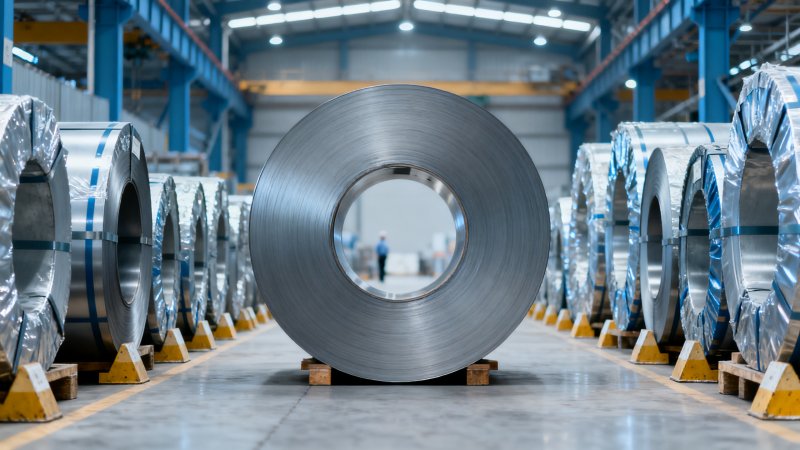
Before ordering carbon coils in volume, price should never be the only benchmark.
Grade stability, edge quality, coating condition, and delivery consistency directly affect resale performance and downstream fabrication results.
In steel trading and project supply, small deviations in carbon coils can create large losses through rejection, rework, delayed installation, or premature corrosion.
This guide explains how to evaluate carbon coils under different application scenarios, reducing sourcing risks while improving supply reliability.
For global projects, trusted exporters with strong quality control help maintain stable standards, lead times, and documentation across repeated shipments.
How application scenarios change carbon coils buying priorities
Not all carbon coils serve the same purpose.
Construction distribution, roll forming, mechanical fabrication, and galvanized processing each require different inspection priorities.
A coil acceptable for basic structural parts may fail in exposed applications that demand better surface finish and tighter dimensional control.
Likewise, carbon coils intended for slitting or bending need reliable tensile behavior, uniform thickness, and predictable flatness after processing.
Scenario-based checking prevents overbuying unsuitable material and lowers the risk of disputes after unloading or fabrication.
Scenario 1: Carbon coils for structural and construction supply
In structural supply chains, carbon coils often move into sections, plates, support members, or fabricated assemblies.
The first check is material grade compliance with project specifications, such as ASTM, EN, JIS, or GB requirements.
Chemical composition and mechanical property reports should match the ordered grade, not just the shipment label.
Thickness tolerance matters because structural conversion depends on accurate forming, welding fit-up, and load-bearing consistency.
Surface rust level also deserves attention, especially when coils will be stored before processing or used in humid climates.
When carbon coils are later converted into profiles, related products such as Metal Channel show why dimensional discipline is important.
For example, channel sections for construction, wall beams, brackets, and lightweight roofs rely on controlled thickness and steady material strength.
Options including Q195, Q235B, and Q345B, with standards like ASTM or JIS, support different structural and fabrication needs.
Scenario 2: Carbon coils for roll forming and profile production
For roll forming lines, carbon coils must perform consistently from the first meter to the last.
Unstable hardness, crown variation, or poor edge condition can disrupt tooling, increase scrap, and reduce output speed.
Key checks include width accuracy, burr condition, coil telescoping, and inner diameter suitability for existing equipment.
It is also wise to review previous batch consistency, because one good sample does not guarantee repeatable bulk supply.
If the target product requires punching, bending, or welding, request test data for elongation and forming behavior.
This matters when carbon coils are processed into U channels or similar profiles for steel structures and light manufacturing components.
Scenario 3: Carbon coils for coated, exposed, or export-sensitive use
Some carbon coils will be painted, galvanized, or used where appearance affects acceptance.
In these cases, surface cleanliness becomes as important as strength.
Check for oil balance, scale, scratches, roll marks, edge cracks, and moisture exposure inside packaging.
If export transit is long, poor wrapping can cause white rust, red rust, or condensation damage before arrival.
For coated downstream products, adhesion problems often begin with inconsistent substrate quality rather than the coating line itself.
Therefore, carbon coils for exposed applications need stronger packaging, clearer inspection photos, and better pre-shipment controls.
What to verify on every carbon coils order
Regardless of end use, several checks should appear in every purchase review.
- Material grade and standard matching the confirmed specification
- Thickness, width, weight, and tolerance verification
- Mechanical properties, including yield strength and elongation where needed
- Surface condition, rust level, oiling, and edge integrity
- Coil ID, OD, packing method, and loading safety
- Mill test certificates, heat number traceability, and inspection records
- Batch-to-batch consistency and realistic lead time confirmation
These points make carbon coils easier to resell, process, and document in international supply chains.
How different scenarios change the required checks
Practical selection advice for stable carbon coils supply
A dependable supplier should offer more than low quotations.
Look for stable production capacity, clear inspection procedures, and familiarity with export documentation.
Suppliers serving construction and industrial projects usually understand why standard compliance and repeatability matter.
It also helps when the supplier can support related structural products, including galvanized or formed sections.
For example, the same quality mindset used in Metal Channel production applies to dimensional control, corrosion resistance, and prompt delivery.
That includes thickness ranges from 1.5mm to 25mm, heights from 80mm to 160mm, and tolerances suited to fabrication accuracy.
When a supplier manages both standard steel products and OEM structural solutions, sourcing coordination often becomes easier.
Common mistakes when checking carbon coils
One common mistake is approving carbon coils from a sample only, without confirming bulk production consistency.
Another is ignoring packaging details, even though shipping damage can erase any initial price advantage.
Some orders also fail because the required standard was named, but the mechanical property expectation was never written clearly.
Others overlook edge quality, although slitting, stamping, and forming lines are highly sensitive to burrs and cracks.
Finally, carbon coils should not be compared only by ton price.
Yield rate, usable width, rejection probability, and delivery reliability all influence the real landed cost.
Next steps for safer bulk ordering
Start with a clear specification sheet for carbon coils, covering grade, dimensions, standard, surface expectations, and packing requirements.
Then request mill certificates, tolerance confirmation, recent shipment records, and inspection images from the actual batch.
For repeat business, compare delivered carbon coils across several orders to confirm long-term stability.
Reliable Chinese structural steel exporters can support this process with consistent production, broad standards coverage, and responsive service.
With the right checks in place, carbon coils become a controllable sourcing category rather than a recurring project risk.
Please give us a message


Please enter what you want to find