As budget pressures intensify for commercial façade projects in 2026, pre-painted steel sheet is emerging as a compelling alternative to aluminum composite panels—offering durability, design flexibility, and significant cost advantages over traditional cladding. For procurement teams and project managers evaluating cold rolled steel sheet, corrugated steel sheet, or even steel rebar price per ton as part of holistic material strategies, Hongteng Fengda’s certified, export-ready pre-painted steel solutions deliver ASTM/EN-compliant performance without compromise. Discover how smart specifiers are balancing aesthetics, lifecycle cost, and supply chain resilience—starting with the right steel.
Why Pre-Painted Steel Sheet Is Gaining Traction in Commercial Façades
Pre-painted steel sheet (PPGI/PPGL) combines cold-formed steel substrate with factory-applied organic coatings—typically polyester, silicone-modified polyester (SMP), or PVDF—applied via continuous coil-coating lines. Unlike post-fabrication painting, this process ensures uniform film thickness (15–25 μm), superior adhesion, and consistent color retention across batches.
In 2026, rising aluminum prices (+22% YoY in key Asian markets) and extended ACP lead times (12–18 weeks for custom colors) have accelerated substitution toward steel-based alternatives. Pre-painted steel sheets offer comparable flatness (<0.3 mm/m), bending radii down to 1×T (thickness), and fire performance up to Class B1 (EN 13501-1) when paired with mineral wool backing—making them viable for mid-rise façades up to 24 meters.
Hongteng Fengda produces pre-painted steel in widths from 600 mm to 1,500 mm and thicknesses ranging from 0.25 mm to 1.2 mm—fully compatible with standard roll-forming, laser cutting, and CNC punching workflows used in façade substructure integration.
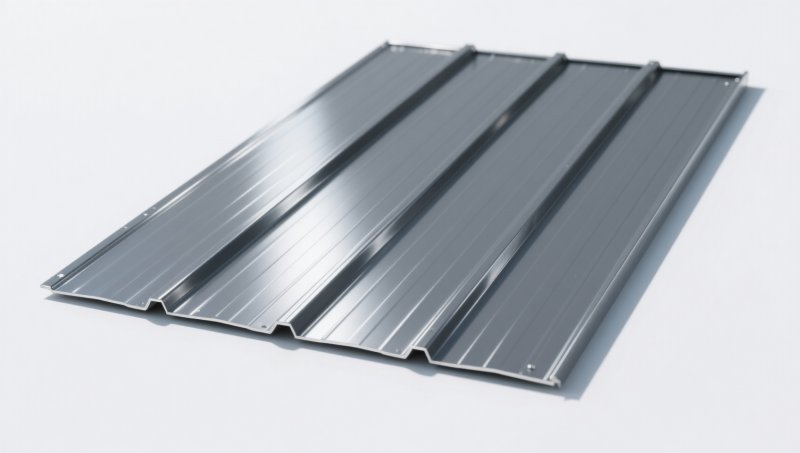
Direct Comparison: Pre-Painted Steel vs. Aluminum Composite Panels
The decision isn’t about “steel vs. aluminum” alone—it’s about total installed cost, maintenance frequency, and long-term value retention. Below is a side-by-side assessment based on real-world façade specifications for office buildings in Southeast Asia and the Middle East (Q2 2026 data):
This comparison reflects actual sourcing conditions—not theoretical specs. For projects requiring fast-track delivery or tight capex control, pre-painted steel delivers faster ROI through lower initial outlay and reduced installation labor (lighter weight + compatibility with existing steel framing systems).
Where Carbon Steel Round Bar Supports Façade Integration
While façade cladding draws attention, structural integrity relies on supporting elements like handrails, brackets, and anchoring systems. Carbon Steel Round Bar serves critical secondary roles—especially in custom bracket fabrication and balcony railing frames. With diameters from 5 mm to 2500 mm and lengths up to 12 m, it enables modular, weldable connections compliant with ASTM A615 or EN 10025 standards.
Its excellent strength and wear resistance make it ideal for high-traffic interface points where mechanical stress and environmental exposure converge—such as stairwell transitions or canopy supports adjacent to pre-painted steel façades.
Procurement Checklist: What Buyers Must Verify Before Sourcing
Global procurement teams face three recurring risks: coating delamination under UV exposure, inconsistent batch-to-batch gloss levels, and delayed customs clearance due to missing EN 10169 documentation. To mitigate these, verify the following before placing orders:
- Coating warranty coverage: minimum 15 years for polyester, 25+ years for PVDF (with test reports per ISO 20462)
- Substrate grade: S355JR or Q355B preferred for façade applications requiring yield strength ≥355 MPa
- Surface treatment compliance: Chromate-free passivation (RoHS-compliant) or zinc-aluminum alloy coating (Galfan®) for coastal environments
- Certification readiness: Full EN 10169 Type 1 certification dossier available within 5 working days of order confirmation
Hongteng Fengda provides pre-shipment inspection support—including third-party verification by SGS or Bureau Veritas—and maintains traceability logs covering raw material origin, coil number, coating line speed, and curing temperature profiles.
Why Global Projects Choose Hongteng Fengda for Steel Façade Solutions
We don’t just supply steel—we align with your project’s critical path. As a certified structural steel manufacturer and exporter from China, Hongteng Fengda operates dual production lines dedicated to architectural-grade pre-painted steel: one for standard RAL-color coils (lead time: 7–10 days), another for custom pigment matching (12–15 days). All coils undergo 100% online surface inspection and tension leveling prior to packaging.
Our customers across North America, Europe, and the Middle East rely on us for predictable delivery windows—even during peak season—backed by ISO 9001-certified QC protocols and real-time logistics tracking. Whether you need 5 tons for a boutique retail façade or 200+ tons for a mixed-use tower, we scale responsively without compromising ASTM A792 or EN 10169 compliance.
Ready to evaluate pre-painted steel for your next façade tender? Contact our technical sales team for: customized coating specification review, sample kits with weathering test data, EN/ASTM compliance documentation, or OEM co-engineering support for bespoke profile integration.
Please give us a message


Please enter what you want to find