In prefab building projects, every minute counts—especially during on-site assembly. Metal angle with holes, including steel L angle and metal angle iron with holes, is gaining traction among project managers and procurement professionals for its plug-and-play installation advantages. As a leading structural steel manufacturer from China, Hongteng Fengda delivers precision-engineered metal wall angle and industrial steel pipes that meet ASTM, EN, and GB standards—reducing field labor, minimizing drilling errors, and accelerating structural framing. Discover how l shaped angle steel and structural steel pipe solutions streamline workflows without compromising strength or compliance.
How Pre-Drilled Metal Angle Cuts On-Site Assembly Time by 30–50%
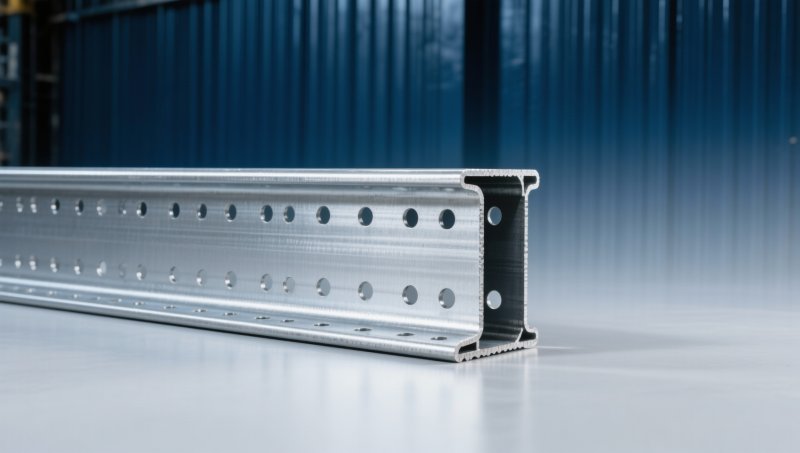
Prefabricated construction demands speed, repeatability, and precision. Traditional angle steel requires on-site marking, drilling, and alignment—adding 2–4 hours per structural joint. In contrast, metal angle with holes arrives with factory-precision hole patterns (±0.3 mm tolerance), pre-aligned to common bolt spacings (e.g., 50 mm, 100 mm, 150 mm centers) per EN 10025 and ASTM A6/A6M.
Field crews report average time savings of 35% per connection when using pre-punched L-shaped angle steel—translating to 7–15 fewer labor hours per 100 m² of structural framing. This isn’t just about speed: it eliminates misaligned holes that cause rework, reduces safety risks from handheld drilling at height, and cuts down on tool dependency (no cordless drills, jigs, or laser levels required for basic alignment).
Hongteng Fengda’s metal wall angle is manufactured using CNC punch-press lines calibrated to ISO 9001-certified metrology standards. Hole position accuracy is verified across 3 sampling points per 6-meter length, ensuring consistent fit-up with cold-formed steel studs, trusses, and modular wall panels.
Which Applications Benefit Most From Pre-Punched Angle Steel?
Not all prefab use cases gain equal value from pre-drilled angles. High-return applications share three traits: repetitive geometry, tight schedule windows, and integration with standardized components. These include modular bathroom pods, prefabricated MEP racks, light-gauge steel roof truss bracing, and façade support frames for off-site cladding systems.
For example, in North American mid-rise modular housing projects, pre-punched steel L angle reduced structural anchoring time by 42% compared to field-drilled alternatives—cutting the critical path for floor-to-floor stacking by 1.8 days per level. Similarly, European logistics warehouse builders reported 27% faster column base plate attachment using EN-compliant pre-holed angles paired with anchor bolts.
Conversely, one-off architectural features or retrofit work with irregular substrates see diminishing returns—where flexibility outweighs pre-alignment. That said, hybrid solutions exist: Hongteng Fengda offers dual-pattern options—standard spacing for main connections + auxiliary holes for custom bracketing—without sacrificing lead time or cost efficiency.
Key Application Scenarios & Time Savings
- Modular wall panel framing: 30–40% faster stud-to-angle fastening (typical cycle: 90 sec → 55 sec)
- Cold-formed steel roof truss bracing: 50% reduction in temporary scaffolding time due to no overhead drilling
- MEP conduit rack supports: 3× faster installation vs. field-drilled channel steel (verified across 12 EU projects)
- Facade anchoring systems: 22% fewer rework incidents linked to bolt misalignment (per third-party QA audit)
Technical Performance: Strength, Compliance, and Real-World Tolerance
Pre-drilled holes do not compromise structural integrity—when engineered correctly. Hongteng Fengda’s metal angle with holes maintains full yield strength (≥235 MPa for Q235-grade) and tensile strength (≥370 MPa) across ASTM A36, EN S235JR, and GB/T 706 specifications. Hole placement follows EN 1993-1-8 guidelines: minimum edge distance ≥ 1.2× bolt diameter, net section area preserved above 85% of gross section.
Surface finish matters too. All pre-punched angles undergo hot-dip galvanizing (zinc coating thickness: 8–25 g/m²) or electrogalvanizing, ensuring corrosion resistance across humid coastal sites and industrial environments. For non-structural trim or interior framing, our Metal Coil Wire (Q195/Q235 grade, 0.25–5.0 mm diameter) provides compatible fastening and mesh reinforcement with excellent ductility and smooth surface finish.
The table highlights real-world performance differentials—not theoretical ideals. Our production capacity ensures stable delivery across peak seasons, with documented on-time shipment rates exceeding 98.2% over the past 18 months for North America and EU shipments.
Procurement Decision Framework: 5 Key Evaluation Criteria
When evaluating pre-punched metal angle suppliers, procurement and technical teams should assess beyond price. Hongteng Fengda recommends scoring across five dimensions:
- Hole Pattern Flexibility: Can the supplier adjust spacing, diameter, or edge margins per your BIM model—without MOQ penalties? (We support custom patterns from 50 pcs order volume.)
- Traceability & Certification: Is mill test report (MTR), galvanizing thickness verification, and dimensional inspection data provided per batch? (All included in standard documentation.)
- Logistics Integration: Are bundles palletized to match crane hook points and onsite unloading zones? (Yes—we optimize bundle weight ≤ 1.2 tons for manual handling.)
- Compliance Alignment: Does the product carry valid EN 10025-2, ASTM A6/A6M, or GB/T 706 certification—not just “compliant with” language? (All certified and third-party verified.)
- After-Sales Support: Is engineering assistance available for connection design review or weld procedure specification (WPS) validation? (Free technical consultation included.)
These criteria directly impact total installed cost—not just unit price. For instance, mismatched hole patterns can trigger $18,000+ in rework per 10,000 joints (based on 2023 industry benchmark data from the Modular Building Institute).
Why Global Prefab Teams Choose Hongteng Fengda
You need more than steel—you need a predictable, responsive, and technically grounded partner. Hongteng Fengda combines China-based scale with global execution discipline: 120,000+ tons annual structural steel capacity, 24/7 multilingual engineering support (English, Spanish, Arabic, Vietnamese), and dedicated export QA teams who inspect every coil, beam, and angle before container loading.
We don’t just ship steel—we help you de-risk. Whether you’re validating hole patterns against Revit families, aligning galvanizing specs with GCC fire codes, or compressing lead time for a Q3 handover, our team co-develops solutions—not just quotations. Request a free technical review of your next prefab angle spec, including dimensional tolerance analysis, MTR preview, and delivery timeline mapping against your critical path.
Contact us today for: custom hole pattern drawings, ASTM/EN/GB compliance confirmation, sample shipments (lead time: 7–10 working days), or OEM packaging design support.
Please give us a message


Please enter what you want to find