Yes, a992 channel steel can be supplied with a valid mill test certificate, provided the channels were produced and tested to ASTM A992 and the certificate can be traced to the material delivered. The quotation should confirm both conditions before the order is placed. A low price loses its advantage if the shipment arrives with an unrelated test report or requires additional testing before fabrication can begin.
The first distinction is between a channel advertised as A992 and a channel actually certified to that specification. ASTM A992 covers structural steel shapes, but availability of a particular channel size under that specification must be confirmed with the producing mill. A certificate for another section, another heat, or another material standard does not establish compliance for the offered channels.
Confirm the channel specification before comparing prices
A channel designation describes its geometry; it does not establish its material grade. Two channels with matching depth, flange width, and nominal weight can have different chemical and mechanical requirements. Conversely, material certified to ASTM A992 still needs to match the ordered dimensions and applicable dimensional tolerances.
The quotation should therefore identify the product as a hot-rolled channel, state the required material specification and edition, and give the section designation, length, quantity, and documentation requirements. If “A992 channel steel” appears only in the quotation heading while the technical schedule lists a different grade, resolve that inconsistency before accepting the offer.
Product form also matters. A cold-formed channel made from sheet or coil, or a channel assembled by welding plates, cannot be treated as a mill-certified hot-rolled A992 channel simply because its outline resembles one. Certificates for the starting material support the identity of that material; they do not automatically establish conformity of the finished section to the requested product specification.
Where A992 channels are unavailable in the required size or quantity, an alternative grade needs explicit technical acceptance. Similar yield strength alone does not establish equivalence. Chemical limits, tensile properties, ductility, welding considerations, and project requirements can change the substitution decision.
The certificate must describe the delivered material
A mill test certificate, also called a mill test report or material test report, records the producing mill’s material identification and test results. Its value comes from a continuous connection between the report, the supplied sections, and the delivery records. A professional layout or a prominent stamp cannot compensate for a broken connection.
The following information should be clear enough to reconcile without guessing:
A report can legitimately cover several sizes or multiple test records. That is acceptable when the relationship between each supplied item and its applicable results is clear and consistent with the specification’s testing requirements. A report containing many heat numbers without a shipment allocation leaves that relationship unresolved.
Read the chemistry and tensile results together
A992 compliance involves more than reaching a minimum yield strength. The applicable specification includes chemical requirements and mechanical requirements that must be assessed together. Reviewing only the most favorable number on the report can miss a disqualifying result elsewhere.
Chemical composition influences welding behavior and material performance. Where the specification requires a carbon-equivalent assessment, the calculation must use the prescribed formula and relevant reported elements. A carbon value by itself cannot replace that assessment. Heat analysis and any required product analysis should also be distinguished, because their purpose and acceptance provisions differ.
The mechanical results should identify yield strength, tensile strength, and elongation with understandable units and specimen information. An elongation result needs its stated gauge length or specimen basis to be interpreted correctly. Comparing percentages from different test bases without accounting for those differences can produce a false rejection or acceptance.
Higher strength does not automatically mean compliant material. A992 includes controls on strength characteristics, including the relationship between yield and tensile strength. A result above the minimum still needs assessment against all applicable limits. Values reported in different unit systems also require careful conversion before comparison.
The review should use the standard edition specified in the order. Project requirements can add tests or acceptance conditions beyond the base material specification. Impact testing, for example, should be stated explicitly when required; it should not be assumed to be included merely because the certificate reports satisfactory tensile results.
Traceability can break after the material leaves the mill
The original mill report remains useful only while the supplied channels retain their identity. Stockholding, bundle splitting, cutting, and repacking create points where one heat can become mixed with another. A correct certificate in the shipping folder does not resolve unidentified material in the bundle.
Before dispatch, the packing list should associate each item or bundle with its heat number and quantity. The identification method should remain readable through the agreed handling and transport conditions. If a bundle contains material from several heats, its records need to show that allocation rather than assigning one heat number to everything.
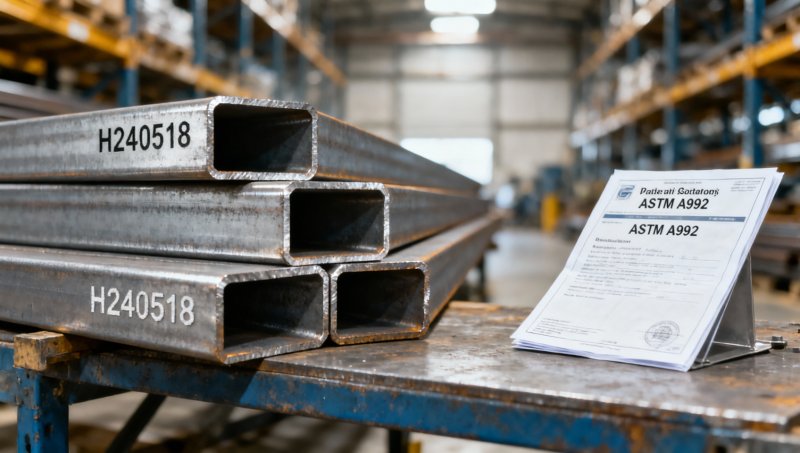
Cut lengths require particular attention. Cutting can remove the original identification location, leaving shorter pieces without an obvious link to the mill report. The order should define an acceptable method for transferring identification and retaining cutting records. Individual marking is useful where pieces will be separated; controlled bundle identification can work while the bundle remains intact.
Surface treatment introduces a similar issue. Blasting, painting, or galvanizing can obscure markings, so identification should be recorded and preserved before treatment. Photographs of markings support the records, but a photograph of one channel cannot establish the identity of an entire mixed shipment.
For orders that also include galvanized sheet products such as Gi Coil, the coil’s base-steel grade and zinc-coating documentation belong to that separate product. Its corrosion-protection data cannot establish the grade or mechanical properties of the structural channels shipped alongside it.
Authenticity, document format, and additional inspection
A digital certificate can be valid. Electronic issuance, signatures, and verification methods vary between mills, so a wet stamp is not a universal test of authenticity. The stronger question is whether the issuer can verify the report reference and whether its contents correspond to the supplied material.
Independent confirmation is appropriate when the mill identity is unclear, the grade appears altered, or different copies contain conflicting results. Verification should use independently established contact details or the mill’s recognized verification system. Contact information printed on a questionable document alone provides a weak verification route.
A translation should accompany the original report where needed. It should preserve heat numbers, units, specification references, and test terminology. Converting units or changing grade descriptions within a rewritten certificate creates unnecessary ambiguity; any conversion should be clearly separated from the original reported values.
The required inspection-document format should be agreed before ordering. A mill report, a supplier’s declaration of conformity, and an independently validated inspection document serve different purposes. If the contract requires a particular certificate type or third-party involvement, an ordinary mill report might leave the documentation package incomplete even when the material results are satisfactory.
Third-party testing also has limits. Testing identified samples can establish the measured properties of those samples. It cannot reconstruct missing production records or automatically convert unidentified stock into mill-certified A992 material. Sampling, test scope, and the acceptance route must be agreed before relying on retesting.
Resolve documentation gaps while the shipment is still accessible
A specimen certificate is useful during quotation review because it shows the mill’s reporting format and typical information fields. It is not evidence for the eventual shipment. Final certificates must cover the actual heats allocated to the order, with delivery records that connect those heats to the channels.
A practical documentation sequence starts with agreement on the specification and required report format, followed by review of the actual reports once stock is allocated or production is complete. Before shipment release, reconcile those reports with the packing list and visible material identification. This timing leaves room to correct an administrative omission or replace unsuitable material before freight costs are committed.
The response to a discrepancy should match its cause:
- A missing packing-list heat reference can be corrected through supporting stock and dispatch records, provided the material identity remains established.
- Conflicting test values or an unexplained grade change require clarification from the issuing mill. A supplier-edited copy does not resolve the conflict.
- When delivered sections have lost their identification, hold the affected material separately. Acceptance requires a documented route to establish identity or an approved alternative assessment.
- A confirmed result outside the specified limits is a material nonconformity. Reissuing the same results under a different heading cannot make the shipment compliant.
Certificate revisions should retain a clear link to the original report and explain the correction. Keeping both versions prevents an administrative update from obscuring a substantive change.
Price the supply with its evidence included
Compare quotations on the same documentation basis. The offer should state whether the price includes the required mill reports, traceability records, translations, and any specified inspection. Special testing or witnessed inspection should be separately identified so its scope and cost are visible.
Stock material deserves close attention to existing evidence. Readily available channels with incomplete records can create delay despite a short dispatch time. New production allows documentation requirements to be arranged in advance, but the quotation still needs to confirm mill availability, production quantity, and delivery timing.
Useful order wording is specific: “Supply hot-rolled channels to ASTM A992, using the agreed edition, with mill-issued test reports covering the supplied heats. Link shipment items to heat numbers and preserve identification through cutting and surface treatment. Obtain written approval before changing the material specification.” Add the required section sizes, inspection-document format, and supplementary tests to that instruction.
Make documentation acceptance a shipment-release condition where the project requires it. Resolving a missing heat reference while the channels remain accessible is considerably simpler than tracing unidentified pieces after delivery, cutting, or fabrication.
Please give us a message


Please enter what you want to find