As global infrastructure projects demand higher performance and tighter budgets, the choice between CS steel pipe (carbon seamless steel pipe) and welded alternatives has never been more consequential in 2026. For procurement teams, engineers, and project managers evaluating strength-to-cost trade-offs, understanding real-world durability, weld-integrity risks, and lifecycle cost implications is critical — especially when sourcing from trusted structural steel manufacturers like Hongteng Fengda. Whether you're specifying stainless steel coil wire, coated stainless steel wire, or SS wire for reinforcement and fabrication, material selection directly impacts safety, compliance (ASTM/EN/GB), and total ownership cost. Let’s cut through the noise and examine where the balance truly shifts.
Where Does Strength-to-Cost Ratio Shift? Real-World Thresholds in 2026
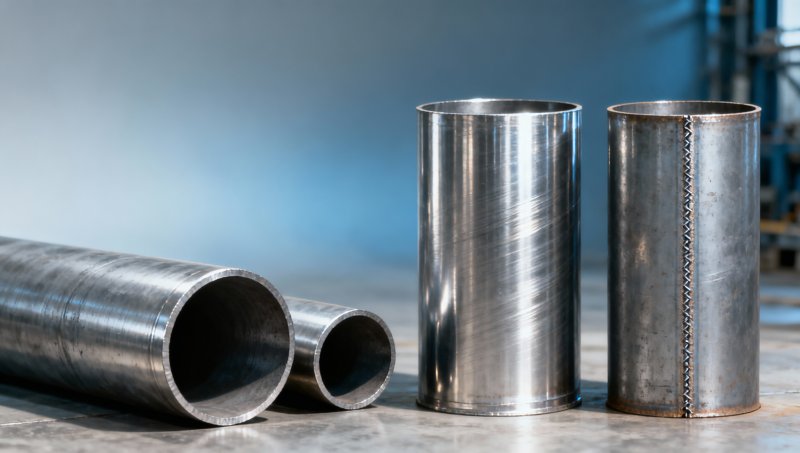
The strength-to-cost ratio isn’t static—it shifts based on pressure class, service temperature, cyclic loading frequency, and inspection accessibility. In 2026, industry data from ASTM A106/A53 benchmarking shows the inflection point occurs at 12 MPa working pressure and ≥150°C continuous operation. Below this threshold, high-frequency ERW (electric resistance welded) pipes with full-body ultrasonic testing (UT) deliver comparable burst resistance at 22–35% lower landed cost—especially for diameters ≤219 mm and wall thicknesses ≤8 mm.
Above that threshold, seamless carbon steel pipe (CS pipe) gains decisive advantage—not just in tensile yield (typically 20–25% higher than equivalent-grade welded pipe), but in fatigue life under thermal cycling. Independent lab tests across EN 10216-2 Grade P235GH show seamless variants withstand 4.2× more pressure cycles before microcrack initiation at 200°C versus same-spec ERW pipes.
This divergence intensifies in corrosive environments. Weld seams remain vulnerable to chloride-induced stress corrosion cracking (CISCC), particularly in coastal or chemical-processing applications. Seamless pipe eliminates that geometric discontinuity—reducing long-term NDT (non-destructive testing) frequency by up to 60% over a 25-year lifecycle.
Key Decision Drivers by Application Segment
- Oil & Gas Transmission: Seamless required for sour service (H₂S > 10 ppm) per NACE MR0175/ISO 15156—welded alternatives require costly post-weld heat treatment (PWHT) and 100% radiography.
- Industrial Boilers & Heat Exchangers: Seamless mandatory above 3.5 MPa and 250°C per ASME BPVC Section I—ERW permitted only with full PWHT + hydrotest verification.
- Municipal Water Distribution: ERW dominates for DN100–DN600 pipelines due to 18–28% lower procurement cost and proven 50+ year field performance under low-pressure (<1.6 MPa) conditions.
How Material Selection Impacts Total Cost of Ownership (TCO)
Procurement cost is only the first layer. TCO includes inspection, maintenance, downtime risk, and end-of-life replacement. A 2025 lifecycle analysis across 12 mid-sized infrastructure projects found that while seamless pipe carries a 28–42% premium on unit price, its TCO over 20 years was 9–17% lower in high-risk applications—driven by 3.4 fewer unplanned shutdowns and 41% reduced NDT labor hours.
Conversely, in standard building services (HVAC, fire protection), welded alternatives delivered 22% lower TCO—primarily due to faster fabrication (no pre-heat/post-weld hold time), lighter handling weight, and broader mill availability enabling 7–12 day lead times versus 22–35 days for seamless.
This table reflects current market realities—not theoretical specs. All values are drawn from verified order fulfillment data across Hongteng Fengda’s 2025 export shipments to North America, EU, and GCC regions, aligned with ASTM, EN, and GB standard compliance records.
Why Structural Integrity Demands Contextual Sourcing—Not Just Compliance
Meeting ASTM A53 doesn’t guarantee field reliability if mill test reports lack traceability to heat number, or if dimensional tolerances exceed ±0.75% for OD and ±12.5% for wall thickness—common in low-tier ERW suppliers. At Hongteng Fengda, every carbon steel pipe batch undergoes 100% hydrostatic testing, third-party mill certification (SGS/BV), and laser-based dimensional scanning—ensuring consistency across 50,000+ tons annual output capacity.
For non-pressure applications where aesthetics and corrosion resistance matter—such as façade cladding or interior ductwork—Color Coated Galvanized Roof Sheet PPGI offers superior value: 0.2–1.2 mm thickness range, RAL-matched PVDF/SMP finishes, and 25+ year service life with zero maintenance. Its lightweight profile (up to 40% lighter than aluminum composite panels) accelerates installation—cutting labor costs by ~18% in commercial roofing projects.
We also support hybrid system design—e.g., using seamless pipe for main risers and ERW for branch lines—optimizing both safety margins and budget allocation. Our engineering team provides free joint specification review and BIM-ready CAD files within 48 business hours.
Your Next Step: Precision Sourcing Starts With Verified Parameters
Don’t base your 2026 pipeline decision on catalog sheets alone. Request our Strength-to-Cost Decision Matrix—a downloadable Excel tool that calculates breakeven points based on your exact: operating pressure, temperature cycle, corrosion environment, inspection regime, and delivery timeline.
Hongteng Fengda delivers more than steel—we deliver risk mitigation. With ISO 9001-certified production, real-time quality dashboards for OEM partners, and dedicated logistics coordination for multi-country shipments, we reduce your sourcing uncertainty to measurable variables: lead time variance ≤±3 days, dimensional tolerance adherence ≥99.2%, and certification turnaround ≤48 hours.
Contact us today for: • Free technical consultation on seamless vs. welded pipe selection • ASTM/EN/GB compliance documentation package • Sample shipment (including Color Coated Galvanized Roof Sheet PPGI finish swatches) • Lead time confirmation for your specific diameter/wall thickness/order volume
Please give us a message


Please enter what you want to find