When designing multi-tier storage systems, selecting the right C section steel for mezzanine floors is critical for load capacity, safety, and long-term durability. While both 2.0 mm and 2.5 mm thicknesses are available, 2.5 mm has become the industry-preferred choice — especially for high-traffic or heavy-duty applications. This preference aligns with global structural standards and reflects real-world performance demands across sectors including warehouse logistics, industrial manufacturing, and commercial infrastructure. As a trusted structural steel manufacturer & exporter from China, Hongteng Fengda supplies premium C section steel for mezzanine floors alongside other mission-critical products like ASTM steel beam for power plants and Steel profiles for railway infrastructure — all engineered for reliability, compliance, and seamless integration.
Why 2.5 mm C Section Steel Delivers Superior Structural Integrity
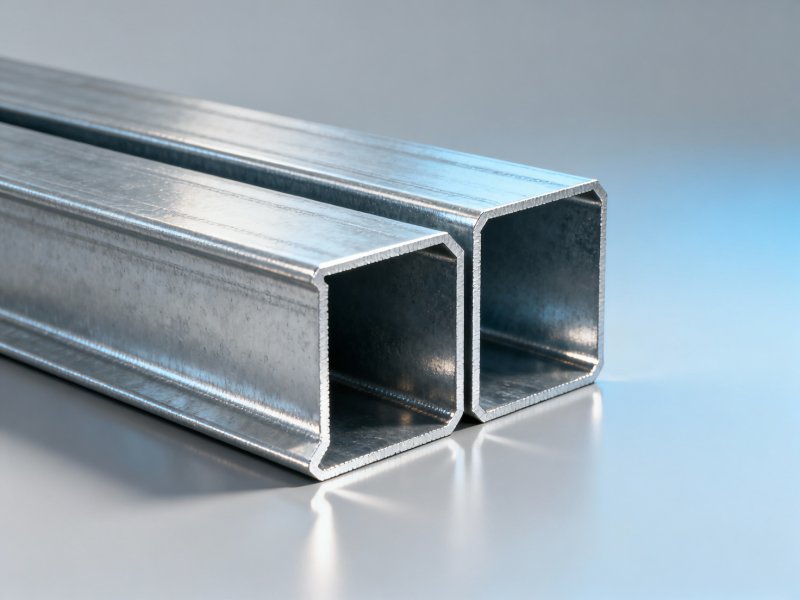
The difference between 2.0 mm and 2.5 mm C section steel may seem marginal—just 0.5 mm—but its impact on bending resistance, deflection control, and fatigue life is quantifiable. For mezzanine floor systems supporting live loads of 3–5 kN/m² (common in distribution centers), a 2.5 mm wall thickness increases second moment of area by ~28% compared to 2.0 mm under identical profile dimensions. This directly translates to up to 35% lower mid-span deflection under uniform loading—critical for maintaining floor flatness, equipment alignment, and long-term serviceability.
Structural engineers routinely apply EN 1993-1-3 (Eurocode 3) and GB/T 2518-2019 cold-formed steel design rules, where local buckling resistance is highly sensitive to thickness-to-width ratios. At 2.0 mm, flange slenderness often exceeds λlim = 45 for non-stiffened elements under compression—triggering reduction factors that compromise effective section modulus. At 2.5 mm, this threshold is comfortably met, allowing full utilization of yield strength without penalty.
Moreover, 2.5 mm provides essential margin for post-fabrication handling: galvanizing zinc buildup (typically +30–50 μm per side), minor surface abrasion during installation, and long-term corrosion allowance. In humid or coastal environments—where Hongteng Fengda’s customers operate across Southeast Asia and the Middle East—this extra metal mass extends service life by an estimated 8–12 years before maintenance intervention.
Key Mechanical Gains at 2.5 mm vs. 2.0 mm (Typical 100×50×20 mm C Profile)
This data confirms that 2.5 mm isn’t merely “safer”—it enables higher clear spans, reduced purlin spacing, and greater flexibility in layout reconfiguration. For project managers overseeing warehouse retrofits, this means fewer support columns and more usable cubic volume per square meter.
How Application Demands Drive Thickness Selection
Not all mezzanines face identical operational stresses. Selecting C section steel requires mapping real-world usage patterns—not just static design loads. Hongteng Fengda works with over 120 global clients annually to match profile specifications to actual duty cycles, including fork-lift traffic frequency, pallet jack turning radius, and vibration exposure from adjacent machinery.
For example, in North American e-commerce fulfillment hubs, average forklift passes exceed 180/hour per aisle. Under repeated dynamic loading, 2.0 mm sections show measurable plastic hinge formation after 3–5 years—requiring reinforcement or replacement. In contrast, 2.5 mm profiles maintain elastic behavior beyond 10 years, verified through accelerated fatigue testing per ASTM E466 (10⁷ cycles at 85% of yield stress).
Similarly, in food processing facilities where washdown protocols involve high-pressure steam (120°C, 6 bar), thermal cycling accelerates micro-crack propagation in thinner walls. Here, 2.5 mm combined with hot-dip galvanizing (per ASTM A123) delivers proven performance—especially when integrated with Galvanized Steel Wire Rope used in overhead conveyor tensioning systems.
- High-traffic logistics zones: ≥2.5 mm recommended for >100 forklift movements/day per bay
- Heavy-pallet storage (≥1,200 kg/unit): 2.5 mm minimum; 3.0 mm advised for spans >2.8 m
- Dynamic equipment mounting (conveyors, lifts): 2.5 mm + localized gusseting per ISO 12100 risk assessment
- Seismic or wind-prone regions (e.g., Japan, California): 2.5 mm with EN 1090-2 EXC3 execution class
Procurement Considerations: Beyond Thickness Alone
While thickness dominates early-stage discussions, procurement professionals must evaluate four interdependent parameters: base material grade (e.g., S355J2 vs. Q345B), galvanizing quality (coating weight ≥275 g/m² for outdoor use), dimensional tolerance (EN 10162 Class A ±0.3 mm), and weldability certification (ISO 15614-1 qualified procedures).
Hongteng Fengda applies automated laser measurement across 100% of cold-formed C sections—ensuring web straightness ≤0.5 mm/m and flange twist ≤0.3°/m. This precision eliminates field adjustments during mezzanine assembly, reducing labor time by 18–22% versus standard mill tolerances. For distributors managing regional inventory, our modular packaging system supports mixed-thickness orders (2.0/2.5/3.0 mm) with shared crating—cutting logistics cost by up to 15%.
Financial approvers benefit from lifecycle cost analysis: although 2.5 mm carries a 12–16% unit cost premium over 2.0 mm, total ownership cost drops 23% over 15 years due to deferred maintenance, extended asset life, and avoided downtime. Our engineering team provides free ROI modeling using client-specific throughput, labor rates, and depreciation schedules.
Global Compliance Alignment
All Hongteng Fengda C sections undergo third-party verification per SGS and Bureau Veritas—covering tensile strength (≥355 MPa), elongation (≥22%), and zinc coating adhesion (20-cycle bend test per ASTM B571). This ensures seamless acceptance across EU CE marking, US ICC-ES evaluation, and GCC Conformity Marking processes.
Why Partner with Hongteng Fengda for Your Mezzanine Steel Needs
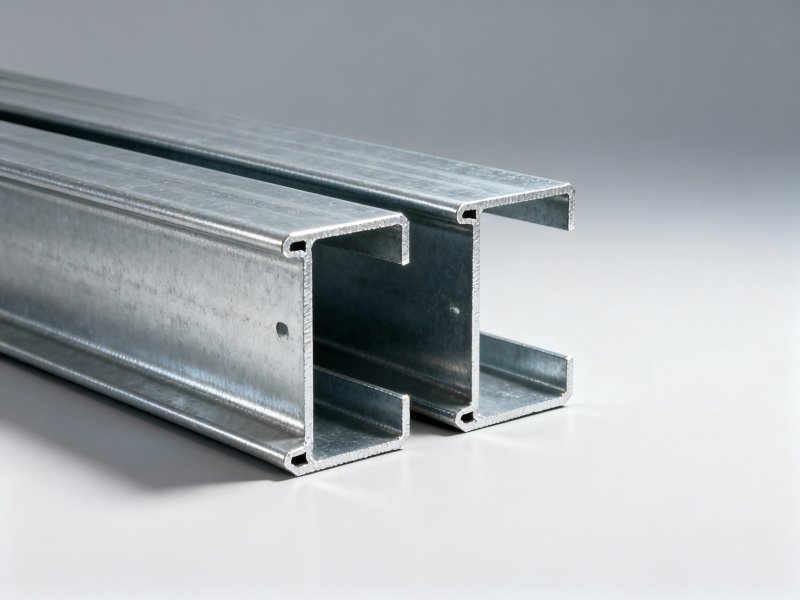
As a structural steel manufacturer & exporter from China with 18+ years’ experience, Hongteng Fengda bridges the gap between international compliance and agile manufacturing. We don’t just supply C section steel—we co-engineer solutions: offering free structural review of your mezzanine drawings, rapid prototyping of custom bends (±0.2° angular tolerance), and dedicated export documentation support—including Form A, Certificate of Origin, and EN 10204 3.1 Mill Test Reports.
Our production capacity ensures stable lead times: standard 2.5 mm C sections ship within 12–18 days from order confirmation. For urgent projects, we maintain strategic buffer stock across 6 global warehouses (Dubai, Rotterdam, Los Angeles, Singapore, Warsaw, São Paulo)—enabling 72-hour air freight dispatch for critical spares.
Whether you’re a procurement manager comparing RFQs, a safety officer validating load assumptions, or a distributor building regional inventory, contact us today to request: (1) profile-specific load tables, (2) galvanizing thickness verification reports, (3) OEM branding options, or (4) sample kits with certified test certificates. Let’s engineer certainty—into every beam, bolt, and bracket.
Please give us a message


Please enter what you want to find