Bulk GI steel coil purchasing usually fails on details that look minor at quotation stage. A low base price can quickly lose its advantage when coating weight is lighter than expected, coil width creates extra slitting loss, or the mill sets a production minimum that forces unnecessary tonnage into stock. When you need to buy GI steel coil in bulk, the practical question is not simply the quoted rate per ton. The real question is how much usable material arrives on time, within specification, and without creating downstream claims.
Cost starts with the steel substrate, zinc coating mass, thickness tolerance, width, and surface treatment. Even when two offers use the same nominal thickness, the actual delivered thickness range may differ because some suppliers quote based on minimum thickness while others discuss average thickness. That gap matters in forming, roofing, ducting, and roll-forming applications where shape stability and coating coverage at edges affect performance. A coil with a tighter thickness tolerance may carry a higher unit price while reducing rejection, setup adjustment, and scrap.
Coating specification deserves the same attention. GI steel coil is often compared by gauge first, but zinc coating weight frequently changes service life more than a small change in base metal thickness. If the operating environment involves humidity, coastal air, condensation, or periodic chemical exposure, a lower coating mass may become an expensive compromise. The quote should state coating designation clearly, along with whether the coating is equal on both sides or differential. If this point is left vague, later disputes become difficult because the invoice may reflect only a general product name.
MOQ affects cost more than many quotations show
MOQ is not only a commercial condition. It is tied to mill scheduling, substrate availability, coating line setup, and packaging efficiency. A supplier may accept a small trial order, but the price can rise because the coil has to be cut from a larger parent coil, or because production is grouped with another order. In some cases, a mixed specification order looks flexible on paper yet creates longer lead time because each width, coating mass, or surface finish needs separate planning.
For that reason, it helps to separate the order into three layers: must-have specifications, negotiable specifications, and cosmetic preferences. Thickness, width, coating mass, steel grade, and end-use related mechanical properties usually belong in the first layer. Spangle appearance, oiling preference, and certain packing details may be adjustable if inventory timing matters more than appearance. This approach can reduce the risk of paying a premium for a small deviation that has no effect on final use.
Another hidden cost appears when MOQ is met by combining coils with different actual weights. One order might satisfy the contract tonnage but still create inventory imbalance if several small coils are unsuitable for the production line, or if a single oversized coil exceeds decoiler limits. Coil inner diameter, outer diameter range, and single-coil weight should therefore be aligned with handling equipment before order confirmation. A coil that is acceptable to the supplier may still be inefficient at the receiving plant.
Specification gaps usually surface after the material arrives
The most common sourcing problem is not dramatic failure. It is mismatch between quoted terms and operating reality. Surface condition may be described only as standard, while the actual requirement is for painting, profiling, or exposed panel use. Oiled material may protect against transit rust but interfere with downstream coating. Dry material may be cleaner to process but more exposed during long ocean transit if packaging is weak or storage conditions are poor. These issues should be settled before production, not after unloading.
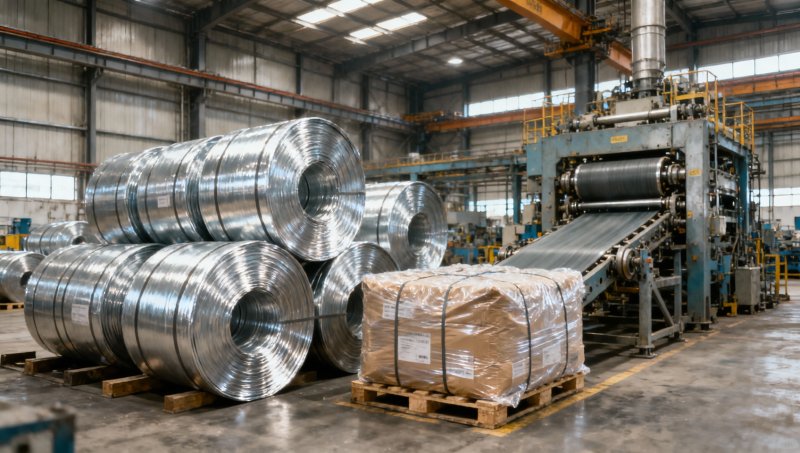
Written specifications should also cover edge condition, width tolerance, camber expectations where relevant, and whether the order permits welds in the coil. A welded join may be acceptable for some continuous lines and unacceptable for others. If this is not stated, the supplier may follow internal standard practice rather than the needs of the application. The same applies to telescoping, coil set, and packaging orientation. These are operational issues, but they often turn into cost issues because they delay production and increase handling time.
Lead time risk is usually a combination of production and logistics
Quoted lead time often compresses several stages into one number: raw material allocation, coating line scheduling, inspection, packing, inland transport, port handling, and vessel booking. Delay can occur at any one of these points. The practical way to read a lead time is to ask which part is fixed and which part is estimated. If the supplier has not yet secured substrate or vessel space, the date may be more of a target than a committed shipment window.
Supply risk becomes sharper when the order includes non-standard widths, uncommon coating masses, or special surface treatment such as anti-fingerprint film. These items can reduce substitution options if the original production slot moves. Midway through a sourcing review, it can be useful to compare GI steel coil with aluminium-zinc coated alternatives in cases where corrosion resistance and heat performance are part of the service requirement. For example, S220GD Galvalume Steel Coil uses a 55% aluminium, 43.5% zinc, and 1.5% silicon coating structure, with common options such as AZ30-AZ150 g/m2, chromated, oiled, or AFP finish, and coil dimensions such as 0.25-1.2 mm thickness, 720-1250 mm width, 3-25 MT coil weight, and 508 or 610 mm inner diameter. In some environments, that kind of coated steel may be considered when the expected exposure is harder on standard galvanised surfaces.
Even where the product choice remains GI, this comparison is useful because it forces the order review back to service conditions instead of staying trapped in a simple tonnage and price discussion. A lower quote is less meaningful if the actual installation environment requires stronger corrosion performance, better heat resistance, or a different coating system.
Price comparisons need the same commercial basis
Many bulk offers look far apart until the commercial terms are normalized. Freight basis, port of loading, packing method, theoretical weight versus actual weight settlement, and tolerance claims all affect the final landed cost. One offer may exclude export packing or include only simple steel straps, while another includes moisture barrier paper, edge protection, outer wrapping, and palletized support. For inland destinations with multiple handling points, packing quality can influence damage rates enough to offset a lower quoted price.
Payment terms deserve the same scrutiny. A lower price attached to a rigid advance payment schedule may tie up cash and reduce room to respond if shipment timing slips. On the other hand, very flexible payment language without clear inspection and claim terms can create uncertainty if quality issues appear at destination. Commercial review should therefore sit alongside technical review; separating them tends to hide the real cost of supply risk.
Another point often missed in negotiations is claim definition. If the contract says quality claims must be made immediately upon arrival, but coating weight verification requires testing after sampling and line preparation, the claim window may already be too narrow. The order should define what documents govern acceptance: mill test certificate, third-party inspection if required, packing list, photos at loading, and tolerance basis. Without that, disputes become opinion-based.
Inspection should match the risk of the application
Routine material does not always require the same inspection depth as exposed construction panels, appliance sheet, or precision-formed parts. Still, some controls are worth requesting whenever you buy gi steel coil in bulk. These include steel grade confirmation, thickness measurement method, coating mass verification standard, surface condition notes, and coil identification traceability. It is also useful to clarify whether testing is performed coil by coil, lot by lot, or by production campaign. A certificate with correct numbers is helpful, but the sampling basis matters when consistency across the full order is important.
For applications involving forming, the grade designation should not be treated as a minor label. Commercially similar products can behave differently in bending, lock-forming, or deep drawing. Grades such as DX51D through DX54D, SGCC, SGCH, and structural grades such as S220GD or higher strength variants may all appear in market conversations, yet their suitability depends on the forming severity and end-use requirement. Substituting across grades without confirming mechanical properties can create cracking, springback, or profile instability.
Transport and storage can change the condition of the coil before use
Bulk coil supply is exposed to moisture, temperature cycling, and handling damage long before the material reaches the production line. White rust risk is especially relevant when coils are packed tightly and exposed to condensation during marine transit or storage in poorly ventilated areas. Oiling, chromating, or anti-fingerprint treatment may reduce certain risks, but each option changes downstream behavior. The correct choice depends on whether the coil will be stored, painted, roll-formed, or consumed quickly after arrival.
Claims related to edge damage and surface marks also need realistic expectations. Minor strap marks, friction marks, or slight edge abrasion may be tolerated in non-exposed uses and rejected in visible architectural applications. The intended use should therefore be stated in the purchase specification. General wording such as commercial quality surface is often too loose for projects where appearance matters.
Supply stability often matters more than the first shipment
A supplier can perform well on a single order and still struggle on repeat business if coating control, raw material sourcing, or scheduling discipline is inconsistent. That risk usually appears when later batches show wider variation in spangle, oil level, or actual coil weight. Long-term evaluation should focus on repeatability: whether the same specification can be produced again with the same practical results, not just the same wording on the paperwork.
When offers are close, the stronger position often comes from the clearer specification set, the more realistic lead time, and the better alignment between coil characteristics and actual processing conditions. That is the point where bulk GI steel coil purchasing becomes manageable: fewer surprises in production, fewer disputes after arrival, and less capital tied up in material that technically meets a quote but does not fit the job.
Please give us a message


Please enter what you want to find