When finance teams decide whether to buy stainless steel coil from overseas or source locally, the visible price is only one cost layer.
Freight swings, stock pressure, inconsistent quality, processing loss, and delay risks often change the final outcome more than the quoted ton price.
In steel projects, the best time to buy stainless steel coil depends on usage scenario, lead time tolerance, quality demands, and cash flow discipline.
This guide explains the hidden cost factors behind imported and local supply, helping cost-focused decisions stay practical and measurable.
When imported supply makes sense to buy stainless steel coil
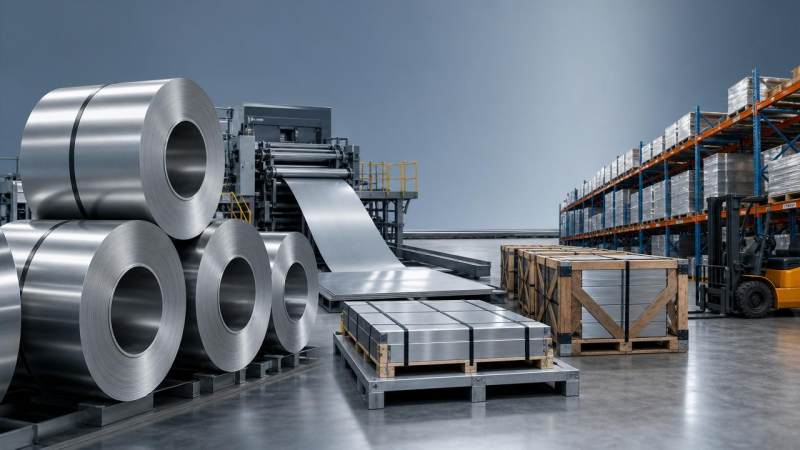
Imported sourcing often works well when volume is stable, specifications are fixed, and project schedules can absorb ocean transit time.
In these cases, buyers can buy stainless steel coil at a lower base price and spread logistics costs across larger tonnage.
This scenario is common in construction supply chains, industrial fabrication, and repeat manufacturing programs with predictable monthly demand.
Chinese exporters with stable mills and strict inspection can also reduce supply uncertainty for international structural steel users.
Hongteng Fengda supports this model through reliable steel products, OEM solutions, and compliance with ASTM, EN, JIS, and GB standards.
Typical signals that offshore purchasing fits better
- Annual demand is large enough to fill containers efficiently.
- Technical standards are clear and repeatable.
- Safety stock can cover transit variability.
- Processing can be planned after arrival without urgent interruptions.
When local supply becomes the lower-risk choice
Local sourcing is often stronger when project timing is uncertain or specification changes happen frequently.
A higher local ton price may still produce a lower total cost if delays, overstock, or rework would be expensive.
This matters in maintenance shutdowns, urgent fabrication, short production runs, and fast-moving order environments.
If the requirement changes from slit coil to formed sections, fast local conversion can save more than a cheaper original quote.
For related corrosion-critical systems, some projects also compare coil purchases with finished tubing such as 316L stainless steel pipe.
Situations where local sourcing can protect budgets
- Demand forecast changes every few weeks.
- Project penalties for late delivery are severe.
- Small batch sizes increase leftover inventory risk.
- Engineering teams may revise width, finish, or grade during execution.
The hidden cost factors behind every stainless steel coil decision
To buy stainless steel coil wisely, cost analysis must go beyond unit price and include total landed and usable cost.
Several hidden items regularly distort comparisons between imported and local options.
1. Freight volatility and port-related charges
Ocean freight can change quickly due to fuel, route congestion, vessel space, and geopolitical events.
Small changes per ton can erase the savings expected when companies buy stainless steel coil offshore.
Demurrage, detention, customs inspection, and inland trucking can also raise the final delivered cost.
2. Inventory carrying cost
Longer lead times usually require more safety stock.
That means working capital, warehouse use, insurance, and the risk of holding the wrong grade or width.
For stainless products, this hidden cost can become significant when monthly consumption is unstable.
3. Quality inconsistency and rework
Surface defects, gauge variation, edge quality issues, or unexpected mechanical behavior may create waste during slitting, forming, or welding.
A low quote loses value fast if production scrap rises or customer claims follow.
4. Processing loss after arrival
Not every coil is fully usable.
Yield loss can come from trimming, decoiling damage, setup waste, or mismatched widths.
When teams buy stainless steel coil, they should compare cost per usable ton, not cost per invoiced ton.
5. Delivery delay exposure
One late container can affect fabrication, assembly, shipment, and invoicing.
If downstream delays trigger contract penalties, the cheapest coil source may become the most expensive decision.
How different steel-use scenarios change the right answer
The best sourcing path depends on where and how the material will be used.
In steel supply, scenario-based analysis creates better results than blanket rules.
Scenario A: Repetitive manufacturing demand
If production uses the same grade and thickness every month, imported supply can create strong cost efficiency.
The key is disciplined forecasting and dependable quality control at source.
Scenario B: Project-based construction procurement
Construction schedules often move because of design review, weather, site readiness, or coordination with other materials.
Here, local flexibility may outweigh a lower offshore quote, especially for smaller lots.
Scenario C: Corrosion-sensitive industrial systems
Chemical, petroleum, and mechanical equipment applications demand material consistency and traceability.
In such environments, stainless grades with enhanced corrosion resistance can justify a higher purchase price through longer service life.
For some systems, components like 316L tubing or pipe may perform better than reprocessed coil products in chlorine or salt exposure.
Comparison table: overseas vs local sourcing for stainless steel coil
Practical steps before you buy stainless steel coil
A stronger decision process starts with a total cost model, not a simple price comparison.
- Calculate landed cost, including freight, duty, local transport, and port charges.
- Estimate inventory carrying cost for expected lead time.
- Measure yield loss from trimming, slitting, and forming.
- Assign a cost to delivery delay and production stoppage.
- Review supplier quality records, standards, and inspection consistency.
- Compare cost per usable ton across both sourcing routes.
Common mistakes that distort stainless steel coil sourcing decisions
One common error is choosing only by invoice price.
Another is ignoring the cash impact of longer stock cycles.
Some teams also underestimate the cost of width mismatch, edge issues, or claims caused by unstable quality.
Others assume local supply is always expensive, even when flexibility prevents waste and deadline loss.
In corrosive service conditions, substituting the wrong stainless form can also raise maintenance costs over time.
For example, where chloride resistance matters, molybdenum-enhanced solutions may outperform standard alternatives in long-term value.
A cost-focused next step for better steel sourcing
If the goal is to buy stainless steel coil at the lowest real cost, scenario fit should lead the decision.
Stable, repeat demand often supports overseas sourcing.
Urgent, variable, or penalty-sensitive demand often supports local supply.
A reliable steel partner should offer clear specifications, quality consistency, realistic lead times, and support for custom structural requirements.
Hongteng Fengda provides structural steel products, customized solutions, and export experience that help global projects reduce sourcing risk and control cost.
Before the next order, build a side-by-side total cost sheet and test both options against your real operating scenario.
Please give us a message


Please enter what you want to find