Why Steel Sheet Pile for retaining walls is becoming a stricter design choice
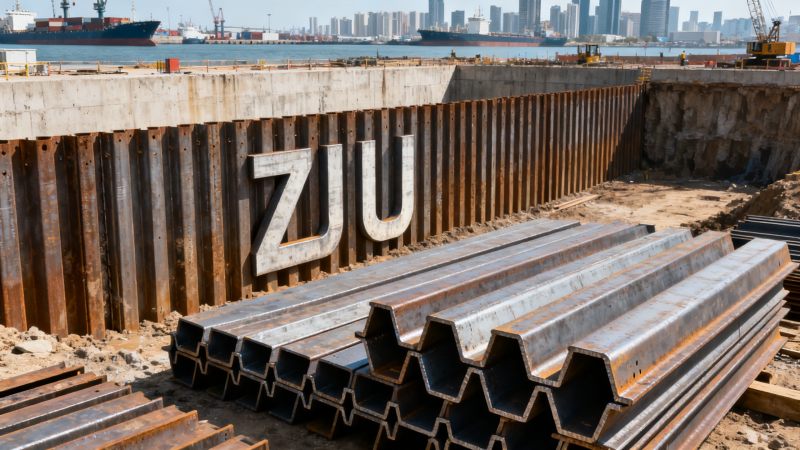
Choosing the right Steel Sheet Pile for retaining walls is critical for project safety, cost control, and long-term performance.
Design expectations are changing fast across infrastructure, marine works, basements, and industrial sites.
Higher loading demands, tighter schedules, and more variable soil conditions now influence every retaining wall decision.
As a result, selecting a Steel Sheet Pile for retaining walls is no longer only about section size.
It also involves corrosion exposure, drivability, structural stiffness, reuse value, and compliance with global steel standards.
This guide reviews the best pile types, explains current selection trends, and highlights practical factors that shape modern retaining wall performance.
Current market signals show a shift toward performance-based pile selection
Retaining wall projects increasingly face mixed requirements rather than one single design priority.
Urban excavations need low vibration installation and space efficiency.
Port and waterfront works need strong corrosion strategies and long service life.
Temporary works often focus on speed, recoverability, and lower total ownership cost.
These changes are pushing engineers to compare Steel Sheet Pile for retaining walls options by lifecycle value, not only initial tonnage cost.
Another trend is the wider use of international grades and standards.
Projects with global investment often require ASTM, EN, JIS, or GB compliance for documentation consistency.
That increases the importance of stable manufacturing quality and predictable delivery capacity.
The best steel sheet pile types depend on structural demand and site conditions
There is no universal best section for every retaining wall.
The most suitable Steel Sheet Pile for retaining walls depends on bending resistance, interlock integrity, installation method, and environmental exposure.
U-type sheet piles remain a practical choice for many common retaining walls
U-type piles are widely used because they offer balanced strength, broad availability, and efficient wall assembly.
Their interlocks can support continuous wall behavior in cofferdams, riverbanks, slope protection, and excavation support.
For many medium-depth applications, U-type Steel Sheet Pile for retaining walls provides a good mix of economy and structural reliability.
Z-type sheet piles are preferred when higher section efficiency matters
Z-type piles place material farther from the neutral axis, improving section modulus efficiency.
This often makes them suitable for deeper excavations and heavier lateral loads.
Where wall stiffness and reduced steel weight are both important, Z-type options are often selected.
They are common in permanent waterfront walls, large basements, and infrastructure corridors.
Straight web piles serve specialized cellular and sealing applications
Straight web sections are less common in ordinary earth retention but valuable in circular cells and bulkhead structures.
Their design supports tensile force transfer in cell systems.
For marine containment or heavy waterfront structures, they can be the right engineered solution.
Cold formed sheet piles are used when budget flexibility outweighs extreme loading needs
Cold formed piles can be cost-effective for lighter-duty retaining walls and temporary works.
However, section properties, interlock robustness, and corrosion allowance must be reviewed carefully.
They may not always match the durability or driving performance of hot rolled alternatives in demanding sites.
Several forces are driving upgrades in retaining wall steel selection
The choice of Steel Sheet Pile for retaining walls is being shaped by technical and commercial pressures at the same time.
The surrounding steel system also affects retaining wall efficiency
A retaining wall rarely works as an isolated product.
Walers, braces, capping beams, and connection members influence the final wall behavior.
In braced excavations, structural members such as I Beam Manufacturers solutions may support load distribution and frame stability.
For industrial structure applications, carbon steel I beams in grades like Q195-Q235, Q345, SS400, A36, and St52 are commonly considered.
Typical thickness ranges from 4.5mm to 15.8mm, with lengths from 6m to 12m.
Flange widths may reach 100mm to 400mm, while web sizes can extend to 900mm depending on design needs.
When retaining wall systems involve welding, bending, punching, or custom cutting, coordinated steel supply reduces fabrication delays.
This is especially useful for projects that need JIS, ASTM, DIN, GB, or EN aligned material documentation.
Different project conditions create different winners among pile types
The best Steel Sheet Pile for retaining walls changes when project constraints change.
- Urban basement walls: prioritize low movement, high stiffness, and reliable interlock sealing.
- Temporary shoring: prioritize speed, reuse value, and adequate strength at lower total cost.
- Marine bulkheads: prioritize corrosion strategy, durability, and resistance to cyclic loading.
- Flood protection walls: prioritize long-term integrity, water tightness, and maintenance planning.
- Industrial retaining systems: prioritize compatibility with bracing steel and custom fabrication needs.
This is why a low price per ton does not automatically mean a better retaining wall outcome.
Installation loss, driving difficulty, corrosion exposure, and deflection risk can quickly change real project cost.
The most important checks before confirming a sheet pile type
Before finalizing a Steel Sheet Pile for retaining walls, several technical checks should be reviewed together.
- Section modulus and moment capacity under expected soil and surcharge loads.
- Wall deflection limits for nearby roads, utilities, or existing structures.
- Embedment depth and toe stability in actual ground conditions.
- Corrosion rate based on soil chemistry, salinity, groundwater, and design life.
- Interlock performance for sealing, alignment, and driving continuity.
- Availability of installation equipment and local handling constraints.
- Compliance with the specified international steel standard.
A practical selection path reduces risk and improves wall performance
A useful decision path starts with project function, then moves to structural demand, and finally checks supply reliability.
- Define whether the wall is temporary, permanent, marine, urban, or industrial.
- Estimate bending, deflection, and service life requirements.
- Compare U-type, Z-type, straight web, and cold formed sections.
- Check corrosion protection strategy and maintenance expectations.
- Confirm manufacturing standard, tolerances, and delivery lead time.
- Review compatibility with braces, walers, and connected structural steel components.
This sequence helps identify the right Steel Sheet Pile for retaining walls without overdesigning or underestimating site risk.
What deserves closer attention in the next stage of retaining wall planning
Retaining wall design is moving toward integrated steel system thinking.
Future decisions will increasingly combine geotechnical analysis, lifecycle durability, installation productivity, and supply chain certainty.
For projects sourcing from China, experienced structural steel partners can help align sheet piles, support members, and custom steel fabrication under one quality framework.
Hongteng Fengda, a structural steel manufacturer and exporter from China, supports global construction and industrial projects with stable capacity and international standard compliance.
Its product range includes angle steel, channel steel, steel beams, cold formed profiles, and customized structural steel components.
That makes coordinated sourcing more practical when a Steel Sheet Pile for retaining walls must work with broader structural systems.
The next step is to compare section type, design life, and supporting steel requirements against actual site conditions.
A clear technical review at this stage usually saves more cost than late changes during installation.
Please give us a message


Please enter what you want to find