Choosing the best carbon steel pipe for oil and gas projects means balancing strength, corrosion resistance, standards compliance, and cost. Whether you are comparing carbon steel pipe for oil and gas with ASTM standard steel pipe or evaluating supply reliability from China, this guide will help buyers, engineers, and project teams identify the right specifications, performance factors, and sourcing strategies for safe and efficient operations.
What Is the Best Carbon Steel Pipe for Oil and Gas Use?
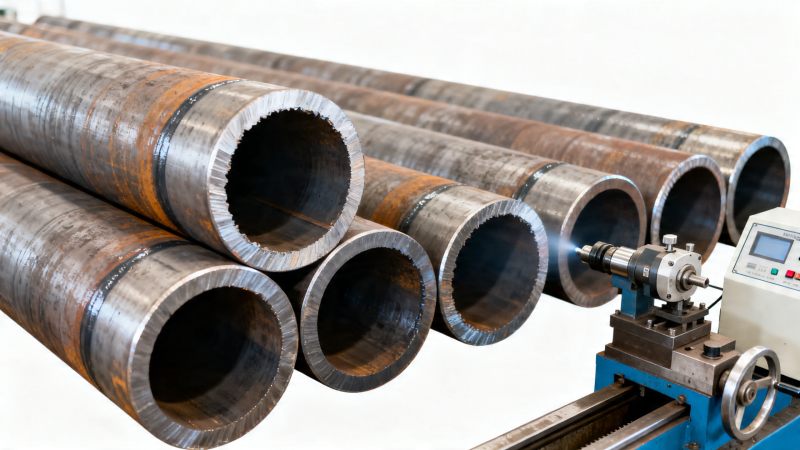
The best carbon steel pipe for oil and gas is not simply the strongest or the cheapest option. In practice, the right choice depends on service conditions, pressure level, transported media, temperature range, corrosion risks, applicable standards, and project budget. For many oil and gas applications, buyers and engineers usually compare pipes based on ASTM, API, and project-specific requirements rather than price alone.
As a general rule:
- For line pipe applications, API 5L grades such as Gr. B, X42, X52, or X65 are commonly evaluated.
- For high-temperature or pressure service, ASTM A106 carbon steel pipe is often preferred.
- For structural or lower-pressure support systems, ASTM A53 may be sufficient depending on code requirements.
- For sour service or corrosive environments, carbon steel may still be used, but only with suitable coatings, linings, corrosion allowance, and strict compliance checks.
So, the “best” option is the one that delivers safe long-term performance with controllable procurement risk. For most project teams, that means selecting a pipe grade and manufacturing source that matches operating conditions, inspection requirements, and total lifecycle cost.
How to Choose the Right Pipe Grade for Different Oil and Gas Applications
Oil and gas systems are not all the same. Upstream gathering lines, refinery process piping, transmission pipelines, fire protection systems, and structural supports all impose different demands. Choosing correctly starts with identifying the actual application.
Transmission and pipeline transport
For long-distance transport of crude oil, natural gas, or processed hydrocarbons, API 5L line pipe is often the benchmark. Important decision factors include yield strength, weldability, toughness, dimensional tolerance, and resistance to crack propagation. Higher grades can reduce wall thickness and weight, but they may also increase cost and fabrication sensitivity.
Process piping in plants and refineries
For plant systems handling elevated temperatures or pressure, ASTM A106 seamless carbon steel pipe is frequently considered. Buyers should verify whether seamless construction is mandatory, what NDT requirements apply, and whether the media introduces corrosion concerns beyond the capability of standard carbon steel.
Low and medium pressure service
For utility lines, water systems, non-critical process service, and some mechanical applications, ASTM A53 can be a practical and cost-effective option. However, it should not be selected by default for critical oil and gas conditions without reviewing design codes and project specifications.
Structural and auxiliary systems
Oil and gas facilities also require steel products beyond piping itself, including supports, skids, platforms, frames, and equipment bases. In integrated projects, sourcing structural steel from a manufacturer with strong standards control can help improve schedule coordination and quality consistency. For example, where auxiliary fabrication or steel structure supply is part of a broader package, products such as Cold Rolled Steel Coil may support construction and steel structure applications including factory steel frameworks, load-bearing components, trusses, and support elements. Materials available under standards such as ASTM, EN, JIS, and GB can be useful for buyers seeking coordinated sourcing.
The key takeaway is simple: start from the application, not from the catalog. A pipe that performs well in one oil and gas segment may be unsuitable or uneconomical in another.
What Buyers and Engineers Should Check Before Approving Carbon Steel Pipe
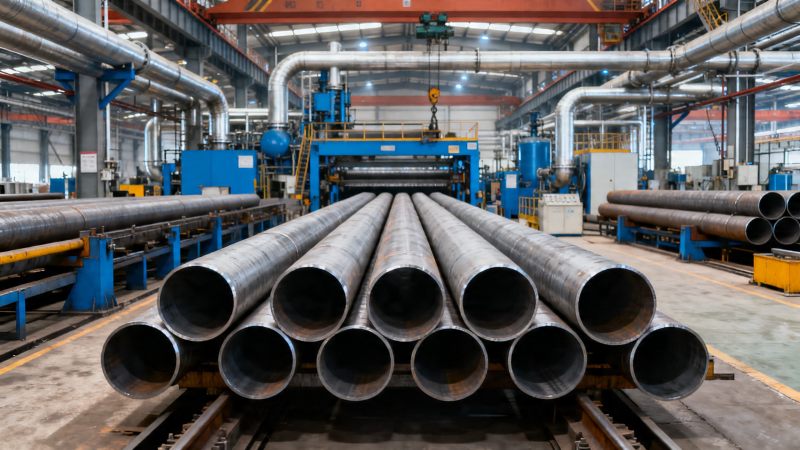
Technical approval should go beyond grade name and nominal dimensions. The following checklist helps reduce costly mistakes.
1. Manufacturing standard and grade equivalence
Do not assume different standards are interchangeable. API 5L, ASTM A53, and ASTM A106 serve different purposes. Always confirm:
- Applicable standard edition
- Pipe type: seamless, ERW, LSAW, or SSAW
- Grade and minimum mechanical properties
- Project or end-user supplementary requirements
2. Mechanical properties
Yield strength, tensile strength, elongation, and impact toughness must fit operating conditions. Higher strength is not automatically better if it complicates welding, procurement, or inspection.
3. Corrosion control strategy
Carbon steel pipe is widely used in oil and gas because it offers good strength and economic value, but it is not inherently corrosion-proof. Decision-makers should review:
- Internal corrosion from water, CO2, H2S, chlorides, or solids
- External corrosion from soil, marine exposure, humidity, or chemicals
- Protective coating systems
- Internal lining options
- Corrosion allowance in wall thickness
- Cathodic protection where relevant
4. Dimensional tolerances and wall thickness accuracy
In oil and gas service, dimensional consistency affects welding fit-up, pressure integrity, and installation speed. Reliable suppliers should provide clear tolerance control and test documentation.
5. Inspection and traceability
Quality control is a major concern for procurement teams, QA/QC staff, and project owners. Review whether the supplier can provide:
- Mill test certificates
- Hydrostatic testing records
- NDT reports
- Chemical composition reports
- Heat number traceability
- Third-party inspection support
6. Weldability and field fabrication performance
Pipe selection should consider actual construction conditions. A technically acceptable pipe on paper may still create field problems if weldability, bevel accuracy, or heat treatment requirements are not practical for the project team.
ASTM Standard Steel Pipe vs API Pipe: Which Matters More?
This is one of the most common questions from technical evaluators and purchasing teams. The answer depends on the intended service.
ASTM standards mainly define material properties, manufacturing methods, and testing requirements for broad industrial use. API standards, especially API 5L, are more specifically aligned with petroleum and natural gas transport applications.
In many oil and gas projects:
- API 5L is preferred for line pipe and energy transport systems.
- ASTM A106 is commonly chosen for high-temperature plant piping.
- ASTM A53 may be used for lower-pressure or less demanding systems, if accepted by project specifications.
For buyers, the practical issue is not deciding whether ASTM or API is “better” in the abstract. It is determining which standard the project, code, owner, or regulator actually requires. A lower-cost pipe that fails compliance review can cause delay, rework, and financial loss far beyond any upfront savings.
How to Balance Cost, Performance, and Supply Reliability
For business evaluators, financial approvers, and project managers, the best carbon steel pipe is often the one that optimizes total project value, not just unit price. A sound procurement decision usually balances five factors.
Initial material cost
Lower unit prices can be attractive, but they should be checked against testing scope, dimensional consistency, coating quality, and logistics reliability.
Fabrication and installation efficiency
Pipes with stable dimensions and consistent weldability can reduce fit-up time, welding defects, and site delays. This often creates hidden savings.
Service life and maintenance risk
If the operating environment is corrosive, under-specification can lead to early failures, shutdowns, and repair cost. In many cases, a slightly higher initial spend delivers much lower lifecycle cost.
Lead time and delivery certainty
For EPC contractors and distributors, supply reliability is critical. Missed delivery windows can interrupt construction sequences and create contract penalties.
Supplier capability
Strong suppliers do more than ship steel. They support specification review, documentation, inspection coordination, and communication across commercial and technical teams.
For importers and global buyers sourcing from China, this is especially important. A qualified manufacturer or exporter should demonstrate stable production capacity, standards compliance, export experience, and the ability to support customized requirements. Companies that already serve international construction, industrial, and manufacturing projects often provide better process control and lower sourcing risk than traders without manufacturing oversight.
Common Mistakes When Buying Carbon Steel Pipe for Oil and Gas Projects
Many procurement problems come from preventable misunderstandings. The most common mistakes include:
- Choosing pipe by price without confirming service suitability
- Assuming ASTM and API grades are freely interchangeable
- Ignoring corrosion conditions in early-stage selection
- Overlooking traceability and inspection requirements
- Accepting incomplete test certificates
- Failing to align engineering, procurement, QA, and site teams before ordering
- Underestimating packaging, export, and logistics risks for international supply
A better process is to align stakeholders early. Engineers define technical requirements, QA/QC verifies compliance, procurement assesses supplier capability, project managers review lead time, and finance evaluates total cost impact.
How to Identify a Reliable Carbon Steel Pipe Supplier
If you are comparing manufacturers or exporters, look beyond catalog breadth. A reliable supplier for oil and gas-related steel products should be able to show:
- Clear compliance with ASTM, EN, JIS, GB, or API-related requirements where applicable
- Documented quality control procedures
- Consistent raw material sourcing and production capability
- Experience with export packaging and shipping
- Responsive support for OEM or customized specifications
- Transparent communication on testing, tolerances, and lead times
For global buyers, a Chinese structural steel manufacturer and exporter with established production systems can offer strong cost-performance advantages, especially when projects require both pipe-related procurement coordination and complementary steel products for industrial or construction use. The real value lies in consistent quality, dependable lead times, and reduced sourcing uncertainty.
Final Decision Guide: What Makes a Carbon Steel Pipe the Best Choice?
The best carbon steel pipe for oil and gas is the one that matches your exact operating conditions, compliance requirements, fabrication needs, and project economics. There is no single universal answer, but there is a reliable decision framework:
- Define the actual application and service environment.
- Match the pipe standard and grade to code and operating conditions.
- Evaluate corrosion risks and protection methods early.
- Verify testing, traceability, and dimensional consistency.
- Assess supplier capability, lead time, and export reliability.
- Compare total lifecycle value, not just purchase price.
For buyers, engineers, and project teams, this approach leads to safer operation, fewer procurement surprises, and better long-term value. If you are sourcing from China, prioritize suppliers with proven standards compliance, modern production control, and the ability to support both technical documentation and delivery performance. That is usually what separates an acceptable steel pipe from the best choice for your oil and gas project.
Please give us a message


Please enter what you want to find