Are structural steel components from offshore suppliers traceable to mill test reports?
When sourcing structural steel components from offshore suppliers, traceability to mill test reports (MTRs) is non-negotiable for procurement professionals — especially in safety-critical construction and industrial projects. At Hongteng Fengda, every batch of structural steel components — including angle steel, channel steel, beams, and custom profiles — is fully traceable to certified MTRs aligned with ASTM, EN, JIS, and GB standards. We ensure full material transparency, from heat number and chemical composition to mechanical properties, enabling seamless compliance verification and risk mitigation for global buyers.
Yes — But Only With a Supplier That Builds Traceability Into Every Process Step
Short answer: Yes, structural steel components from qualified offshore suppliers *can* be fully traceable to mill test reports — but not all suppliers deliver this reliably. For procurement teams managing high-stakes infrastructure, energy, or commercial building projects, “yes, in theory” isn’t enough. What matters is documented, auditable, batch-level traceability — tied directly to the actual heat number used in production, verified against internationally recognized standards, and delivered without delay or ambiguity.
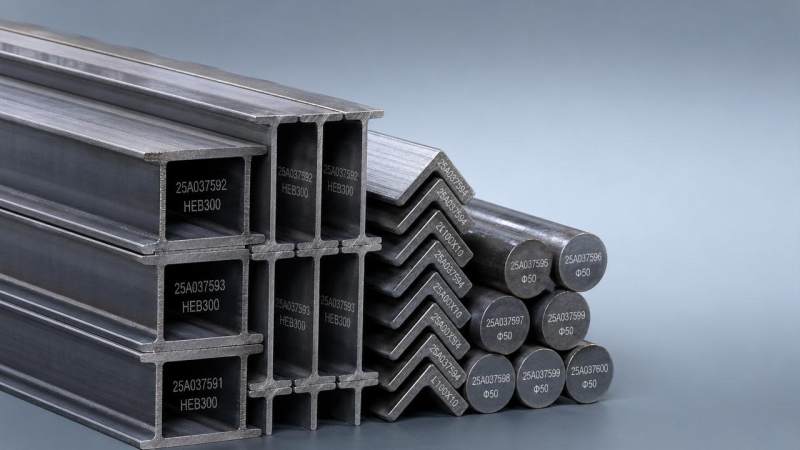
At Hongteng Fengda, traceability isn’t an add-on service — it’s embedded in our manufacturing DNA. From raw material intake through rolling, cutting, forming, and final inspection, each lot is assigned a unique heat identification code. That code travels with the material across every quality checkpoint and appears verbatim on the corresponding MTR — ensuring zero disconnect between physical product and paper (or digital) evidence.
This level of rigor matters because procurement professionals don’t just buy steel — they buy assurance. Assurance that tensile strength meets ASTM A6/A6M requirements. Assurance that sulfur content stays within EN 10025-2 limits for weldability. Assurance that your project won’t face costly delays, rework, or regulatory rejection due to unverified material origin.
What Procurement Teams Actually Need From MTRs — Not Just What They’re Supposed To Get
Many buyers assume an MTR is a standardized document — but in practice, its value depends entirely on what’s included, how it’s validated, and whether it reflects *your specific order*. A generic MTR stamped “compliant” means little if it lacks the heat number matching your shipment, omits key mechanical test results (e.g., yield strength at room temperature), or references outdated editions of ASTM A36 or EN S355JR.
We go beyond minimum compliance. Every MTR we issue includes: (1) full heat number and ladle analysis; (2) certified chemical composition (C, Mn, Si, P, S, Cu, Ni, Cr, Mo); (3) mechanical test data — tensile strength, yield point, elongation, and impact values (where applicable); (4) reference to the exact standard revision (e.g., ASTM A656-18, not just “ASTM A656”); and (5) third-party lab validation where required by client specification or regional regulation (e.g., TÜV, SGS, or BV).
Crucially, we provide MTRs *before shipment*, not after — giving procurement teams time to cross-check data, flag discrepancies, and approve release. This eliminates last-minute surprises and supports just-in-time logistics planning. For North American buyers, our MTRs are pre-formatted to align with AWS D1.1 and AISC 360 documentation expectations. For EU clients, they include CE marking support and Declaration of Performance (DoP) readiness.
How We Ensure Traceability Across Product Lines — Including Carbon Steel Round Bar
Traceability must scale across diverse product categories — from hot-rolled structural sections to precision-engineered cold-formed profiles and long products like round bars. Our system treats each category with equal forensic discipline. For example, our Carbon Steel Round Bar inventory — available in diameters from 5mm to 2500mm and lengths up to 12m — is managed under the same heat-tracking protocol as I-beams or channel sections.
Each Carbon Steel Round Bar batch carries full certification for grades such as Q345, S355JR, ASTM A106 Gr.B, and 45#, with MTRs specifying actual tensile strength (e.g., ≥470 MPa for Q345), elongation (>21%), and hardness values. Surface treatments — galvanizing, phosphating, or anti-rust oil — are also recorded, as they impact corrosion resistance and coating adhesion in end-use applications like handrails, staircases, or water supply systems.
This consistency allows procurement teams to consolidate sourcing without compromising traceability. Whether you’re specifying structural steel components for a wind turbine tower (requiring EN 10225 compliance) or decorative round bar for architectural railings (needing aesthetic finish + mechanical integrity), one supplier — Hongteng Fengda — delivers unified documentation, consistent lead times, and zero gaps in material lineage.
Why Offshore Sourcing Doesn’t Mean Compromised Oversight — If You Choose Right
The misconception that offshore = opaque is outdated — but only when working with partners who invest in verifiable systems. We maintain ISO 9001:2015-certified quality management, with internal audits conducted quarterly and external surveillance by SGS and Bureau Veritas. Our ERP system logs every heat number against purchase order, production schedule, NDT report, and final MTR — creating an immutable digital chain of custody.
For procurement teams managing multi-tier supply chains, this means reduced vendor qualification time. We accept client-audited MTR templates, support API RP 2A-WSD or ASME BPVC Section II Part A review protocols, and offer optional video-recorded mill inspections for high-value orders. No gatekeeping. No “standard format only.” Just responsive, audit-ready transparency.
And because we manufacture *and* export — rather than acting as a trading intermediary — there’s no middleman diluting accountability. When questions arise about a specific heat’s Charpy impact test at -20°C, our metallurgists respond directly — not via forwarded emails or delayed translations.
Practical Next Steps for Procurement Professionals
Before issuing your next RFQ for structural steel components, ask your supplier three non-negotiable questions: (1) Can you provide the MTR *before* loading — with matching heat number and full chemical/mechanical data? (2) Is your MTR issued by an in-house lab accredited to ISO/IEC 17025, or a third-party body? (3) Do you retain raw material certificates from your own steel mill suppliers — and can you share them upon request?
If the answer to any is “no,” “not routinely,” or “we’ll check,” treat it as a red flag — not a negotiation point. At Hongteng Fengda, all three are baseline commitments — backed by over 18 years of delivering traceable structural steel components to clients across 42 countries. We don’t just ship steel. We ship confidence — heat by heat, batch by batch, project by project.
In summary: Yes, structural steel components from offshore suppliers *are* traceable to mill test reports — but only when the supplier treats traceability as foundational, not optional. For procurement professionals balancing cost, speed, and compliance, partnering with a manufacturer that embeds transparency into operations — not just paperwork — transforms sourcing from a risk management exercise into a strategic advantage.
Please give us a message


Please enter what you want to find