Why angle steel price is moving from unit cost to total cost thinking
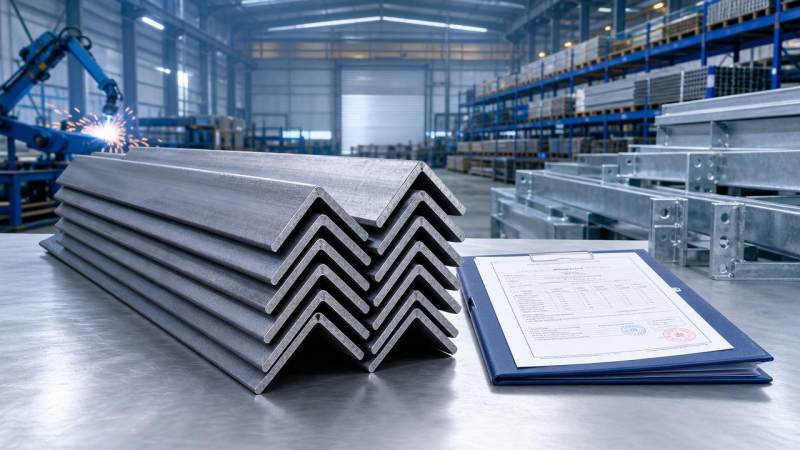
Angle steel price can vary far more than many buyers expect, and material grade is often one of the biggest cost drivers.
The market no longer rewards looking only at the lowest quoted tonnage rate.
Today, grade selection affects fabrication efficiency, coating performance, welding behavior, service life, and standards compliance.
That means angle steel price should be evaluated as a total project cost issue, not only a raw material purchase issue.
In structural steel sourcing, higher grade may increase the initial quote while reducing downstream waste, rework, and replacement risk.
This shift matters across construction, machinery, infrastructure, and industrial support structures.
Current signals show grade is becoming a stronger pricing variable
Recent sourcing patterns show wider price gaps between standard and higher performance angle sections.
This is happening because technical requirements are tightening in many export markets.
Projects increasingly require traceability, certified chemistry, mechanical property consistency, and alignment with ASTM, EN, JIS, or GB standards.
As a result, angle steel price is influenced not just by section size and weight.
It is also shaped by steelmaking route, alloy design, testing scope, and quality assurance depth.
For many applications, grade now determines whether a product is simply usable or truly cost-efficient.
What the market is signaling
- More projects specify minimum yield strength rather than generic mild steel.
- Corrosion exposure is pushing demand toward better coating compatibility.
- Fabrication shops prefer grades with stable forming and welding performance.
- Export documentation requirements increase the value of certified material.
- Longer service life expectations make lifecycle cost more visible.
The reasons behind angle steel price differences are becoming clearer
Material grade changes total cost because it changes both production inputs and project outcomes.
Some grades require tighter chemical control, cleaner steel, and more demanding rolling consistency.
Others are easier to produce but may create extra consumption in design or fabrication.
This is why two offers with similar dimensions can show very different angle steel price levels.
The cheaper quote may only be cheaper at the purchase stage.
How different grades change downstream project economics
Grade selection affects design efficiency first.
A stronger material may allow lighter sections or fewer reinforcements in some structures.
That can offset a higher angle steel price through lower steel consumption.
Fabrication is the second area of impact.
If the grade has reliable flatness, chemistry, and weld response, cutting and assembly become more predictable.
Better consistency often means fewer defects, lower scrap, and less schedule disruption.
A similar pattern appears in other carbon steel products used in global industrial applications.
For example, High Carbon Steel Pipe is often selected by comparing grade, standard, coating, and end treatment together.
Options such as API 5L, ASTM A106 Gr.B, or ASTM A53 Gr.B show how certification and performance can reshape total value.
With outer diameters from 15mm to 1200mm and finishes like galvanized or anti-corrosion coated, the right specification controls maintenance and installation costs.
The same sourcing logic applies when analyzing angle steel price.
Where total cost often changes
- Material consumption in structural design
- Welding speed and filler usage
- Drilling, cutting, and fit-up efficiency
- Galvanizing or coating adhesion performance
- Inspection pass rate and documentation approval
- Maintenance frequency over service life
The biggest impact is seen in compliance, risk, and delivery stability
Material grade affects more than engineering performance.
It directly shapes commercial risk in international steel supply.
When a grade matches project specifications exactly, inspection and approval become smoother.
When the grade is substituted loosely, hidden costs often appear later.
These costs may include retesting, delayed shipment, rejected lots, or field modifications.
In this context, a low angle steel price can become expensive very quickly.
Reliable structural steel suppliers reduce this risk through stable production, strict quality control, and standards-based manufacturing.
Manufacturers with export experience can also support customized structural steel components and OEM needs more effectively.
Key business effects
- Better grade matching reduces sourcing uncertainty.
- Certified materials lower approval delays.
- Stable quality helps protect installation schedules.
- Consistent lead times improve inventory planning.
- Suitable grades reduce long-term operating expense.
What deserves closer attention when comparing angle steel price
A useful comparison starts with application needs, not with the quote alone.
Angle steel used in light brackets does not face the same demands as angle steel used in towers, frames, or support systems.
The right review points usually include the following:
- Required strength level and structural load
- Applicable standard, such as ASTM, EN, JIS, or GB
- Welding, bending, punching, or galvanizing requirements
- Outdoor exposure, corrosion risk, or temperature condition
- Documentation needs, including MTC and inspection records
- Expected service life and replacement tolerance
These points help explain whether a higher angle steel price reflects real value or unnecessary over-specification.
A practical way to judge whether a higher grade is worth the extra cost
This approach turns angle steel price analysis into a value decision instead of a simple bidding exercise.
The next smart move is to compare offers on delivered value
The most useful steel quotation is not always the lowest one.
The best option is the one that balances grade, compliance, fabrication ease, durability, and dependable supply.
When reviewing angle steel price, ask for the exact grade basis, standards, testing scope, and tolerances.
Then compare likely downstream effects on scrap, labor, coating, lead time, and maintenance.
For global projects, working with an experienced structural steel manufacturer in China can help align cost with performance more accurately.
Hongteng Fengda supplies angle steel, channel steel, steel beams, cold formed steel profiles, and customized structural steel components for international requirements.
With modern production, strict quality control, and support for ASTM, EN, JIS, and GB standards, sourcing decisions become clearer and more reliable.
If the goal is better project economics, evaluate angle steel price through total cost, not tonnage alone.
Please give us a message


Please enter what you want to find