Choosing the right angle iron for construction is one of the most practical decisions in a steel project. If the size is too small, the structure may bend, twist, or fail early. If it is too large, you pay more for material, transport, fabrication, and installation without gaining useful value. For most buyers, the right choice comes down to matching load, span, connection method, environment, and local code requirements.
In simple terms, there is no single “best” size for every job. Small brackets, shelving frames, edge supports, wall reinforcements, equipment bases, and stair components all require different dimensions and thicknesses. This guide explains how to evaluate angle iron for construction, what sizes are commonly used, where buyers make mistakes, and how to choose with more confidence.
What users really need to know before choosing a size
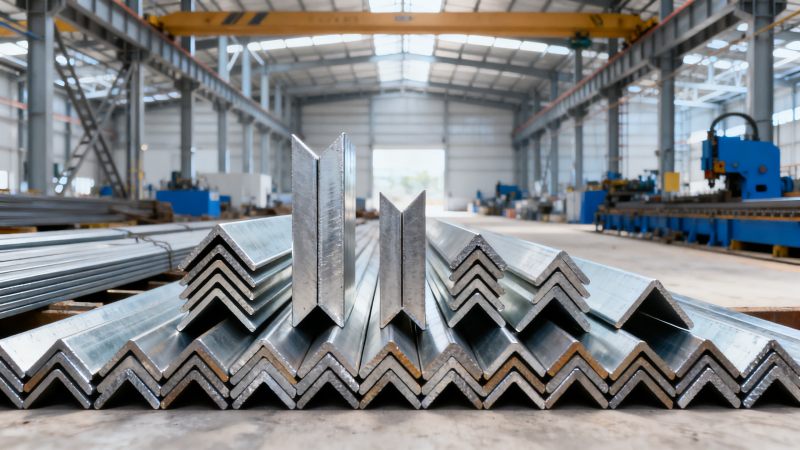
When people search for angle iron for construction, they are usually not looking for a textbook definition. They want to know which size will be safe, practical, and cost-effective for a real application. They may be comparing options for a home project, workshop frame, support member, fence structure, platform, or renovation job.
The first thing to understand is that “size” does not only mean leg length. Angle iron sizing also includes thickness, equal or unequal legs, steel grade, length, and whether the member will be welded or bolted. These factors work together. A wider angle with thin material may still perform worse than a smaller angle with greater thickness in some situations.
That is why experienced buyers start with function, not just dimensions. Ask what the angle will support, how long the unsupported span is, where the force will act, and whether the steel will face moisture, weather, vibration, or impact. Once those answers are clear, the right size becomes easier to identify.
Start with the actual job: what will the angle iron do?
Before looking at a size chart, define the exact role of the angle. In construction, angle iron can act as a brace, frame edge, corner reinforcement, connection support, lintel support, equipment base, rack member, or general fabrication component. Each role places different demands on strength and stiffness.
If the angle is mainly used as a trim support or light bracket, the load may be limited and smaller sections may work well. If it will support masonry, machinery, concentrated loads, or repetitive movement, the section usually needs more thickness and stronger load capacity. For long spans or heavily loaded frames, engineering review becomes especially important.
Homeowners and end users often choose based on appearance first, especially when the project seems small. That can be risky. A decorative-looking section may not have the stiffness needed to prevent sagging. Even when failure is unlikely, excessive deflection can create problems in alignment, finishes, fasteners, and long-term durability.
How angle iron size is measured
Angle iron is usually described by leg dimensions and thickness. An equal angle has two legs of the same length, such as 50 x 50 x 5 mm. An unequal angle has different leg lengths, such as 75 x 50 x 6 mm. In many practical applications, equal angles are common because they are simpler to source and fabricate.
Leg length affects bearing area, connection space, and overall geometry. Thickness affects strength, stiffness, weldability, and resistance to local deformation. Length matters because a longer unsupported piece can bend more easily than a shorter one, even if the cross-section is the same. This is why a size that works in one project may be inadequate in another.
Some buyers also overlook steel grade. Two pieces with the same shape and dimensions may have different mechanical properties depending on the material standard. If your project must meet ASTM, EN, JIS, or GB requirements, always confirm the grade and performance data rather than ordering by size alone.
Common angle iron sizes and where they are often used
For light-duty construction and fabrication, smaller sections such as 25 x 25 mm, 30 x 30 mm, or 40 x 40 mm may be used for brackets, small frames, guards, and light supports. These sizes are easier to handle and more economical, but they are not suitable for every structural task.
Mid-range sizes such as 50 x 50 mm, 63 x 63 mm, and 75 x 75 mm are common in many practical building applications. They are often used for support frames, edge members, utility structures, equipment stands, and moderate reinforcement work. Thickness selection in this range makes a major difference in performance.
Larger sizes such as 90 x 90 mm, 100 x 100 mm, or heavier unequal angles are more often used where loads are greater, spans are longer, or connection requirements are more demanding. These sections can provide stronger support, but they also increase cost, weight, and fabrication complexity. Bigger is not automatically better if the project does not need it.
Five factors that determine the right size
The first factor is load. Consider both dead load and live load, plus any impact, vibration, or occasional overload. A support carrying static shelving is different from a support under equipment that starts, stops, and shakes. Underestimating real loading conditions is one of the most common buying mistakes.
The second factor is span and support conditions. An angle fixed at both ends behaves differently from one that is loosely attached or projects as a cantilever. Longer spans generally require either a larger section, thicker steel, additional bracing, or a different shape entirely. In some cases, angle iron may not be the most efficient profile.
The third factor is connection method. Bolted connections need enough leg width and edge distance for holes. Welded fabrication needs appropriate thickness for sound welding and reduced distortion risk. If the angle must connect to concrete, wood, or other steel members, the connection detail often influences section choice as much as load does.
The fourth factor is exposure environment. Indoor dry conditions are relatively forgiving. Outdoor, coastal, industrial, or humid settings increase corrosion risk and may require protective coating, galvanized material, or a better corrosion-resistant system. Section loss from corrosion over time can reduce effective strength if protection is ignored.
The fifth factor is code, safety margin, and project standards. If the member affects structural safety, local building regulations or an engineer’s design may govern the minimum size. End users should not rely on guesswork for critical structural elements, especially in load-bearing walls, platforms, stairs, roof supports, or seismic applications.
Equal angle or unequal angle: which is better?
Equal angle iron for construction is widely used because it is versatile, easy to stock, and convenient for general framing and support work. When loads and connections are relatively balanced, equal angles are often the simplest and most practical choice. They also make layout and installation more straightforward for smaller projects.
Unequal angle becomes useful when one leg needs more connection area or when the geometry of the project is not symmetrical. For example, one leg may need to sit against a surface while the other provides support projection. In such cases, unequal angles can improve fit and material efficiency without over-sizing the entire member.
The better choice depends on the application, not preference alone. If a standard equal angle meets the load and connection needs, it is often the easier purchasing decision. If installation space, hole layout, or support direction is unusual, an unequal angle may solve the problem more efficiently.
Do not ignore corrosion protection and surface performance
Many buyers focus only on section size and forget that durability affects real value. In construction, corrosion can shorten service life, weaken appearance, increase maintenance, and reduce long-term safety. This matters even more for outdoor supports, roofing substructures, wall members, agricultural buildings, and industrial sites.
Depending on the application, you may use painted, galvanized, or specially coated steel products in the wider project. For example, if angle members are part of a building system exposed to weather, buyers often pair them with corrosion-resistant sheet and coil products for cladding or secondary structural use.
One option used in exterior, structural, and industrial applications is AZ50 Galvalume Steel Coil. With an aluminum-zinc-silicon coating, thickness from 0.12 mm to 6.00 mm, width from 600 mm to 1500 mm, and compliance with standards such as ASTM, EN, JIS, and GB, it is valued for corrosion resistance, strength, impact resistance, and weldability in related building applications.
While angle iron itself and coated coil are different product categories, the lesson is the same: size selection should always be considered together with environment and service life. Choosing the right section but the wrong protection system can still lead to higher lifetime cost.
Practical mistakes buyers often make
The first mistake is choosing by price per piece instead of total project value. A cheaper section may need extra supports, more frequent maintenance, or replacement earlier than expected. True cost includes fabrication, shipping, coating, labor, and service life, not just the purchase price of the steel.
The second mistake is copying a size from another project without checking current conditions. Even if two projects look similar, the span, connection, environment, and load may be very different. Reusing a dimension without reviewing these factors can create either overdesign or underperformance.
The third mistake is overlooking thickness. Buyers sometimes increase leg size for confidence but keep thickness too light. This can lead to local buckling, weak bolt zones, poor weld behavior, or noticeable flex. Thickness is not a minor detail; it is a core part of strength and fabrication performance.
The fourth mistake is failing to verify standards and tolerances. Imported or mixed-source steel should be checked for dimensional accuracy, chemical composition, mechanical properties, and quality consistency. Reliable manufacturers help reduce sourcing risk by providing clear specifications, inspection control, and stable supply.
A simple checklist to choose angle iron for construction
Start by writing down the application, load type, approximate load magnitude, member length, support points, and connection method. Then note whether the angle will be indoors or outdoors, visible or hidden, lightly loaded or structurally important. This basic list will immediately narrow your options.
Next, compare candidate sizes based on leg dimensions, thickness, grade, and finish. If the project is non-critical, you can often make a reasonable first selection from standard sizes. If the member will carry significant load or affect safety, ask a qualified engineer, fabricator, or supplier to review the choice before ordering.
Finally, confirm practical supply details. Ask whether the size is available in standard lengths, whether cutting or hole processing is supported, what coating options are available, and which international standards apply. Good sourcing is not just about finding steel; it is about finding steel that fits your project without creating delays or rework.
When to ask for custom support from a steel supplier
If your project includes multiple steel profiles, strict export requirements, or non-standard dimensions, working with an experienced structural steel manufacturer can save time and reduce error. This is especially useful when you need angle steel together with channel steel, beams, cold formed sections, or custom fabricated components.
A capable supplier can help align size selection with production capability, quality control, packaging, and destination market standards. For end users, this means fewer surprises during installation and better confidence that the steel you receive will match the technical and commercial needs of the job.
It also helps when the supplier understands global requirements. Manufacturers with experience in ASTM, EN, JIS, and GB standards can support buyers more effectively when projects involve different regional expectations. That is often as important as the section size itself.
Conclusion: choose the smallest size that safely does the job well
The best angle iron for construction is not the largest section you can afford. It is the size that safely handles the load, fits the connection, matches the environment, complies with the project standard, and avoids unnecessary cost. In most cases, that decision depends on load, span, thickness, steel grade, and corrosion protection working together.
If you remember one rule, let it be this: define the application first, then choose the section. When buyers start with the real job requirements instead of guesswork, they are far more likely to get a durable, economical, and reliable result. That approach leads to better performance, lower risk, and smarter steel purchasing.
Please give us a message


Please enter what you want to find