When evaluating alloy steel wire for industrial or construction applications, price alone never tells the full story.
The better question is how alloy steel wire performs over time under load, wear, moisture, heat, and repeated handling.
A lower purchase price may seem attractive, yet short service life often increases replacement cost, downtime, and sourcing risk.
For steel-related projects, long-term value depends on material grade, processing quality, application fit, and supplier consistency.
This guide answers practical questions about alloy steel wire price versus service life and helps build a smarter buying framework.
Why is alloy steel wire price not the same as total cost?
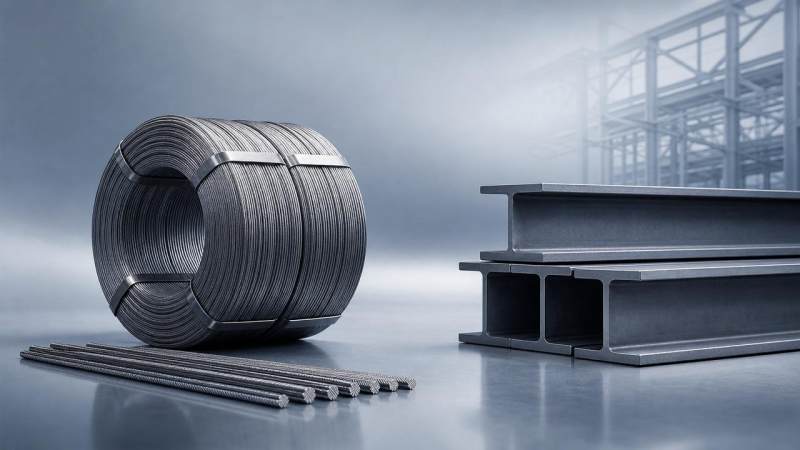
The listed alloy steel wire price reflects only the initial transaction, not the complete ownership cost across the working cycle.
Total cost includes installation time, maintenance frequency, inspection effort, replacement intervals, and possible production interruption.
If alloy steel wire fails early, the hidden cost may exceed the savings gained from a lower unit price.
This is especially true in harsh environments where abrasion, tension, or corrosion accelerate material degradation.
In many steel structure and industrial systems, stable service life supports safer operation and more predictable project budgeting.
- Low price can mean thinner coating or inconsistent chemistry.
- Frequent replacement increases labor and delivery pressure.
- Unstable batches can create quality variation across one project.
What factors most influence alloy steel wire service life?
Service life depends on more than strength alone. Material composition and production control both matter greatly.
1. Alloy composition and base grade
Different alloying elements improve tensile strength, toughness, fatigue resistance, or heat performance.
A suitable grade can extend alloy steel wire life in demanding applications, while an unsuitable grade shortens it quickly.
2. Heat treatment and processing quality
Drawing quality, heat treatment, and surface finish strongly affect crack resistance and long-term mechanical stability.
Poor process control may leave internal stress or uneven hardness, reducing the expected life of alloy steel wire.
3. Working environment
Outdoor exposure, marine air, chemicals, and high humidity can speed corrosion and weaken performance.
In high-friction environments, wear resistance becomes as important as tensile capacity.
4. Load pattern and use frequency
Static loads and repeated dynamic loads affect alloy steel wire differently.
Applications with frequent bending or vibration usually require greater fatigue resistance and tighter quality consistency.
How can you compare low-price and high-value alloy steel wire?
A practical comparison should combine price, performance, and risk rather than focusing on quotation alone.
The table below offers a simple evaluation method for alloy steel wire sourcing decisions.
When reviewing alloy steel wire offers, ask for mechanical properties, tolerances, coating details, and compliance documents.
A strong offer should explain not only price, but also expected service performance in the real application.
Which related steel products help improve structural project value?
Many projects using alloy steel wire also require structural members with reliable strength and efficient fabrication performance.
For load-bearing systems, H Shape Beam is often selected for steel structures, bridging, shipbuilding, and machinery.
Available grades include Q235, Q345B, Q460C, SS400, S275JR, S355JR, A572, and A992.
It supports flange thickness from 8-64mm and web thickness from 5-36.5mm.
Lengths can range from 1m to 12m or follow project requirements.
Its optimized cross-sectional area distribution offers strong bending resistance, simple construction, and cost-saving potential.
Products can comply with JIS G3101, EN10025, ASTM A36, ASTM A572, and ASTM A992.
When alloy steel wire and structural sections are sourced together, compatibility and delivery planning become easier to manage.
How do application scenarios change the best alloy steel wire choice?
The best alloy steel wire is always application-specific. There is no universal lowest-cost solution.
Construction and structural support
Projects exposed to weather need attention to corrosion resistance, coating durability, and consistent tensile properties.
If installation is difficult, longer service life usually justifies a higher alloy steel wire price.
Industrial manufacturing
Machinery and production systems often demand fatigue resistance and dimensional accuracy.
In these cases, a stable alloy steel wire supplier helps avoid line stoppage caused by uneven quality.
Marine or humid environments
Salt, moisture, and temperature change create aggressive conditions for steel materials.
Choosing alloy steel wire only by price may lead to premature corrosion and higher lifetime expense.
What common mistakes reduce alloy steel wire value?
Several purchasing mistakes can make alloy steel wire look economical on paper but expensive in operation.
- Comparing quotes without checking standards, grade details, or testing records.
- Ignoring the actual environment where alloy steel wire will be used.
- Assuming all wires with similar dimensions deliver equal service life.
- Overlooking packaging, transport protection, and storage conditions.
- Choosing a supplier with unstable lead times or weak quality traceability.
These issues can affect project schedules as much as material performance itself.
For global sourcing, service reliability is part of value, not a separate consideration.
How should alloy steel wire be evaluated before ordering?
A balanced evaluation process helps connect alloy steel wire price with expected service life more accurately.
- Define working load, environment, and required lifespan.
- Confirm applicable standards and grade options.
- Request test reports for strength, chemistry, and dimensional tolerances.
- Review coating or surface treatment where corrosion matters.
- Compare supplier capacity, traceability, and delivery consistency.
- Estimate replacement frequency to calculate long-term cost.
This approach turns alloy steel wire purchasing into a measurable technical decision instead of a simple price comparison.
Conclusion: how can price and service life be balanced effectively?
The best alloy steel wire choice is rarely the cheapest option on the quotation sheet.
Real value comes from suitable grade selection, consistent quality, dependable supply, and a service life matched to the application.
In steel-related projects, that balance helps reduce replacement cycles, lower operational uncertainty, and support stronger cost control.
If the goal is better sourcing confidence, compare alloy steel wire offers by lifecycle value, not by unit price alone.
A qualified structural steel partner with stable production and standard-compliant products can make that decision much easier.
Please give us a message


Please enter what you want to find