For financial decision-makers planning 2026 steel procurement, understanding ASTM standard steel pipe cost factors is essential for accurate budgeting and risk control. From raw material volatility and manufacturing standards to logistics, compliance, and supplier reliability, every variable can affect total landed cost. This article explains the key pricing drivers to help buyers make cost-efficient, lower-risk sourcing decisions.
In 2026, the price of ASTM standard steel pipe will not be determined by base steel alone. Finance teams must look at at least 6 cost layers: raw materials, processing route, specification complexity, testing and certification, freight, and supplier execution reliability. A quotation that appears 3% lower at order stage can become 8% to 15% higher after delays, rework, inspection issues, or unexpected logistics surcharges.
For import buyers, especially those approving annual or project-based budgets, the key question is not simply “What is the unit price per ton?” It is “What is the total landed cost per compliant, usable ton delivered on time?” That distinction matters when comparing mills, traders, and exporters across China and other sourcing markets.
What Drives ASTM Standard Steel Pipe Cost in 2026
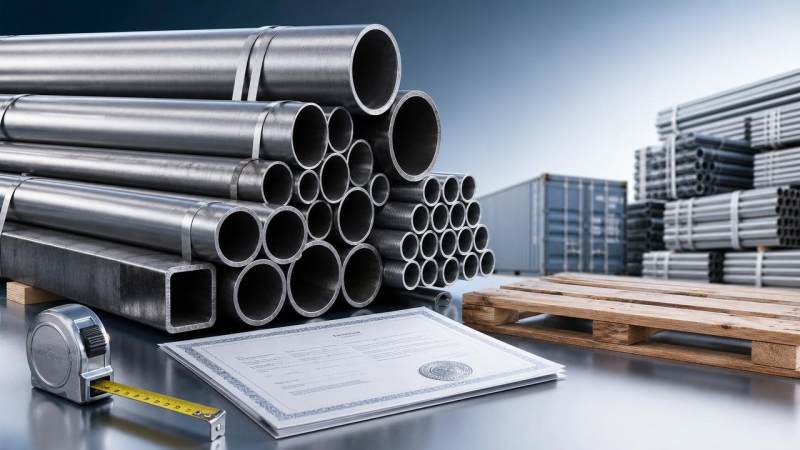
ASTM standard steel pipe pricing usually reflects both commodity exposure and manufacturing discipline. For finance approvers, the most important task is separating visible costs from hidden costs. Visible costs include steel price, processing fee, and freight. Hidden costs include tolerance failure, coating inconsistency, retesting, customs documentation gaps, and delivery slippage of 1 to 4 weeks.
Raw Material and Grade Selection
The first driver is steel grade. ASTM standard steel pipe may be produced from different materials such as A53, A106, or structural and line pipe grades depending on application. Even when outside diameter and wall thickness look similar, the chemistry, mechanical performance, and process route can create a price gap of 5% to 20%.
Raw material volatility is especially relevant when procurement cycles exceed 30 to 60 days. Scrap, billet, hot rolled coil, and energy costs can all move within one quarter. Buyers who request price validity for 45 days or more should expect either a risk premium or a formula-based mechanism tied to material movement.
Why this matters to finance teams
- Grade substitution risk can create downstream compliance losses.
- Low-cost offers may exclude required test documentation.
- Material swings can affect annual budget variance by 8% or more.
Pipe Manufacturing Method and Processing Cost
Manufacturing method is the second major cost factor. Welded pipe and seamless pipe have different production economics. ERW production is typically more cost-efficient for many structural and general applications, while seamless pipe usually carries a higher conversion cost due to piercing, rolling, heat treatment, and inspection steps. Depending on size and grade, the difference can range from 10% to 35%.
Processing details also change the final price. Beveling, threading, grooving, cutting into fixed lengths such as 6 m or 12 m, bundling, painting, galvanizing, or anti-rust oil application all add cost. In finance evaluation, these items should be isolated line by line rather than buried in a single ex-works number.
The table below shows how common procurement variables affect the cost structure of ASTM standard steel pipe orders.
The main takeaway is that price differences often reflect process choices rather than supplier margin alone. When procurement specifications are not tightly aligned with actual use conditions, finance departments may approve unnecessary cost layers that do not create project value.
Specification Complexity, Compliance, and Testing Costs
The third pricing lever is specification complexity. ASTM standard steel pipe ordered in standard dimensions is generally more economical than pipe requiring special outside diameters, heavy wall thicknesses, mixed lengths, or low-volume custom bundles. Once an order moves away from mill-standard scheduling, setup efficiency declines and cost per ton rises.
Tolerance, Inspection, and Documentation
For many industrial and construction buyers, compliance cost is not optional. Hydrostatic testing, ultrasonic inspection, dimensional checks, mill test certificates, and export documentation can add measurable value because they reduce the risk of rejection or project delay. However, each added requirement should be tied to a real acceptance criterion, not copied automatically from past tenders.
Inspection cost can be small on a per-ton basis, yet large in project impact. A delayed third-party inspection by 5 to 7 days may trigger vessel rollover, storage charges, or missed installation windows. Finance teams should compare the cost of pre-shipment verification against the potential penalty of site disruption.
Four compliance checks worth reviewing before approval
- Whether ASTM grade and application standard are clearly matched.
- Whether mechanical property requirements are listed in the contract.
- Whether testing scope is defined before production begins.
- Whether document format meets destination customs and project owner requirements.
In many sourcing programs, buyers also bundle other steel items into the same purchasing cycle. For example, structural packages may include round bars, beams, channels, and cold formed profiles. In such cases, consolidating orders with a capable manufacturer can reduce coordination costs. One practical example is A36 Carbon Steel Round Bar, commonly used in construction, manufacturing, engineering, handrails, railings, staircases, and general fabrication. Available in lengths such as 2 m, 5 m, 6 m, and 12 m with diameter ranges from 5 mm to 2500 mm, it can support mixed-project sourcing where ASTM-related documentation, surface treatment options, and dimensional consistency matter for budget control.
From a finance perspective, combining compatible products under one supplier may reduce separate inspection events, duplicate inland transport, and fragmented customs paperwork. The savings may not always appear in unit price, but they often improve total procurement efficiency across 2 to 3 product categories.
How Standardization Lowers Cost
When buyers standardize dimensions, coating type, and acceptance rules, manufacturers can plan production in larger runs. This often improves yield, shortens lead time by 7 to 14 days, and reduces changeover loss. For annual contracts, such standardization can produce meaningful savings even if the nominal unit price reduction is only 2% to 4%.
Logistics, Incoterms, and Total Landed Cost
The fourth major cost block is logistics. For imported ASTM standard steel pipe, ocean freight, inland trucking, port charges, packaging method, and Incoterms can change the actual landed cost substantially. A buyer comparing FOB and CIF quotes without calculating destination charges may misread the cheaper option.
Freight and Packaging Variables
Pipe dimensions affect container utilization. Longer lengths such as 12 m may require breakbulk or special handling depending on the route and destination infrastructure. Smaller bundles can improve unloading flexibility but may increase packaging labor. Heavy-wall pipe also raises payload and freight-per-container efficiency differently from lighter sections.
In 2026 budgeting, finance approvers should model at least 3 scenarios: stable freight, moderate increase, and peak-season disruption. This is especially relevant for shipments to North America, Europe, the Middle East, and Southeast Asia, where seasonal congestion and port handling differences can affect delivery by 1 to 3 weeks.
The following table outlines practical landed-cost checkpoints for imported ASTM standard steel pipe.
A finance-led review of logistics often identifies savings that sourcing teams miss. For example, a slightly higher ex-works price from a supplier with stronger export execution can still deliver lower total cost if it reduces demurrage, claims, or schedule slippage.
Incoterms and Budget Accuracy
Choosing between EXW, FOB, CFR, or CIF changes cost visibility. FOB is often preferred when buyers control freight centrally, while CIF may simplify smaller programs. However, no term is automatically cheaper. The right choice depends on shipment frequency, internal logistics capability, and the buyer’s tolerance for external cost variability.
For annual procurement, many finance teams use a two-layer model: product cost approval first, then freight index adjustment at shipment stage. This approach can improve budget discipline where freight is volatile but material demand is stable.
Supplier Reliability, Lead Time, and Cost of Procurement Risk
The fifth and often underestimated factor is supplier reliability. ASTM standard steel pipe sourced from a capable manufacturer is not only about production equipment. It also depends on process control, documentation discipline, export coordination, and communication speed. A delayed response during the pre-shipment stage can create much larger cost consequences than a small unit-price difference.
Why lead time consistency affects cost
If promised lead time is 25 days but actual production takes 38 days, the extra 13 days may affect installation sequence, labor scheduling, and cash flow planning. For project-based buyers, this can be more expensive than paying 2% more to a supplier with dependable execution. Budget accuracy improves when lead time variance stays within a controlled range, such as plus or minus 5 days.
Hongteng Fengda operates as a structural steel manufacturer and exporter from China, supplying angle steel, channel steel, steel beams, cold formed profiles, and customized structural steel components for global construction and industrial use. For buyers managing multiple steel categories, working with a partner familiar with ASTM, EN, JIS, and GB requirements can simplify technical communication and reduce sourcing risk across different standards.
Five supplier review points before final approval
- Production capacity aligned with required monthly tonnage.
- Clear quality control checkpoints before shipment.
- Experience handling export documents for target markets.
- Ability to support OEM or mixed-specification orders.
- Consistent communication within 24 to 48 hours during execution.
Common cost mistakes finance teams should avoid
One common mistake is approving the lowest headline quote without checking what is excluded. Another is using an outdated specification that adds unnecessary testing or premium-grade requirements. A third is evaluating suppliers only on first-purchase price rather than on three metrics: compliance rate, on-time delivery, and rework probability.
A more effective approach is to build a weighted scorecard. For example, unit price may account for 40%, technical compliance 25%, lead time 20%, and logistics capability 15%. This turns supplier selection into a measurable business decision rather than a purely price-driven negotiation.
Practical Budgeting Strategy for 2026 ASTM Steel Pipe Procurement
For finance decision-makers, a workable procurement strategy should combine cost control with operational resilience. Start by defining the application clearly, then standardize grades and dimensions where possible, validate testing scope, compare landed cost under the same Incoterm, and qualify suppliers based on execution history. These 5 steps usually produce more reliable outcomes than negotiating price in isolation.
Recommended approval framework
- Confirm required ASTM specification and end-use environment.
- Review whether standard sizes can replace custom dimensions.
- Separate ex-works price, processing fee, and logistics cost.
- Check testing, certification, and document requirements.
- Evaluate supplier lead time, export readiness, and communication discipline.
When this framework is applied consistently, buyers are better positioned to reduce avoidable overspending, limit compliance disputes, and improve budget predictability over 6- to 12-month purchasing cycles.
ASTM standard steel pipe cost in 2026 will be shaped by more than mill price trends. Grade selection, process route, standardization level, inspection scope, freight structure, and supplier reliability all influence the final cost per usable ton. For financial approvers, the strongest sourcing decisions come from full-cost visibility and disciplined supplier evaluation, not from headline price alone.
If you are planning structural steel or related ASTM procurement from China, Hongteng Fengda can support your team with stable production, international-standard compliance, and customized supply coordination for global projects. Contact us today to discuss specifications, request a tailored quotation, or get a practical sourcing plan for your 2026 steel purchasing program.
Please give us a message


Please enter what you want to find