Many buyers focus on price and size but overlook critical ASTM A106 Gr.B specification details that affect compliance, performance, and delivery. From ASTM A106 Gr B chemical composition and ASTM A106 Gr B mechanical properties to ASTM A106 Gr.B equivalent grades and pipe ordering notes, small mistakes can create costly project risks. This guide highlights the specification points often missed in orders and helps engineers, purchasers, and project teams source ASTM A106 Gr B pipe with greater confidence.
What Buyers Usually Miss When Ordering ASTM A106 Gr.B Pipe
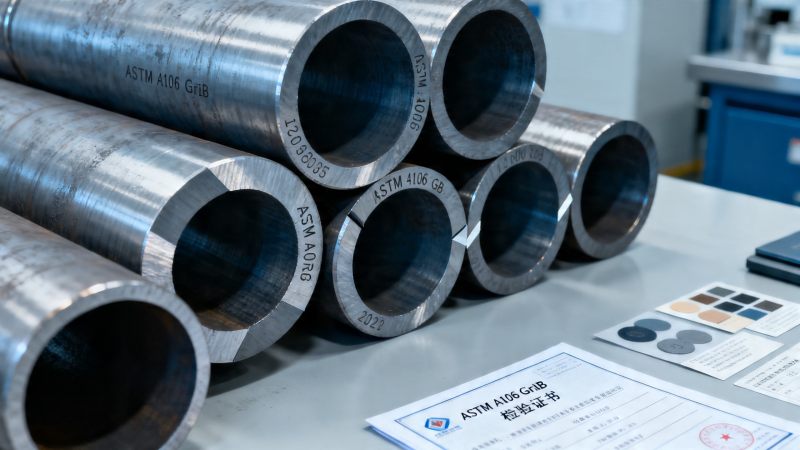
The core search intent behind this topic is practical: buyers, engineers, and project teams want to avoid ordering mistakes that lead to rejection, delay, or performance risk. In real projects, the problem is rarely “what is ASTM A106 Gr.B?” The real problem is whether the ordered pipe will match service conditions, inspection requirements, certification expectations, and downstream fabrication needs.
For most target readers, the biggest concerns are straightforward:
- Will the pipe fully meet ASTM A106 Gr.B specification requirements?
- Are the chemical composition and mechanical properties suitable for the operating condition?
- Have all order details been clearly defined to avoid supplier interpretation gaps?
- Can the material documents, testing, and traceability support project approval and final inspection?
- Is there any risk in using equivalent grades without formal technical review?
The most helpful way to evaluate ASTM A106 Gr.B pipe is not by nominal size and quoted price alone, but by checking the order sheet against actual project demands: temperature, pressure, testing scope, end finish, length tolerance, documentation, and coating or packaging requirements. These details decide whether a low-price order remains low-cost after delivery.
Key ASTM A106 Gr.B Specification Points That Should Be Written Into the Order
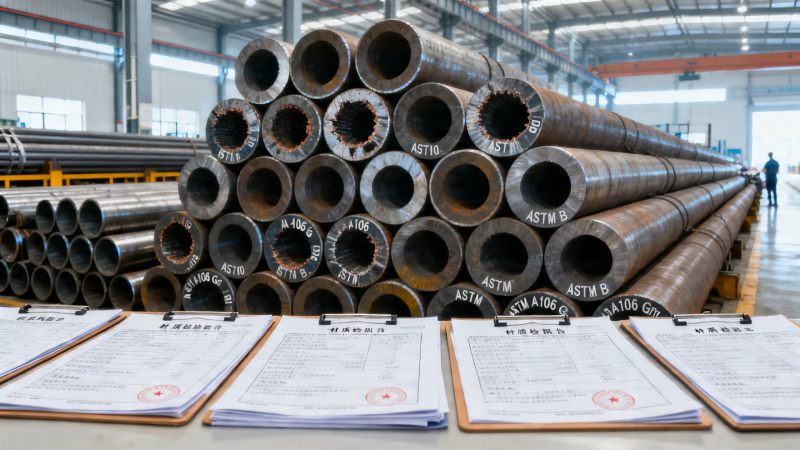
ASTM A106 Gr.B is a seamless carbon steel pipe specification commonly used for high-temperature service. Because it is widely used, many buyers assume suppliers will automatically understand all expectations. That assumption causes problems. The standard defines baseline requirements, but many commercial and project-specific details still need to be stated clearly in the purchase order.
1. Confirm the exact product form
ASTM A106 applies to seamless carbon steel pipe. If the order only says “A106 Gr.B pipe” without emphasizing seamless type, confusion may arise in mixed sourcing environments where other carbon steel pipe standards are also offered. The order should identify:
- Standard: ASTM A106
- Grade: Gr.B
- Manufacturing type: seamless
- Pipe size: NPS / OD and wall thickness
- Schedule or exact wall
- Length requirement: random, double random, or fixed cut length
2. Do not assume chemical composition is enough on its own
ASTM A106 Gr B chemical composition is important, but buyers often stop there. In practice, the material must also support fabrication, welding, bending, and in-service reliability. A typical review should include carbon, manganese, phosphorus, sulfur, silicon, and any project limits that may be stricter than the ASTM minimum standard.
If your project has welding sensitivity or toughness concerns, ask whether additional controls are needed beyond the base ASTM requirement. This is especially important when end users, EPC contractors, or third-party inspectors apply supplementary acceptance criteria.
3. Check ASTM A106 Gr B mechanical properties against actual use
ASTM A106 Gr B mechanical properties are often cited in a general way, but what matters is whether the delivered pipe supports the intended service and fabrication process. Buyers should verify at least:
- Tensile strength
- Yield strength
- Elongation
- Flattening or bend test compliance where applicable
Mechanical compliance on paper does not remove the need to define hydrostatic testing, NDT expectations, or any project-specific inspection hold points.
4. Specify testing and documentation clearly
One of the most frequently missed order details is documentation. If the purchase order does not state required certificates and test reports, a supplier may provide only standard commercial paperwork. For critical applications, specify whether you need:
- Mill test certificate
- Heat number traceability
- Chemical analysis report
- Mechanical test report
- Hydrostatic test record
- NDT report if required
- Third-party inspection
- Marking and traceability method
This point matters not only to quality teams but also to finance and project managers, because missing documents can delay acceptance, payment release, customs clearance, or site installation.
5. Be careful with ASTM A106 Gr.B equivalent grades
Buyers often search for ASTM A106 Gr.B equivalent grades to broaden sourcing options or compare international materials. This can be useful, but “equivalent” does not always mean “interchangeable without review.” Similar grades under ASTM, EN, JIS, or GB may differ in chemistry range, testing scope, manufacturing route, or application assumptions.
If an equivalent grade is proposed, ask for a technical comparison covering:
- Chemical composition range
- Mechanical properties
- Applicable temperature and pressure conditions
- Inspection and testing differences
- Code or end-user approval requirements
For procurement teams, this review can reduce supply risk. For technical evaluators, it prevents a substitution that appears acceptable commercially but fails project compliance review later.
How to Reduce Ordering Risk in Real Projects
The best orders are not the shortest ones. They are the clearest ones. In practical purchasing, many disputes come from unstated assumptions rather than nonconforming material. To reduce risk, use a structured order checklist before PO release.
Recommended ASTM A106 Gr.B order checklist
- Reference standard and grade
- Seamless pipe confirmation
- Size, wall thickness, and schedule
- Length type and tolerance
- Ends: plain end, beveled end, threaded, with caps if needed
- Quantity by piece, ton, or total length
- Required tests and inspection scope
- Certification and traceability documents
- Surface condition, coating, varnish, or temporary protection
- Marking, bundling, packaging, and shipping requirements
- Application environment if relevant
- Third-party inspection or customer witness points
This approach is valuable across functions. Engineers gain better technical fit, procurement reduces claims, quality teams improve incoming inspection efficiency, and management gets more predictable delivery and cost control.
In many industrial supply chains, buyers also source complementary steel products for support structures, fabrication, or corrosion-resistant components alongside pipe materials. For example, if a project also requires durable round steel for towers, poles, hardware, or structural accessories, Galvanized Round Steel can be relevant where anti-corrosion life, dimensional control, and multi-standard compliance are important. In such cases, reviewing coating method, tolerances, tensile performance, and traceability with the same discipline used for pipe orders helps reduce total sourcing risk across the project.
What Different Decision Makers Should Check Before Approval
Because the target audience includes technical, commercial, operational, and management roles, the decision criteria are not identical. A strong ASTM A106 Gr.B sourcing decision should satisfy all of them.
For engineers and technical evaluators
- Verify operating temperature suitability
- Review ASTM A106 Gr B mechanical properties against design needs
- Assess fabrication and welding considerations
- Confirm substitution risk if equivalent grades are offered
For purchasers and commercial teams
- Compare quotations based on full technical scope, not unit price only
- Check what testing and documents are included or excluded
- Confirm lead time for exact specification, not generic stock
- Clarify packing, marking, and shipment method before order release
For quality and safety personnel
- Require traceable MTCs and inspection evidence
- Review heat number consistency and product marking
- Confirm whether third-party inspection is needed
- Check acceptance criteria before goods arrive on site
For project managers and business decision makers
- Measure total risk cost, not just purchase cost
- Prioritize stable supply, documentation quality, and delivery reliability
- Reduce rework, schedule slippage, and approval delays through clearer ordering
- Choose suppliers that can support international standards and customized requirements
That is where experienced steel manufacturers and exporters can add value beyond supply alone. For global buyers, the ideal partner is one that understands not only standard compliance but also how documentation, customization, packaging, and lead-time control affect project execution.
Final Takeaway: A Better ASTM A106 Gr.B Order Is a Lower-Risk Order
The most missed ASTM A106 Gr.B specification details are usually not complicated. They are the practical items buyers assume are “understood” but never clearly state: seamless confirmation, testing scope, length details, end finish, documentation, traceability, and any restrictions on equivalent grades. These omissions can create avoidable cost, compliance, and delivery problems.
If you are sourcing ASTM A106 Gr.B pipe, the safest approach is to align the order with real service needs and approval requirements from the start. Review ASTM A106 Gr B chemical composition and ASTM A106 Gr B mechanical properties in context, treat ASTM A106 Gr.B equivalent grades with caution, and convert verbal assumptions into written PO details. That is how buyers, engineers, and project teams improve compliance confidence and reduce sourcing risk.
Please give us a message


Please enter what you want to find