ASTM A106 Gr.B specification directly affects pressure performance, sourcing decisions, and project safety. Before comparing ASTM A106 Gr.B equivalent options or reviewing ASTM A106 Gr B chemical composition, buyers and engineers need to understand the key limits that define every ASTM A106 Gr B pipe. This guide explains the selection-critical factors clearly, helping technical teams, purchasers, and project managers reduce risk and choose compliant steel solutions with confidence.
In industrial steel procurement, selection errors rarely begin with price. They usually begin with incomplete reading of the standard. For ASTM A106 Grade B seamless carbon steel pipe, a few specification limits can change the entire fit-for-service decision, including pressure rating, wall thickness tolerance, testing scope, and heat treatment expectations.
This matters not only to design engineers, but also to quality managers, project buyers, distributors, and financial approvers. A pipe that looks similar on paper may differ significantly in temperature suitability, inspection requirements, or compliance risk. For projects with 2- to 12-month execution cycles, correcting a wrong material choice after delivery can create costly delays.
As a structural steel manufacturer and exporter from China, Hongteng Fengda supports global buyers who need consistent steel quality, standard-based production, and practical sourcing advice. While the company is known for structural steel sections and customized components, the same disciplined approach to standards, traceability, and export control also shapes how technical steel products should be evaluated in international supply chains.
What ASTM A106 Grade B Covers and Why the Scope Matters
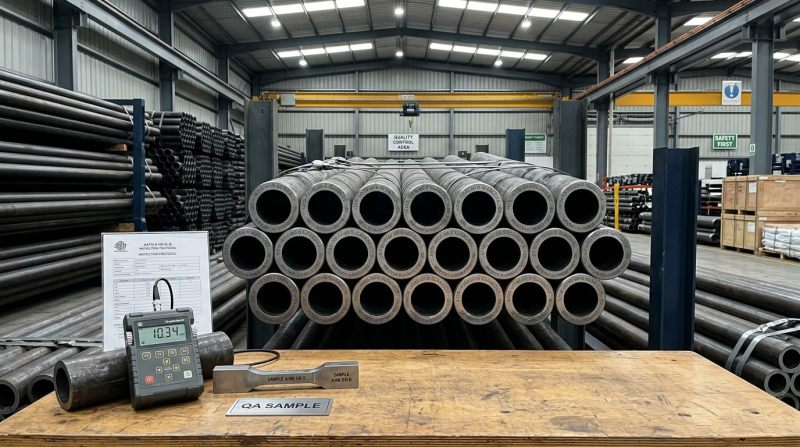
ASTM A106 covers seamless carbon steel pipe for high-temperature service. Grade B is the most commonly specified option because it balances strength, availability, and cost across refineries, power plants, process lines, and general pressure piping systems. The keyword here is seamless. That single word changes manufacturing route, inspection expectations, and end-use reliability.
Many buyers compare ASTM A106 Gr.B with ASTM A53 or API 5L because dimensions can overlap. However, the specification scope is different. A106 is selected when elevated temperature performance is required, often in systems operating above standard ambient utility conditions. Even a 20°C to 100°C rise in service environment can affect material suitability decisions in real projects.
Another important point is that ASTM A106 Grade B does not define selection by chemistry alone. Pipe choice must consider manufacturing method, testing, dimensional tolerance, and end condition. Engineers often start with ASTM A106 Gr B chemical composition, but procurement teams should read the full specification and purchase order requirements before locking in supply.
In project practice, the standard matters most in 4 areas: service temperature, pressure retention, fabrication compatibility, and inspection confidence. If one of these four is not aligned with project requirements, the material may still be “standard compliant” but unsuitable for the actual job site conditions.
Core scope checkpoints before selection
- Confirm the pipe is seamless, not ERW or welded substitute material.
- Check whether the service is truly high-temperature or general-purpose pressure piping.
- Verify end use: boiler line, process piping, steam service, fabrication spool, or structural crossover use.
- Review whether supplementary tests or third-party inspection are required at order stage.
The table below shows how ASTM A106 Grade B is typically differentiated from other commonly compared pipe standards in practical sourcing discussions.
The key conclusion is simple: ASTM A106 Grade B should not be selected only because its nominal strength appears familiar. Its value lies in the service scope and specification framework, not just the grade label.
The Key Limits That Most Directly Change ASTM A106 Gr.B Selection
Several specification limits have a direct impact on whether an ASTM A106 Gr B pipe is acceptable for a given project. The first is chemical composition. Although composition ranges are not unusually complex, carbon, manganese, phosphorus, sulfur, silicon, chromium, copper, molybdenum, nickel, vanadium, and combined alloy limits all affect weldability, toughness, and process reliability.
The second is mechanical performance. ASTM A106 Grade B is commonly associated with minimum tensile strength of 60 ksi and minimum yield strength of 35 ksi. Those values are often treated as a simple pass/fail benchmark, but they also influence wall thickness decisions, support spacing, and fabrication planning in systems that combine pressure duty with thermal expansion stress.
The third is dimensional tolerance. Outside diameter, wall thickness, length, end finish, and straightness can all affect fit-up efficiency. A pipe that passes mill inspection but arrives with tolerance variation near the upper or lower limit may still create field welding delays, especially in prefabricated spools or projects using automated bevel alignment tools.
The fourth is testing and marking. Hydrostatic test, nondestructive electric test, flattening requirements where applicable, and traceable marking on each length are not paperwork details. They are part of the risk-control package. In export procurement, especially across 3 to 5 logistics checkpoints, traceability failures can delay customs, site acceptance, or insurance claims.
Selection-critical limits at a glance
The table below organizes the most important limits buyers and engineers should review before approving ASTM A106 Grade B material.
For experienced project teams, these limits are not independent. A marginal chemistry profile, combined with tight fabrication schedules and strict NDT requirements, can make a low-cost offer more expensive within 2 to 3 weeks of site execution.
A practical mistake to avoid
One common mistake is evaluating ASTM A106 Gr.B equivalent material only by nominal grade mapping. Equivalent claims should be checked against chemistry range, mechanical properties, manufacturing route, and inspection method. Equivalent on strength alone is not enough for regulated pressure applications.
How Buyers Should Read ASTM A106 Gr B Chemical Composition and Mechanical Data
When reviewing ASTM A106 Gr B chemical composition, the goal is not simply to confirm compliance. The real goal is to understand how the material will behave during cutting, welding, bending, pressure service, and long-distance transport. For example, sulfur and phosphorus are controlled because excessive levels can reduce ductility or increase cracking sensitivity during fabrication.
Mechanical data should also be read in context. Minimum tensile strength of 60 ksi and yield strength of 35 ksi define a baseline, not a full performance guarantee under every temperature and thickness scenario. For critical lines, project engineers often add 3 more checks: impact requirement if applicable, hardness expectations, and third-party witness of mechanical testing.
Procurement teams should also distinguish between mill test certificate compliance and actual project compliance. A certificate may meet ASTM requirements, but the purchase order may additionally require normalized condition, specific pipe end preparation, PMI support, or heat number traceability on 100% of delivered lengths. These details become especially important for export projects with multiple subcontractors.
In broader steel sourcing strategy, buyers often work across more than one product family. A company that manages both pressure materials and structural packages may also evaluate sections such as Rail for railway, bridge railing, or deck handrail applications. Although rails and seamless pressure pipes serve different functions, disciplined review of grade, dimensions, and certification is equally important in both categories.
Three-step review method for technical and procurement teams
- Check base compliance: chemistry, tensile strength, yield strength, size range, and seamless manufacturing confirmation.
- Check project additions: heat treatment, NDT method, marking format, coating condition, and documentation package.
- Check execution risk: lead time, lot consistency, third-party inspection access, and port-to-site handling requirements.
The table below can help purchasing and QA teams read technical data more efficiently during supplier comparison.
This review structure is especially useful when 2 or more suppliers offer similar prices but different documentation depth. In many cases, documentation quality determines the real procurement value more than a 3% to 5% unit price difference.
Selection Risks in Sourcing, Inspection, and International Delivery
ASTM A106 Grade B sourcing risk often appears after the order is placed. On paper, two offers may both mention ASTM A106 Gr.B pipe, but the actual risk profile can differ in production route stability, lot consistency, testing discipline, packing method, and export documentation. This is where experienced steel exporters add value beyond simple supply.
For international buyers, the highest-risk points usually fall into 5 stages: quotation review, pre-production confirmation, in-process inspection, pre-shipment verification, and arrival acceptance. If any one of these five stages is weak, the project may face a quality dispute, documentation gap, or installation delay within 7 to 30 days of material receipt.
Quality managers should also align inspection intensity with project criticality. For routine industrial use, standard mill documentation may be enough. For power, petrochemical, or EPC-controlled packages, additional hold points such as third-party witnessing, dimensional sampling, and full marking verification are often justified. The cost of such control is usually small compared with shutdown risk or rework costs.
A capable Chinese steel manufacturer or exporter should be able to support this process with stable production planning, standard-based quality control, and communication discipline. Hongteng Fengda’s broader experience in structural steel exports reflects the same operating principles buyers expect in technical steel supply: consistent quality, dependable lead times, and lower sourcing uncertainty across cross-border projects.
Common sourcing risks to flag early
- Supplier quotes a grade but does not clearly confirm seamless manufacturing method.
- Mill test certificate format is incomplete or inconsistent with purchase order wording.
- Wall thickness tolerance control is not discussed during technical clarification.
- Packing and end protection are too basic for 4- to 8-week ocean transit conditions.
- Third-party inspection access is limited to final shipment stage only.
Why delivery details affect material performance
Even fully compliant ASTM A106 Grade B pipe can face end damage, corrosion initiation, or marking loss if export packing is poor. For long-length steel products, the same principle applies across categories. For example, when sourcing rail products for railway or bridge railing applications, buyers typically review lengths from 12m to 30m, thickness from 3mm to 24mm, and finish options such as oil, black, galvanized, or painted because handling condition directly affects usability on arrival.
That mindset should also be applied to pressure pipe: verify end caps, bundle security, identification durability, and inspection document packaging before shipment release. These practical checks often save more time than post-arrival claims management.
A Practical Procurement Checklist for ASTM A106 Grade B Projects
For most B2B buyers, the best way to reduce ASTM A106 Grade B selection risk is to convert the specification into an actionable checklist. This helps technical teams, purchasers, commercial evaluators, and project owners align before issuing a purchase order. A structured checklist also improves supplier comparison when more than 3 quotations are under review.
Start with the service condition. Confirm fluid type, operating temperature range, pressure class, corrosion allowance, and required schedule. Then move to supply scope: seamless only, length range, quantity per size, surface condition, end preparation, and packaging method. These points should be clear before price negotiation, not after order confirmation.
Next, define compliance and documentation. A practical order package should state the applicable standard, required edition if relevant, MTC requirements, inspection witness level, and marking expectations. For projects with tight commissioning windows, also request milestone updates every 7 to 10 days so logistics and site teams can plan receiving resources in advance.
Finally, evaluate the supplier’s delivery capability in real terms: production stability, export familiarity, communication speed, and ability to coordinate custom requirements. In steel supply, dependable execution often produces more value than a slightly lower ex-works quote that later creates freight, inspection, or rework issues.
Recommended procurement checklist
- Verify ASTM A106 Grade B standard scope matches service temperature and pressure duty.
- Confirm size, schedule, quantity, and tolerance expectations for each line item.
- Request complete chemistry and mechanical property records with heat traceability.
- Define inspection method: mill self-inspection, buyer inspection, or third-party witness.
- Review packing, shipment timing, document package, and claims procedure before dispatch.
Final decision advice for mixed stakeholder teams
Engineering teams should own technical fit. QA teams should own compliance clarity. Procurement should own commercial comparison and schedule control. Finance and management should review total delivered risk, not just unit cost. When these 4 roles align early, ASTM A106 Gr.B pipe purchasing becomes faster, safer, and more predictable.
ASTM A106 Grade B remains a widely trusted choice because it offers a practical balance of strength, temperature capability, and supply availability. But the grade only performs well when buyers understand the key limits behind the label. If you are evaluating steel products for industrial or construction projects and need support on specification review, export supply coordination, or customized steel solutions, contact Hongteng Fengda to discuss your requirements, request technical details, or get a tailored sourcing plan.
Please give us a message


Please enter what you want to find