Avoiding common API pipe sourcing mistakes is critical for buyers comparing API 5L pipe, carbon pipe, seamless steel tube, and corrosion-resistant pipe options. From material grades like Q235 steel and S235JR steel to quality standards, supplier capability, and cost control, this guide helps procurement teams, engineers, and project managers make safer, smarter decisions when sourcing steel products globally.
What Buyers Are Really Trying to Avoid When Sourcing API Pipe
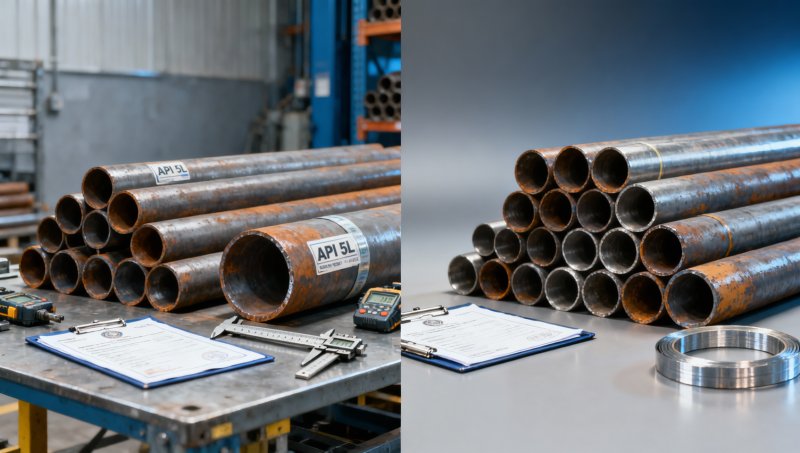
When people search for “API pipe sourcing mistakes to avoid,” they are usually not looking for basic pipe definitions. They want to prevent expensive purchasing errors: wrong grade selection, non-compliant products, hidden supplier risks, shipment delays, and quality claims after delivery. In practical terms, the biggest mistake is not price alone—it is buying pipe that does not match the project, standard, operating condition, or inspection requirement.
For procurement teams, engineers, quality managers, and project owners, the safest overall judgment is this: a good API pipe sourcing decision depends on matching specification, certification, supplier capability, and total landed cost, not just choosing the lowest quotation. This is especially important in projects involving API 5L pipe, carbon pipe, seamless steel tube, and corrosion-resistant pipe for construction, industrial, energy, and infrastructure applications.
If the sourcing process is rushed or based on incomplete technical comparison, the result may be material substitution, welding problems, corrosion failure, poor dimensional tolerance, or rejection during third-party inspection. These risks affect not only project cost, but also delivery schedule, safety, and downstream business reputation.
The Most Common API Pipe Sourcing Mistakes
1. Choosing by price before checking the actual specification
Many buyers compare quotations too early, before confirming whether all suppliers are offering the same product scope. API pipe pricing can vary because of steel grade, production route, wall thickness tolerance, coating type, testing level, length range, end finish, and packaging. A cheaper offer may exclude hydrostatic testing, MTC documentation, beveling, anti-corrosion treatment, or third-party inspection.
2. Confusing material equivalence across standards
Some buyers assume that Q235 steel, S235JR steel, and API-grade pipe can be used interchangeably because they appear similar in basic strength levels. This is a risky shortcut. API 5L pipe has its own standard requirements for chemistry, mechanical performance, manufacturing control, testing, and traceability. Standard structural grades may be suitable in some applications, but they are not automatic substitutes for line pipe specifications.
3. Ignoring the difference between seamless and welded options
Not every project requires seamless steel tube, and not every buyer benefits from paying the premium for it. At the same time, selecting welded pipe where pressure, temperature, or service conditions demand seamless performance can create long-term operating risk. The right choice depends on design code, service environment, pressure level, corrosion exposure, and fabrication requirements.
4. Overlooking corrosion conditions
In many international projects, failure does not come from strength shortage but from corrosion. Buyers often focus on grade and dimension while underestimating humidity, marine exposure, buried installation, chemical contact, or coating damage during transport. If corrosion-resistant pipe or suitable surface protection is not considered early, maintenance costs can quickly outweigh the initial savings.
5. Verifying documents but not verifying production capability
A supplier may provide a compliant-looking certificate, but buyers should still confirm whether the factory can consistently produce the requested size range, tolerance, coating, and test requirements. Real capability includes manufacturing equipment, quality control procedures, export experience, packaging control, and schedule reliability.
6. Not defining inspection and acceptance terms before order placement
Disputes often begin because the purchase contract is vague. If the order does not clearly state standard edition, inspection method, negative tolerance allowance, test frequency, marking rules, documentation package, and claim process, it becomes difficult to manage quality issues later.
How to Evaluate API Pipe Correctly Before You Issue a Purchase Order
The most useful approach is to evaluate API pipe sourcing through a structured checklist. This helps both technical and commercial teams make better decisions.
- Confirm the application: Is the pipe for fluid transmission, structural use, fabrication, or general industrial service?
- Verify the exact standard: API 5L, ASTM, EN, JIS, or other required standard should be clearly stated.
- Check grade and manufacturing route: For example, determine whether seamless or welded construction is required.
- Review dimensions carefully: OD, wall thickness, length, tolerance, and end condition must match the project drawings.
- Assess corrosion protection: Bare, galvanized, painted, oiled, or custom coating options should align with service conditions.
- Require documentation: MTC, inspection reports, test certificates, and traceability markings are essential.
- Audit supplier stability: Capacity, lead time control, export records, and responsiveness matter as much as the quotation.
- Compare total cost: Include logistics, inspection, customs, packaging, and risk of non-conformance—not only ex-works price.
This evaluation logic is not limited to pipe. In broader steel procurement, the same principle applies to supporting materials used in construction and infrastructure. For example, buyers sourcing reinforcement and structural support products may also compare specifications, certifications, surface treatment, and processing services when selecting Wire rod for civil engineering construction, bridges, roads, foundations, beams, columns, walls, and slabs. Products available in grades such as HRB335, HRB400, and HRB500, with options in hot rolled or cold rolled technique, galvanizing, anti-rust oil, and certifications including ASTM, JIS, GB, ISO, and SGS, show how important it is to review the full technical package rather than buying by description alone.
Questions Procurement and Engineering Teams Should Ask Suppliers
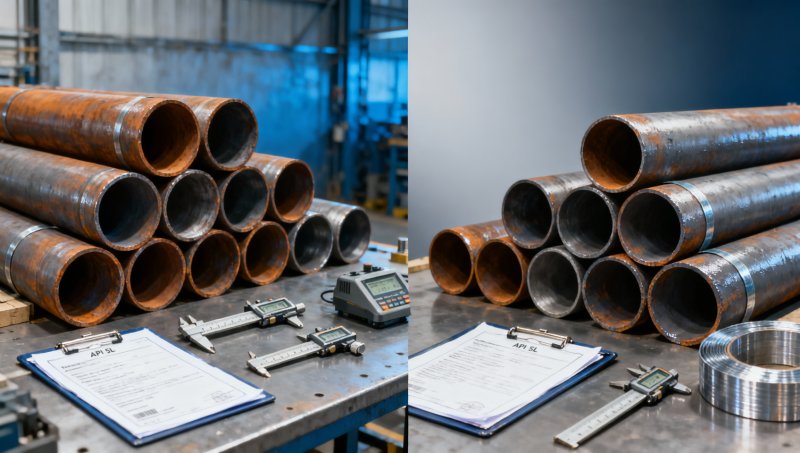
If you want to avoid sourcing mistakes, ask suppliers questions that reveal real operating capability instead of just sales confidence.
- Can you provide the exact standard, grade, and manufacturing process for this API pipe?
- What is the origin of raw material, and how is heat traceability controlled?
- What inspections are performed in-house, and which can be arranged through third parties?
- What dimensional tolerances can you consistently maintain?
- Do you have experience supplying similar projects in North America, Europe, the Middle East, or Southeast Asia?
- How do you protect pipe surface quality during packing, loading, and ocean shipment?
- Can you support customized cutting, beveling, coating, or other processing needs?
- What is the realistic lead time under current production loading?
- How are claims handled if there is a quality issue after delivery?
Strong suppliers should answer these questions clearly and consistently. Vague answers often indicate trading-only limitations, unstable subcontracting, or weak quality systems.
How to Balance Quality, Cost, and Delivery Without Taking Unnecessary Risk
The goal is not to buy the most expensive pipe. The goal is to buy the right pipe with predictable quality and dependable delivery. This is where many buyers improve results by focusing on risk-adjusted value.
For example, a lower quote may become more expensive if it leads to:
- re-inspection fees,
- production stoppage on site,
- replacement freight,
- welding or fit-up issues,
- schedule penalties,
- premature corrosion or service failure.
By contrast, a capable structural steel manufacturer and exporter with stable production, strict quality control, and familiarity with ASTM, EN, JIS, and GB requirements can help reduce hidden sourcing costs. This matters especially for global buyers managing multi-country projects, where communication efficiency, documentation accuracy, and export reliability directly affect project execution.
For decision-makers and finance approvers, the practical takeaway is simple: if a supplier can reduce uncertainty in compliance, delivery, and claim risk, that supplier may create better total value even if the unit price is not the lowest.
A Practical Sourcing Framework for Global API Pipe Buyers
To make evaluation easier, buyers can use this simple sourcing framework:
- Define the technical requirement clearly before requesting quotation.
- Shortlist suppliers by manufacturing and export capability, not by price alone.
- Compare quotations on the same scope, including testing, coating, packing, and documents.
- Request samples, certificates, or inspection records where necessary.
- Confirm lead time, payment terms, and claim responsibilities in writing.
- Use pre-shipment inspection or third-party verification for important orders.
- Review supplier performance after delivery for long-term sourcing improvement.
This method helps procurement personnel, engineers, QA teams, and project managers align their priorities. It also supports distributors, resellers, and business evaluators who must manage both margin and reliability.
Conclusion: The Best Way to Avoid API Pipe Sourcing Mistakes
The most common API pipe sourcing mistakes come from incomplete comparison, unclear technical requirements, and overreliance on low price. Buyers who want safer outcomes should focus on standard compliance, grade suitability, corrosion conditions, supplier capability, inspection terms, and total delivered value.
Whether you are comparing API 5L pipe, carbon pipe, seamless steel tube, or corrosion-resistant pipe, the best sourcing decision is the one that fits the actual application and reduces execution risk. A disciplined review process helps protect budget, timeline, product quality, and project safety at the same time.
For global steel procurement, smart sourcing is not about avoiding all cost—it is about avoiding the wrong cost.
Please give us a message


Please enter what you want to find