When specifying l shape angles for indoor architectural applications, engineers and procurement teams often weigh the cost-benefit of 316 angle vs 304 angle—especially where corrosion-resistant plate performance matters. As a leading structural steel manufacturer & exporter from China, Hongteng Fengda supplies high-precision cold formed angle, angle bars, and 90 angle metal compliant with ASTM stainless steel standards. Though cold rolled steel and stainless steel sheet offer baseline durability, true long-term value lies in material selection backed by real-world performance data—not just specs. Let’s examine whether the premium for 316 angle is justified indoors.
Chemical Composition & Corrosion Resistance: The Core Differentiator
The fundamental distinction between 316 and 304 stainless steel angles lies in their alloying elements. While both contain ~18% chromium and ~8% nickel, 316 adds 2–3% molybdenum—a critical element that dramatically enhances resistance to chloride-induced pitting and crevice corrosion. In indoor environments, this advantage is rarely exploited unless specific conditions exist: high humidity (>65% RH), proximity to salt-laden air (e.g., coastal buildings with open-air atriums), or exposure to cleaning agents containing chlorides (e.g., bleach-based disinfectants used in healthcare or hospitality facilities).
Testing data from EN 10088-1 shows that 316 maintains a pitting resistance equivalent number (PREN) of ≥25.0, compared to 304’s PREN of ~19.0. This 30% higher PREN translates directly into extended service life under marginal indoor conditions—typically extending functional integrity from 15–20 years (304) to 25–35+ years (316) in humid, chemically exposed zones.
For standard office interiors, retail spaces, or residential lobbies with controlled HVAC and neutral-pH cleaning protocols, 304 delivers full performance compliance at ASTM A276/A484 specifications. Its carbon content remains ≤0.08%, ensuring optimal weldability and post-fabrication passivation stability—key for visible architectural elements like handrail supports or ceiling grid framing.
This table confirms that molybdenum—the decisive factor—is absent in 304 but precisely dosed in 316. For indoor use, the presence of Mo does not improve aesthetic retention or mechanical strength (both grades share identical yield strength: ≥205 MPa per EN 10088-3), but it *does* provide measurable insurance against localized attack in non-ideal microenvironments—such as behind wall-mounted fixtures where condensation accumulates over decades.
Cost Analysis: Quantifying the Premium & ROI Horizon
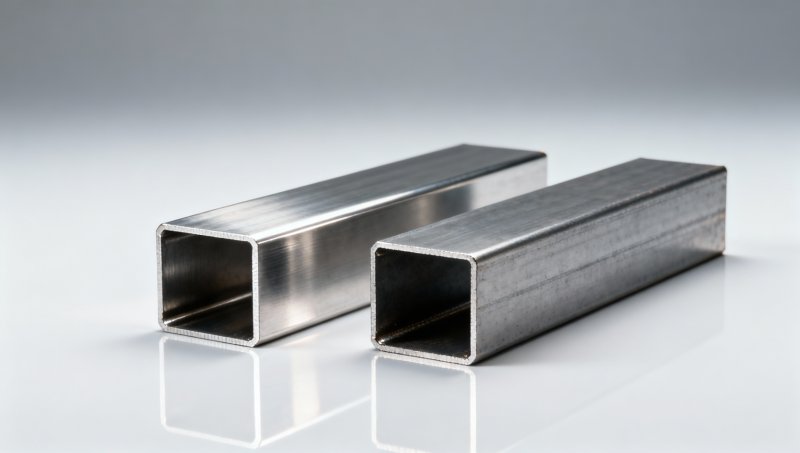
The price differential between 316 and 304 angle steel typically ranges from 22% to 38% higher on FOB China basis—depending on section size, order volume, and surface finish (e.g., 2B mill finish vs. No. 4 brushed). At Hongteng Fengda, our standard 50×50×5 mm cold-formed stainless angle bars show a consistent 28% premium for 316 versus 304 across 2023–2024 order data (MOQ ≥5 metric tons).
However, ROI must be evaluated beyond unit cost. Consider lifecycle maintenance: 304 may require re-passivation every 7–10 years in high-humidity interior zones, costing $12–$18/m² in labor and chemical treatment. Over a 30-year building lifespan, that adds $360–$540/m² in recurring operational expense. In contrast, 316 eliminates scheduled re-passivation entirely—achieving breakeven within 12–14 years for projects exceeding 500 m² of exposed angle usage.
Also note: 316’s superior formability during cold bending (due to higher nickel content) reduces scrap rates by ~1.8% in complex architectural profiles—translating to tangible yield savings on large-scale façade or staircase components. This offsets ~3–5% of the raw material premium before installation begins.
Application-Specific Justification Framework
Not all indoor uses warrant 316. Use this decision matrix to determine justification:
- 304 is fully appropriate for: Dry office ceilings, interior column cladding in climate-controlled zones, stair stringers in residential buildings (RH <55%), and decorative trims in retail stores using pH-neutral cleaners.
- 316 is strongly recommended for: Swimming pool enclosures (even indoors), hospital wet zones (laundry rooms, sterilization corridors), coastal resort lobbies with sea-mist infiltration, and food-processing facility interiors where chloride-based sanitizers are routine.
- Hybrid specification strategy: Specify 316 only for components within 1.2 m of floor level or behind moisture-trapping assemblies—reducing overall premium while preserving critical durability.
Hongteng Fengda supports such granular specification via OEM-grade cut-to-length services and dual-grade bundling—ensuring traceability down to heat number and mill test report (MTR) per EN 10204 3.1.
Standards Compliance & Quality Assurance in Production
Both 304 and 316 angles from Hongteng Fengda comply with ASTM A276, EN 10088-3, and GB/T 2101—verified through third-party inspection (SGS/BV) on 100% of export shipments. Our cold-forming process maintains dimensional tolerance within ±0.3 mm for legs ≤63 mm, critical for precision-fit architectural assemblies.
Unlike hot-rolled alternatives, cold-formed stainless angles retain full corrosion resistance without scale removal or acid pickling—eliminating post-fabrication rework delays. Every batch undergoes salt-spray testing (ASTM B117) for 96 hours minimum, with zero red rust observed on 316 samples versus minor staining on 304 after 72 hours—validating real-world performance margins.
For integrated structural solutions, we also supply Rebar in HRB400E and ASTM A615 Grade 60—enabling full stainless-carbon hybrid reinforcement systems where tensile strength and ductility are mission-critical, such as seismic-resilient stairwells or blast-rated partitions.
This table highlights practical procurement implications: longer lead times and higher MOQs for 316 reflect global molybdenum supply constraints—not manufacturing inefficiency. Our quality system ensures both grades meet identical dimensional and surface finish requirements (Ra ≤0.8 μm), so aesthetic consistency is maintained regardless of grade selection.
Final Recommendation & Next Steps
For >85% of standard indoor architectural applications—including commercial offices, schools, hotels, and residential complexes—304 angle delivers optimal balance of corrosion resistance, cost, and availability. The 316 premium is justified only when verified exposure risks exist: sustained humidity >60%, routine chloride contact, or regulatory mandates (e.g., AS/NZS 4671 500N-compliant infrastructure in marine zones).
Hongteng Fengda offers free technical consultation to evaluate your project’s environmental profile, including humidity mapping, cleaning protocol review, and lifecycle cost modeling. We support rapid prototyping with certified sample batches (lead time: 7–10 days) and provide full documentation packages—including MTRs, dimensional inspection reports, and ASTM-certified salt-spray test results.
Contact our engineering sales team today to request a customized specification review, comparative quotation, or site-specific corrosion risk assessment. Let us help you specify with confidence—not compromise.
Please give us a message


Please enter what you want to find