316 Stainless Steel Pipe Manufacturer Checklist for Scenario-Based Sourcing
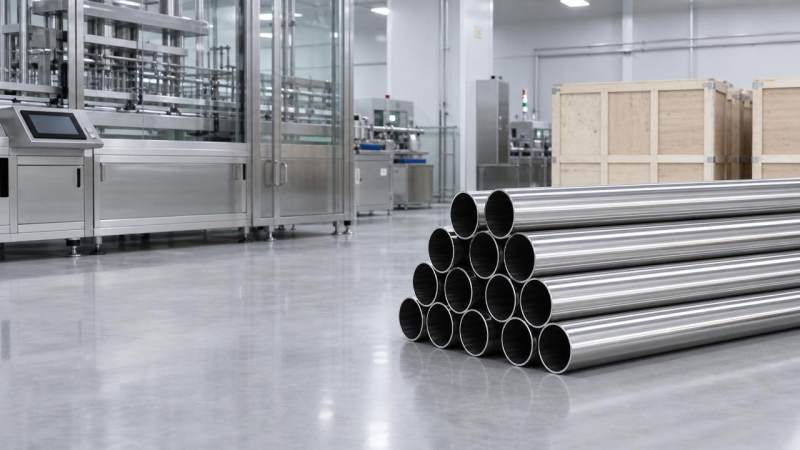
Choosing the right 316 stainless steel pipe manufacturer is critical for quality, cost, compliance, and delivery risk.
Material traceability, international standards, production capacity, and export experience can directly affect project timelines and long-term performance.
This checklist helps evaluate suppliers confidently, reduce sourcing uncertainty, and support industrial, construction, and manufacturing projects worldwide.
Why Scenario Fit Matters When Selecting a 316 Stainless Steel Pipe Manufacturer
A qualified 316 stainless steel pipe manufacturer should not be judged by price alone.
Different environments require different corrosion resistance, dimensional accuracy, documentation depth, and delivery planning.
Marine facilities, chemical plants, food processing lines, and structural projects all apply different pressure on the supply chain.
The best 316 stainless steel pipe manufacturer understands these differences before confirming grade, finish, tolerance, and packing method.
Scenario-based evaluation also reduces hidden costs from rework, delayed inspection, or mismatched technical documents.
Checklist Point One: Confirm Material Traceability for Each Application
Traceability is the first sign of a reliable 316 stainless steel pipe manufacturer.
316 stainless steel contains molybdenum, improving resistance to chloride corrosion and many aggressive industrial environments.
However, this advantage only matters when chemical composition is verified and linked to actual production batches.
- Request mill test certificates for each heat number.
- Check chemical composition against ASTM, EN, JIS, or project standards.
- Confirm mechanical properties, including tensile strength and elongation.
- Verify marking on pipe body, bundles, and packing labels.
A dependable 316 stainless steel pipe manufacturer should connect inspection data with shipment documents clearly.
Industrial Fluid Systems: Focus on Corrosion and Pressure Conditions
Industrial fluid systems often involve chemicals, steam, condensate, or salt-bearing media.
In these applications, a 316 stainless steel pipe manufacturer must control surface defects and wall thickness consistency.
Small pits, inclusions, or uneven weld zones may become failure points under cyclic operation.
For welded pipe, review welding process control, bead treatment, eddy current testing, and hydrostatic testing records.
For seamless pipe, confirm piercing, heat treatment, straightness, and ultrasonic inspection capability.
The right 316 stainless steel pipe manufacturer should explain which process better matches pressure, temperature, and fluid chemistry.
Construction and Structural Projects: Match Pipe Supply With Steel Package Planning
Construction projects often combine stainless pipe with carbon steel profiles, beams, channels, and customized components.
This creates a wider sourcing challenge than pipe performance alone.
A capable 316 stainless steel pipe manufacturer should coordinate tolerances, schedules, packing, and documentation across project materials.
Hongteng Fengda supports global steel projects with angle steel, channel steel, steel beams, cold formed profiles, and OEM components.
Its export experience helps align production, inspection, and shipping for North America, Europe, the Middle East, and Southeast Asia.
For transport infrastructure, product matching may also include Rail used in railway, bridge railing, and deck handrail applications.
Available grades include U74, U71Mn, PD2, PD3, BNbRE, Q235, 55Q, 50Q, U71, and 45Mn.
Typical parameters include 12m-30m length, 3mm-24mm thickness, 134-170mm height, and ±1% tolerance.
A steel partner with broader product coordination can reduce communication gaps between stainless piping and structural steel packages.
Food, Pharmaceutical, and Hygienic Systems: Prioritize Surface Finish
Hygienic systems require more than general corrosion resistance.
A 316 stainless steel pipe manufacturer must control internal surface roughness, cleanliness, and contamination risk.
Polished surfaces help reduce residue buildup and simplify cleaning cycles.
Ask whether the supplier can provide pickling, passivation, polishing, or special cleaning before shipment.
Packing should prevent moisture, dust, and surface scratches during long-distance transport.
A professional 316 stainless steel pipe manufacturer should define acceptable surface conditions before production starts.
Marine and Coastal Projects: Evaluate Chloride Exposure Carefully
Marine and coastal environments expose stainless pipe to chlorides, humidity, and temperature variation.
316 performs better than 304 in many coastal applications, but selection still depends on severity.
A responsible 316 stainless steel pipe manufacturer should discuss whether standard 316, 316L, or alternative grades are appropriate.
Surface finish, weld quality, drainage design, and maintenance access all influence service life.
Do not treat grade selection as the only corrosion control measure.
Different Scenarios Require Different Supplier Proof
This comparison shows why one 316 stainless steel pipe manufacturer may fit one project better than another.
The strongest supplier provides evidence matched to the actual operating environment.
Checklist Point Two: Review Standards, Certifications, and Inspection Control
Standards create a common technical language between drawing, production, inspection, and shipment.
A dependable 316 stainless steel pipe manufacturer should produce according to recognized standards and project specifications.
- Confirm applicable standards before quotation.
- Check whether third-party inspection is accepted.
- Ask for ISO quality management documentation.
- Review sample certificates from previous export orders.
Hongteng Fengda works under strict quality control and supports major standards, including ASTM, EN, JIS, and GB.
This standard awareness is valuable when a project combines stainless pipe and structural steel supply.
Checklist Point Three: Check Production Capacity and Lead Time Reliability
Lead time risk often appears after the order is placed.
A 316 stainless steel pipe manufacturer should explain capacity, current workload, raw material availability, and inspection timing.
Stable production matters for phased projects, repeat orders, and urgent replacement needs.
Ask for a realistic production schedule instead of accepting only the shortest promised date.
- Confirm monthly output capacity.
- Separate production time from inspection time.
- Confirm packing and container loading dates.
- Request progress updates during manufacturing.
A transparent 316 stainless steel pipe manufacturer will not hide bottlenecks that can affect delivery.
Checklist Point Four: Assess Export Experience and Documentation Accuracy
Export experience affects more than shipping price.
Incorrect packing marks, certificate details, or customs documents may delay clearance and site delivery.
A seasoned 316 stainless steel pipe manufacturer should provide consistent invoices, packing lists, certificates, and shipping files.
For international projects, review how the supplier handles seaworthy packing, bundle protection, and destination requirements.
Hongteng Fengda supports global buyers with stable capacity, consistent quality, and dependable lead times.
This export foundation helps reduce sourcing risks and improve project execution efficiency.
Common Misjudgments When Comparing a 316 Stainless Steel Pipe Manufacturer
Several mistakes can make a low quotation expensive later.
- Comparing price without checking wall thickness tolerance.
- Ignoring surface finish for hygienic or visible applications.
- Accepting certificates that do not match heat numbers.
- Forgetting packing requirements for long sea transport.
- Choosing a supplier without proven export documentation.
A trustworthy 316 stainless steel pipe manufacturer helps identify these risks before production and shipment.
Clear communication at the inquiry stage usually prevents disputes during inspection or installation.
Practical Supplier Selection Steps Before Placing an Order
Use a structured review process before confirming a 316 stainless steel pipe manufacturer.
- Define application media, pressure, temperature, and environment.
- Confirm grade, size, wall thickness, finish, and standard.
- Request certificates, inspection methods, and traceability samples.
- Compare lead time, packing, and export documentation support.
- Review total project value, not only unit price.
This approach makes comparison between suppliers more objective and less dependent on sales claims.
Next Step: Build a Safer Steel Sourcing Decision
A qualified 316 stainless steel pipe manufacturer should combine material control, standard compliance, production stability, and export reliability.
The right choice depends on the actual operating scenario, not only the specification line.
When projects also require structural steel, integrated supply capability can improve coordination and reduce sourcing complexity.
Share drawings, standards, quantities, inspection needs, and delivery schedules for a practical quotation and technical review.
Hongteng Fengda can support reliable steel sourcing with customized solutions, strict quality control, and professional export service.
Please give us a message


Please enter what you want to find