For procurement teams, understanding the steel 304 pipe price is essential for controlling budgets and reducing sourcing risks.
The cost of 304 stainless steel pipe changes with nickel trends, pipe size, finish, standards, and ordering terms.
This guide explains what affects pricing most, how to compare offers, and how to buy with better cost visibility.
Basic understanding of steel 304 pipe price
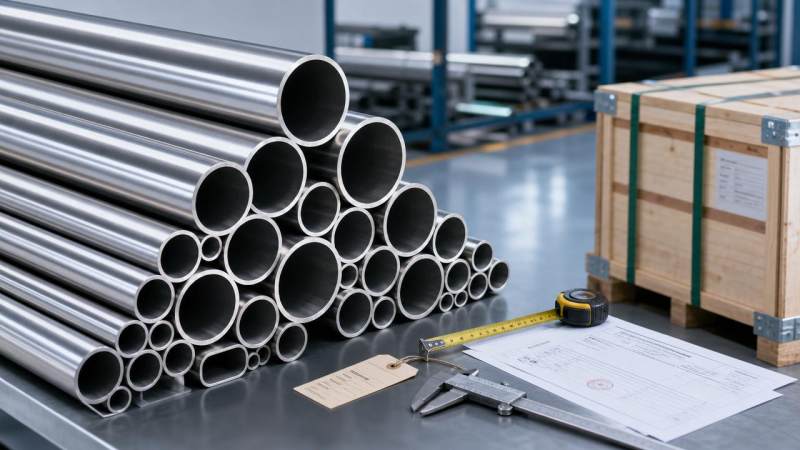
The steel 304 pipe price reflects more than stainless steel weight alone.
It includes alloy cost, processing, testing, packaging, freight conditions, and supplier risk margins.
Grade 304 is widely used because it offers corrosion resistance, clean appearance, and solid forming performance.
That broad demand also means pricing can shift quickly across regions and project cycles.
In many quotations, the steel 304 pipe price is built from a base stainless cost plus manufacturing extras.
Those extras often create larger differences between suppliers than buyers first expect.
What is usually included in a quote
- Raw material value linked to chromium and nickel markets
- Pipe diameter, wall thickness, and length tolerance
- Welded or seamless production route
- Surface treatment, polishing, or pickling
- Testing, certification, and inspection requirements
- Packaging, export handling, and shipping terms
Main market signals that move pricing
The steel 304 pipe price is highly sensitive to upstream stainless raw material movements.
Nickel is often the most watched input because it can create sharp cost adjustments within short periods.
Chromium, energy costs, and steel mill operating rates also influence final selling levels.
Beyond raw material volatility, freight changes and currency swings can reshape landed pipe cost.
When these signals move together, the steel 304 pipe price can change even if specifications stay the same.
Specification factors that change cost most
Dimensions are one of the biggest variables in the steel 304 pipe price.
Larger diameters use more metal, but unusual sizes may also increase tooling and lower production efficiency.
Thicker walls raise weight fast, and they can also affect forming, welding, and inspection time.
Length matters too, especially when projects need fixed lengths, tight straightness, or low scrap rates.
Key specification cost drivers
- Outer diameter and wall thickness combination
- Seamless versus welded pipe selection
- Standard mill length or custom cut length
- Tolerance control for diameter, thickness, and straightness
- Special end preparation or threading
Seamless pipe usually carries a higher steel 304 pipe price because production is more complex.
Welded pipe may be more economical for many structural, decorative, and general industrial applications.
However, performance requirements should guide selection before price comparison begins.
Surface finish, standards, and processing additions
Surface finish can noticeably affect the steel 304 pipe price.
Mill finish is often more economical than polished or decorative treatments.
Brushed, mirror, pickled, or passivated surfaces add labor, consumables, and quality checks.
Certification also matters because compliance with ASTM, EN, JIS, or GB can require extra testing.
Hydrostatic testing, PMI, mechanical reports, and third-party inspection all increase total cost.
In broader project sourcing, stainless pipe is often evaluated together with structural steel components.
For mixed-material projects, Carbon Steel Round Bar may support construction, handrail, water supplying, and fabrication needs.
Available in grades such as A53, A106, S235JR, S355JR, ST37, ST52, and X42 to X70, it fits varied specifications.
Length options include 2m, 5m, 6m, and 12m, with diameters from 5mm to 2500mm.
Surface choices include passivation, oiling, phosphating, galvanized, PVC, black painting, and anti-rust oil.
This kind of complementary sourcing can help align fabrication planning and logistics across steel categories.
Business value of accurate price comparison
Comparing the steel 304 pipe price only by tonnage can create expensive mistakes.
A lower unit price may hide thinner walls, weaker tolerances, missing tests, or unsuitable finish quality.
A higher quote may actually reduce project risk if it includes stable lead times and verified compliance.
Reliable comparison should focus on total delivered value, not only the initial number.
This approach gives the steel 304 pipe price more meaning in real project budgeting.
Typical application scenarios and price sensitivity
Different applications place different pressure on the steel 304 pipe price.
Decorative uses may focus on finish consistency, while industrial systems may prioritize pressure performance and documentation.
- Construction piping: balance compliance, durability, and volume pricing
- Food and clean environments: emphasize finish, cleanliness, and traceability
- Handrail and architectural work: focus on appearance and polishing quality
- Industrial fabrication: review wall thickness, weld quality, and test reports
- Export projects: include packaging, marking, and shipping protection costs
Understanding the end use helps buyers judge whether a lower steel 304 pipe price is actually suitable.
Practical sourcing suggestions for cost control
Clear specifications are the first step to controlling the steel 304 pipe price.
Ask for the same grade, size, finish, standard, quantity, and trade term from each supplier.
Without that alignment, price comparison becomes unreliable.
Useful sourcing checklist
- Lock the exact pipe specification before requesting quotations.
- Confirm whether the offer is based on theoretical or actual weight.
- Check included tests, certificates, and inspection scope.
- Review production lead time and shipment schedule.
- Compare packaging level and damage prevention method.
- Track raw material timing if the order is large or long-term.
It is also useful to ask how long the steel 304 pipe price remains valid.
Short validity periods often signal unstable raw material conditions or tight mill availability.
Next-step planning for stable purchasing
The steel 304 pipe price is shaped by alloy markets, dimensions, finish, standards, and order details.
Better results come from comparing complete offers instead of chasing the lowest visible quote.
For global projects, stable supply and dependable quality often protect budgets more effectively than short-term savings.
Hongteng Fengda supports construction and industrial sourcing with reliable steel products, international standard compliance, and customized solutions.
When planning the next inquiry, prepare full specifications, target quantities, and delivery terms to receive more accurate price evaluation.
That step will make every steel 304 pipe price comparison more practical, transparent, and useful for project execution.
Please give us a message


Please enter what you want to find