Choosing the right zinc coated wire is critical for structural integrity, corrosion resistance, and long-term project ROI—especially when sourcing from China. For procurement teams evaluating hot-dip vs electrolytic (electro-galvanized) options, subtle differences in coating thickness, adhesion, uniformity, and cost-performance ratio directly impact fabrication yield, on-site durability, and compliance with ASTM/EN standards. As a certified structural steel manufacturer and exporter, Hongteng Fengda helps global buyers navigate these technical trade-offs with data-driven guidance—ensuring optimal zinc coated wire selection for beams, reinforcements, and custom cold-formed components.
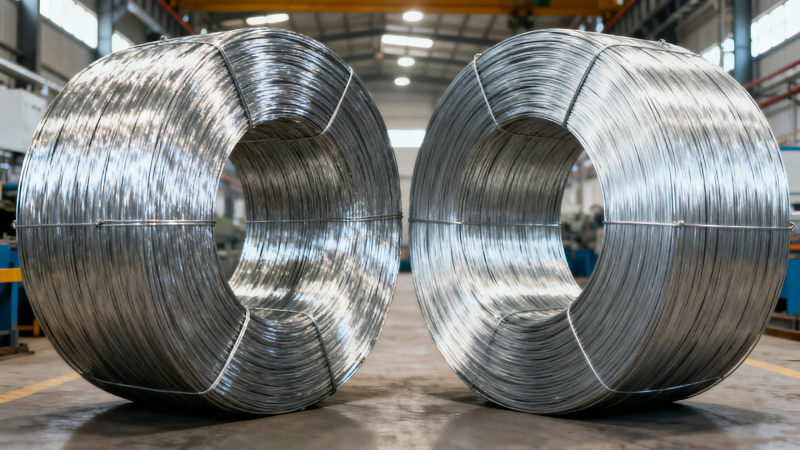
How Coating Method Impacts Structural Steel Performance
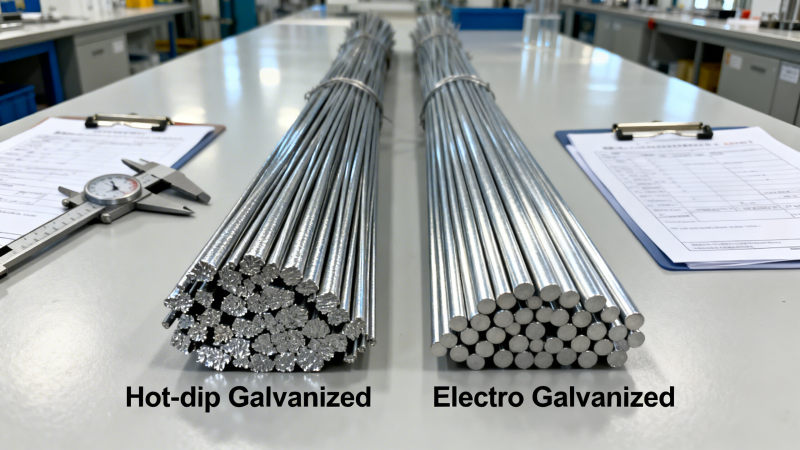
Zinc coating isn’t just about rust prevention—it’s a functional interface between base steel and environment. Hot-dip galvanizing immerses wire in molten zinc (≈450°C), forming a metallurgical bond with multiple intermetallic layers. Electrolytic (electro-galvanized) coating deposits zinc via electric current in aqueous solution at room temperature, yielding a pure but thinner metallic layer.
For structural applications like Metal Channel used in purlins, wall beams, or lightweight roof systems, coating performance dictates service life under mechanical stress, welding compatibility, and exposure to industrial or marine atmospheres. ASTM A123 (hot-dip) and ASTM A591 (electrolytic) define minimum thickness requirements—yet real-world durability depends on more than nominal values.
Hongteng Fengda applies both processes across Q235B, Q345B, and stainless grades (304/316), validating each batch against EN ISO 1461 and ASTM A123 for coating weight (≥610 g/m² for hot-dip), adherence (tape test per ASTM D3359), and uniformity (measured at ≥5 points per meter).
Key Technical Differences at a Glance
This table reflects typical performance ranges verified across Hongteng Fengda’s production batches. Note that electrolytic coatings show higher visual uniformity—ideal for aesthetic-facing components—but hot-dip remains the standard for load-bearing structural elements where abrasion resistance and longevity are non-negotiable.
Which Applications Demand Hot-Dip Over Electrolytic?
Procurement decisions must align with application severity—not just budget. For Metal Channel deployed as steel structure construction purlin or mechanical column in humid or coastal regions, hot-dip galvanizing delivers proven field performance over 25+ years. Electrolytic variants suit indoor, low-stress uses—e.g., light-duty brackets or arm supports where aesthetics matter more than decades-long corrosion resistance.
Critical decision triggers include:
- Exposure to rain, condensation, or de-icing salts → hot-dip mandatory per EN 1090-2 Annex B
- Post-fabrication welding or drilling → hot-dip withstands thermal shock; electrolytic risks zinc vaporization and localized corrosion
- Structural load requirement >50 kN/m² → hot-dip’s thicker, ductile coating prevents micro-cracking under cyclic stress
- Project certification scope includes UL 2218 (impact resistance) or ISO 12944 C4/C5 environments → only hot-dip meets coating mass and adhesion thresholds
Hongteng Fengda routinely supplies hot-dip galvanized channel steel (Q235B/Q345B) for North American commercial roofs and Middle Eastern industrial plants—where ambient temperatures range from −20°C to +50°C and design life exceeds 30 years.
Procurement Checklist: 5 Non-Negotiable Verification Points
When sourcing zinc coated wire from Chinese manufacturers, procurement teams must go beyond surface-level specs. Hongteng Fengda recommends verifying these five dimensions before PO issuance:
- Coating weight verification: Request mill test reports showing actual Zn mass (g/m²) per ASTM A123—not just “compliant” statements
- Batch traceability: Confirm each coil carries heat number, coating date, and furnace ID—critical for audit trails in EN 1090-certified projects
- Weldability testing: Ask for cross-weld tensile strength data (≥450 MPa) on coated samples—electrolytic often fails at >2 mm thickness due to hydrogen embrittlement risk
- Dimensional tolerance control: Verify ±0.02mm thickness tolerance (per GB/T 706) is maintained post-coating—hot-dip adds ~0.03–0.05mm; electrolytic adds<0.01mm
- Lead time consistency: Hot-dip requires longer processing (7–15 days); electrolytic can ship in 3–5 days—but verify if expedited timelines compromise coating uniformity
All Hongteng Fengda hot-dip galvanized products undergo 100% coating thickness scanning (XRF) and salt-spray validation before shipment—ensuring every order meets ASTM A123 Class B or EN ISO 1461 requirements.
Why Partner with Hongteng Fengda for Zinc-Coated Structural Steel?
As a certified structural steel manufacturer exporting to 30+ countries, Hongteng Fengda bridges technical precision with procurement pragmatism. We don’t just supply wire—we co-engineer solutions for your specific structural system, whether it’s cold-formed Metal Channel for Southeast Asian solar farms or heavy-duty beams for European infrastructure.
Our value proposition includes:
- On-demand coating method selection: hot-dip, electrolytic, or duplex (zinc-aluminum alloy) based on your corrosion map and budget
- Pre-shipment documentation package: ASTM/EN test reports, SGS/BV inspection certificates, and full traceability logs
- Flexible MOQs: From 1-ton trial orders to 500-ton project shipments—with stable lead times of 25–35 days for hot-dip, 15–20 days for electrolytic
- OEM support: Custom labeling, packaging, and dimensional adjustments (e.g., 80–160mm height, 1.5–25mm thickness) without minimum surcharges
Contact our procurement engineering team today to request a comparative quote, review coating test data for your target grade (Q235B, Q345B, 304, or 316), or schedule a virtual factory audit. Let’s ensure your next structural steel order delivers not just compliance—but confidence.
Please give us a message


Please enter what you want to find