When evaluating the 1 1/2 stainless steel pipe price, relying solely on nominal diameter—like quoting 'ss pipe 1 inch price' or 'ss pipe 2 inch price'—ignores critical variables: wall thickness, grade (e.g., 430 stainless steel plate vs. 304), finish, and certification. This volatility misleads procurement teams, project managers, and financial approvers alike—especially when comparing against carbon steel pipe supplier quotes or galvanized steel sheet for roofing budgets. At Hongteng Fengda, a leading structural steel manufacturer & exporter from China, we clarify pricing drivers across DX51D steel, electrogalvanized wire, steel rebar price per ton, and channel steel supplier benchmarks—ensuring accurate cost modeling for global construction and industrial projects.
Why Nominal Diameter Alone Fails Cost Modeling
A “1 1/2 stainless steel pipe” designation refers only to its approximate outside diameter—not wall thickness, schedule, alloy composition, or surface treatment. In practice, a 1.5-inch OD pipe may be manufactured in Schedule 10S (1.65 mm wall), Schedule 40S (3.73 mm), or even Schedule 80S (5.49 mm), with weight differences exceeding 120% between extremes. For example, a 6-meter length of 304 stainless steel pipe at 1.5″ OD weighs 18.2 kg under Sch. 40S—but jumps to 32.7 kg under Sch. 80S. That directly impacts freight, handling, welding labor, and structural load capacity.
Grade selection introduces further complexity: 304 stainless steel carries ~2.3× the base material cost of Q235 carbon steel, while 316 adds another ~35% premium due to molybdenum content. Meanwhile, finishes like BA (bright annealed), 2B, or pickled-and-oiled alter reflectivity, corrosion resistance, and cleaning frequency—critical for food-grade or pharmaceutical applications where hygiene audits occur quarterly.
Certification is non-negotiable in regulated sectors. A pressure vessel pipe requiring ASTM A312 TP316L with PMI (Positive Material Identification) testing and 100% hydrostatic test documentation commands a 15–22% markup over standard commercial-grade tubing—even with identical dimensions.
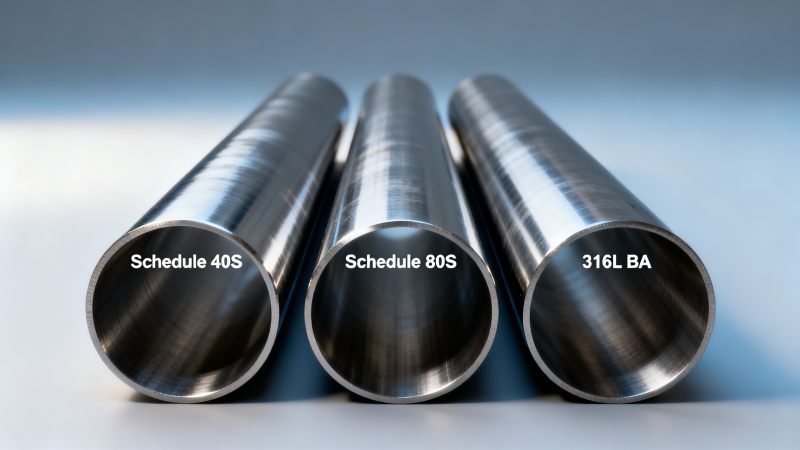
This table demonstrates how three independent variables—each routinely omitted from preliminary RFQs—compound price deviation. Misquoting based on diameter alone risks budget overruns of 40–65% mid-project, especially when cross-referencing against carbon alternatives such as Metal Channel used in purlin framing or bracing systems.
Beyond Stainless: Cross-Material Benchmarking for Structural Integrity
Procurement professionals often benchmark stainless pipe against carbon or galvanized options without adjusting for functional equivalence. A 1½″ Schedule 40 carbon steel pipe (ASTM A53 Grade B) costs ~USD 1.85/kg—yet requires hot-dip galvanizing (Z275 coating, 275 g/m²) for outdoor exposure, adding USD 0.42/kg and 5–7 working days lead time. By contrast, 304 stainless delivers inherent corrosion resistance but demands tighter tolerances during field welding to avoid sensitization.
For roof support applications, Metal Channel offers high strength-to-weight ratio with standardized dimensions: height 80–160 mm, thickness 1.5–25 mm, and lengths 6–12 m. Its Q235B or Q345B variants meet EN 10025-2 and ASTM A653 standards—enabling direct substitution for pipe-based trusses where moment resistance and bolted connection efficiency matter more than fluid conveyance.
Hongteng Fengda maintains dual-certified production lines for both stainless piping components and structural profiles. Our channel steel inventory includes hot-dip galvanized U-channel steel in grades Q195 through 316, with dimensional tolerance controlled to ±0.02 mm (thickness) and ±2 mm (height)—critical for precision-fit modular construction.
These benchmarks reflect real-world engineering trade-offs—not theoretical specs. Each recommendation aligns with international compliance frameworks (ASTM, EN, GB/T) and accounts for total installed cost—not just per-unit list price.
How Hongteng Fengda Ensures Pricing Transparency
At Hongteng Fengda, we embed transparency into every quotation. Every stainless pipe quote includes full parametric disclosure: exact OD/ID/wall thickness, ASTM/EN/GB grade, heat number traceability, surface finish type, and third-party test report scope. We provide side-by-side comparisons against equivalent carbon or galvanized alternatives—including delivery timelines, MOQ flexibility (as low as 500 kg for trial orders), and port-of-discharge logistics coordination.
Our structural product portfolio spans angle steel, channel steel, steel beams, and cold-formed profiles—all produced in-house under ISO 9001-certified processes. With annual production capacity exceeding 800,000 metric tons and stock availability across 12 standard sizes for Metal Channel, we eliminate speculative pricing and reduce sourcing risk for global buyers.
For procurement teams managing multi-year infrastructure contracts, our fixed-price agreements lock in material costs for up to 18 months—sheltering projects from raw material volatility linked to nickel (Ni) and chromium (Cr) index fluctuations, which historically swing ±18% annually.
Actionable Procurement Checklist
Before issuing an RFQ for 1½″ stainless pipe—or evaluating structural alternatives—verify these six parameters:
- Specify actual required wall thickness (not just “Schedule”) and allowable tolerance (±0.05 mm typical for precision applications)
- Define grade with full alloy designation (e.g., “ASTM A312 TP304L”, not “304 stainless”)
- State finish requirements: 2B, BA, No. 4, or custom polish (Ra value specified)
- List mandatory certifications: Hydrotest pressure, PMI, NDE method (UT/RT), and reporting standard (ASME BPVC Section V)
- Clarify packaging: Bundled vs. loose, protective film type, and marking requirements (heat number, grade, size)
- Confirm destination port and Incoterm® (FOB Shanghai vs. CIF Rotterdam affects landed cost by 6–11%)
Omitting any one item invites rework, delays, or rejection at customs or site inspection—costing 3–7 days per incident and up to USD 1,200 in demurrage fees.
Conclusion: Precision Quoting Starts with Precision Questions
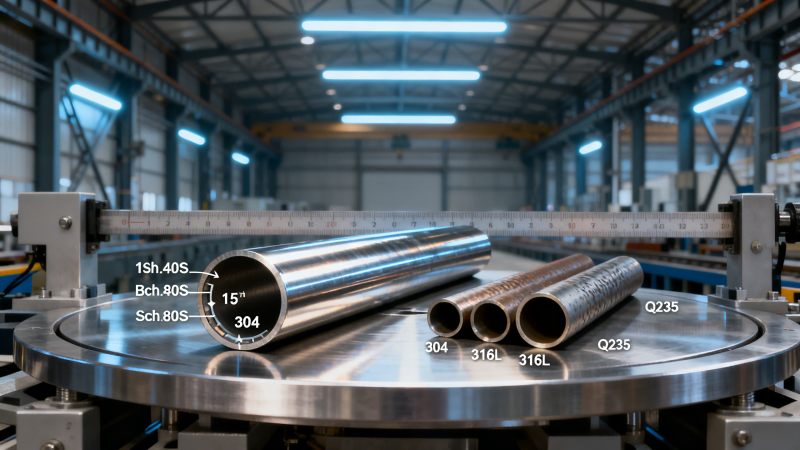
Quoting “1 1/2 stainless steel pipe price” by diameter alone is like estimating a building’s cost by floor count—ignoring materials, finishes, codes, and site conditions. True cost control begins with technical clarity: wall thickness, alloy chemistry, surface integrity, and compliance scope. Hongteng Fengda supports global buyers with engineering-grade quoting, certified structural products—including versatile Metal Channel solutions—and stable supply chains across North America, Europe, the Middle East, and Southeast Asia.
Whether you’re modeling a chemical plant upgrade, specifying roof framing for a logistics hub, or auditing your steel supplier portfolio—contact Hongteng Fengda today for a no-obligation technical consultation and customized quotation backed by 15+ years of structural steel export expertise.
Please give us a message


Please enter what you want to find