If you are comparing the 1 1 2 stainless steel pipe price, you may notice quotes can change quickly across suppliers and markets. Factors such as material grade, wall thickness, steel tube specifications, surface finish, order volume, and freight all affect the final cost. For buyers evaluating ss pipe 2 inch price or related stainless and carbon steel products, understanding these pricing variables is essential for accurate sourcing, budgeting, and project planning.
The core search intent behind this topic is practical: buyers want to know why the same nominal pipe size can receive very different quotations in a short time, and how to judge whether a price is reasonable. For procurement teams, engineers, project managers, distributors, and financial approvers, the real concern is not only the latest 1 1 2 stainless steel pipe price, but also what is included in the quote, what hidden cost risks may appear later, and how to compare suppliers on a like-for-like basis.
In short, price variation is normal, but uncontrolled variation is risky. The best way to evaluate a quote is to look beyond the headline number and confirm grade, standard, schedule or wall thickness, finish, tolerance, production route, testing requirements, packaging, lead time, and shipping terms. Once these points are aligned, the quote becomes much easier to compare and negotiate.
Why the 1 1 2 stainless steel pipe price can change so quickly
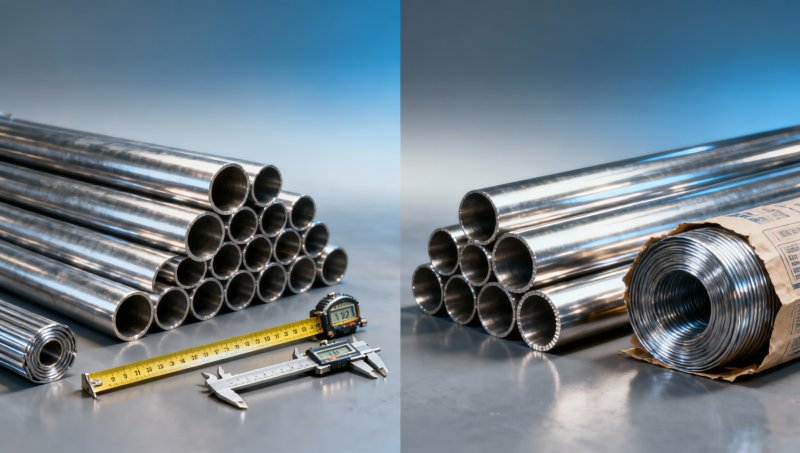
The biggest reason stainless steel pipe quotes move fast is that the product itself is rarely identical between suppliers, even when the size looks the same on paper. A 1 1/2 inch stainless steel pipe can differ in alloy grade, thickness, manufacturing method, standard, finish, and inspection requirements. Each difference changes the cost base.
Several price drivers matter most:
- Material grade: 201, 304, 316, 430, and other grades have different alloy content and corrosion resistance. Nickel and molybdenum content especially influence cost.
- Wall thickness and schedule: Heavier wall means more metal weight per meter, which directly raises the unit price.
- Pipe type: Welded pipe and seamless pipe do not have the same production cost or use case.
- Surface finish: Pickled, polished, BA, 2B, or other finishes affect processing cost.
- Standards and certifications: ASTM, EN, JIS, GB, ISO, SGS, BV, and project-specific inspection can all add cost.
- Order quantity: Small lots usually cost more per ton or per piece than container-scale orders.
- Raw material market movement: Stainless pricing can react quickly to alloy surcharges, mill adjustments, and regional supply conditions.
- Freight and delivery terms: EXW, FOB, CFR, and DDP create very different landed costs.
This is why one buyer may receive a very low quote that later changes after technical confirmation, while another gets a higher but more complete offer from the beginning. Fast-changing quotes are often a result of incomplete specification alignment rather than arbitrary pricing alone.
What buyers should check before comparing stainless pipe quotations
If you want to compare the 1 1 2 stainless steel pipe price accurately, the first step is to standardize the inquiry. Many quote differences happen because one supplier prices to the exact technical request and another prices to a basic assumption.
Use the following checklist before making any decision:
- Confirm the exact outside diameter and wall thickness rather than relying only on a nominal size description.
- Specify the stainless grade such as 201, 304, 316, or another project-required material.
- State welded or seamless because the cost structure is different.
- Define the standard such as ASTM, EN, JIS, or GB.
- Request length and tolerance if cut lengths or tighter tolerances are needed.
- Clarify surface finish especially if appearance matters for decorative or exposed installations.
- List testing and certification requirements such as MTC, PMI, hydrostatic test, or third-party inspection.
- Include packaging and shipping terms to avoid hidden downstream charges.
For technical evaluators and quality teams, this approach reduces compliance risk. For purchasing and finance, it improves quote comparability. For project managers, it helps prevent delays caused by nonconforming material arriving on site.
In many metal sourcing situations, buyers also compare pipe with sheet, coil, or formed structural products when planning mixed-material projects. For example, if your application also involves fabricated stainless components, 430 Stainless Steel Coil may be relevant for decorative panels, kitchen-related applications, outdoor decoration engineering, medical instruments, automotive parts, conveyor belts, or low-grade household products. Available in grades such as 430 and 201, with finishes including BA, 2B, NO.1, NO.4, 4K, HL, and 8K, it can support projects requiring higher formability, cold-working capability, and compliance with standards such as ASTM, AISI, JIS, GB, DIN, EN, ISO, SGS, and BV. This kind of cross-product understanding is useful when buyers want one supplier to support a broader stainless sourcing package rather than only one pipe item.
How to tell whether a low stainless steel pipe quote is actually a good deal
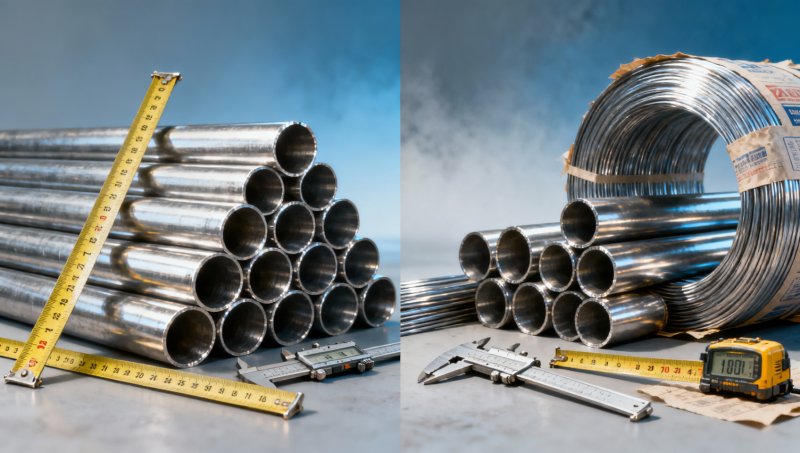
A low quote is not always the best quote. In steel sourcing, a lower initial number can lead to a higher final cost if the material does not meet the actual application, causes fabrication problems, or creates replacement risk.
Here are the most common reasons a “cheap” offer may not be a real saving:
- Lower material grade than expected: The supplier may quote 201 while the project really needs 304 or 316.
- Thinner actual wall: Small thickness deviations can significantly reduce weight and cost.
- Different testing scope: The offer may exclude inspection, material reports, or project documentation.
- Short validity period: The quote may look attractive but is tied to immediate confirmation only.
- Incomplete logistics cost: Local delivery, export packing, port charges, or customs-related items may not be included.
- Long or unstable lead time: A low unit price may disrupt the project schedule and increase indirect costs.
For procurement and business decision-makers, the right question is not “Who gave the cheapest price?” but “Which offer gives the best total value with acceptable technical and delivery risk?”
A practical evaluation method is to compare suppliers across five dimensions:
- Technical compliance
- Price transparency
- Lead time reliability
- Quality assurance and documentation
- Commercial flexibility for repeat orders
This method is especially important for distributors, contractors, and industrial users who need stable replenishment rather than a one-time spot purchase.
Key market factors that influence short-term pipe pricing
Even when the specification stays the same, the 1 1 2 stainless steel pipe price can still move due to market conditions. Understanding these external factors helps buyers decide when to request quotes, lock pricing, or split orders.
The most common short-term market influences include:
- Stainless raw material fluctuations: Changes in nickel, chromium, and molybdenum costs affect mill pricing.
- Mill production scheduling: If mills prioritize other dimensions or grades, lead times and prices can shift.
- Export demand changes: Seasonal demand from North America, Europe, the Middle East, or Southeast Asia can tighten supply.
- Freight volatility: Ocean freight, inland trucking, and fuel costs can move quickly.
- Exchange rate movement: Currency changes matter in international transactions.
- Policy and trade environment: Tariffs, anti-dumping measures, or customs changes can affect landed cost.
For corporate buyers and financial approvers, this means quote timing matters. If your project timeline allows, it can be useful to request validity periods, ask about raw-material linkage, or negotiate batch delivery pricing to manage exposure.
How to get a more stable and accurate quote from a supplier
If you want fewer surprises, the best strategy is to make the inquiry more detailed and the commercial terms clearer. Reliable suppliers can only provide stable quotations when the technical and delivery scope is defined from the start.
To improve quote quality, buyers should:
- Send a full specification sheet or drawing
- State project application and service environment
- Confirm required standard and destination market
- Ask for both unit price and theoretical weight basis
- Request clear lead time and quote validity
- Clarify whether taxes, freight, and packaging are included
- Confirm test certificates and third-party inspection needs early
- Ask about alternatives if budget optimization is required
For example, in some applications, buyers may consider adjusting finish, length, packaging method, or order batch size to improve total procurement efficiency without compromising safety or performance. This is where working with an experienced structural steel manufacturer and exporter can be useful, especially when the project includes multiple steel categories and requires coordinated supply.
Suppliers with modern production facilities, stable capacity, international-standard compliance, and export experience are usually better positioned to offer more consistent quality and dependable lead times. That consistency often creates more value than chasing the lowest short-term quote.
Final takeaway for buyers comparing pipe prices
The 1 1 2 stainless steel pipe price can vary fast because stainless pipe pricing is affected by both technical differences and market movement. In most cases, quote gaps are caused by grade, thickness, standard, finish, quantity, testing scope, and freight terms rather than by price alone.
If you need a meaningful comparison, do not compare quotations by size name only. Compare them by full specification, compliance level, delivery condition, and total landed cost. That is the most reliable way to protect quality, control budget, and avoid procurement mistakes.
For buyers, engineers, project teams, and decision-makers, the best result comes from combining technical clarity with commercial discipline. When those two are aligned, it becomes much easier to identify a fair quote, negotiate confidently, and source stainless steel products with lower risk.
Please give us a message


Please enter what you want to find