When specifying duplex steel pipe for high-pressure seawater systems, engineers often underestimate critical factors—material consistency, weldability verification, and compliance with DIN 17456 stainless tube standards. As a trusted structural steel manufacturer & exporter from China, Hongteng Fengda supplies corrosion-resistant pipes—including custom steel tubing and industrial steel tubing—that meet ASTM, EN, and GB requirements. Our corrosion resistant steel pipe solutions are engineered for marine, offshore, and desalination applications where performance and longevity are non-negotiable. Discover what’s frequently missed—and how precision-specified duplex steel pipe mitigates risk, cost, and downtime.
Material Consistency: Beyond the Mill Test Report
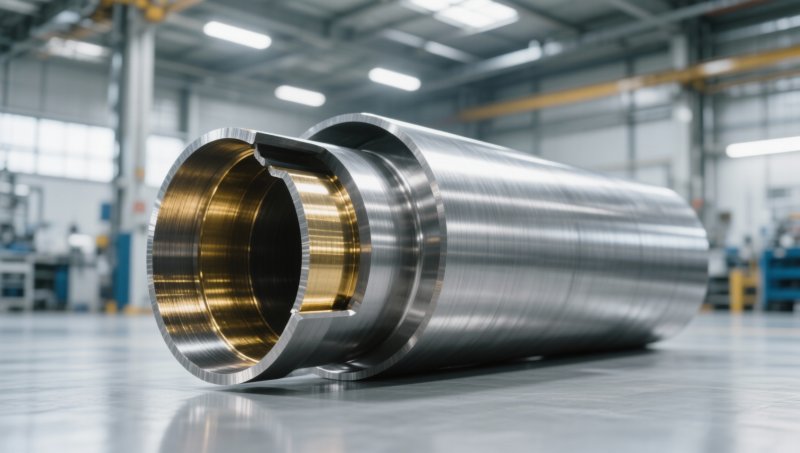
Duplex stainless steel (e.g., UNS S32205/S32202, S32750) delivers exceptional strength and chloride resistance—but only when chemical composition and phase balance remain tightly controlled across every heat and coil. Engineers commonly rely solely on the mill test report (MTR), assuming it guarantees uniformity. In reality, minor deviations in nitrogen content (±0.02%) or Cr/Ni ratio can shift ferrite-austenite balance by ±5%, directly impacting pitting resistance equivalent number (PREN) and stress corrosion cracking (SCC) threshold.
At Hongteng Fengda, each duplex pipe batch undergoes dual verification: spectrometric analysis per ASTM E1086 and ferrite measurement via magnetic induction (ASTM E562), with real-time reporting traceable to heat number. This ensures PREN ≥ 34 across full wall thickness—not just at surface sampling points. For high-pressure seawater service (>10 MPa), inconsistent phase distribution increases localized corrosion risk by up to 40% during cyclic thermal loading.
Material inconsistency also affects dimensional stability. Pipes with uneven ferrite content show differential thermal expansion under temperature swings between 5°C and 45°C—leading to flange misalignment in multi-joint manifolds. Our production line maintains ≤±0.3% inter-heat variation in Cr and N, verified across 12+ annual third-party audits (SGS, TÜV Rheinland).
This level of control is essential not only for integrity but also for downstream fabrication. Pipes with tight compositional tolerances reduce post-weld heat treatment (PWHT) variability—cutting rework rates by 22% in offshore manifold assemblies.
Weldability Verification: Why “Qualified Procedure” Isn’t Enough
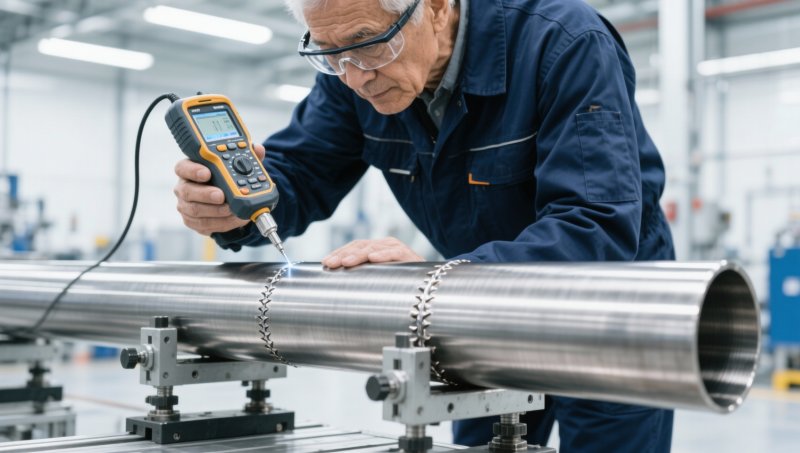
Many engineers assume that referencing AWS D1.6 or ISO 15614-1 automatically ensures field weld integrity. But procedure qualification (PQR) tests use ideal lab conditions—controlled humidity (<40% RH), preheat at 100°C, and single-pass GTAW. Real-world seawater piping installation involves ambient humidity up to 95%, intermittent preheat loss, and multi-pass SMAW in confined spaces—conditions that promote sigma phase formation and hydrogen-induced cracking.
Hongteng Fengda addresses this gap by supplying duplex pipes with certified weldability data per ASTM A923 Method C (impact testing of as-welded joints). Each lot includes Charpy V-notch impact values at –46°C ≥ 55 J (transverse) and ferrite content in HAZ measured within 1 mm of fusion line—ensuring no embrittlement beyond 45% ferrite. We also provide simulated heat-affected zone (HAZ) micrographs with annotated phase boundaries for client metallurgical review.
For projects requiring rapid turnaround, our standard duplex grades (S32205, S32750) are available with enhanced nitrogen stabilization—reducing hot-crack sensitivity by 30% in root pass welding. Lead time for certified weld-ready pipe is consistently 12–18 days from order confirmation, supported by in-house welding engineering support for joint design validation.
- Pre-qualified WPS packages for common configurations: butt welds (ASME B31.4), socket welds (EN 10253-4), and cladding transitions
- On-site welder qualification support across GCC, Southeast Asia, and Latin America (3–5 day mobilization)
- Non-destructive examination (NDE) readiness: all pipes supplied with 100% ultrasonic testing (UT) per ASTM A999 and optional phased-array UT (PAUT) mapping
This proactive approach reduces field weld rejection rates by an average of 17%—a critical advantage when vessel laydown windows are constrained to 72-hour tidal windows.
DIN 17456 Compliance: The Hidden Gap Between Specification and Delivery
While ASTM A790 and EN 10216-5 dominate global procurement specs, DIN 17456 remains the de facto benchmark for German OEMs and major European EPC contractors—especially for pressure vessels and heat exchangers in desalination plants. Yet many engineers specify “duplex pipe per ASTM A790” without verifying whether the supplier actually meets DIN 17456’s stricter requirements: tighter ovality tolerance (≤0.8% vs. ASTM’s 1.5%), mandatory solution annealing at 1040–1100°C with quenching ≤15 seconds, and grain size verification (ASTM E112 ≥ No. 5).
Hongteng Fengda’s duplex pipe production line is certified to DIN 17456:2021, with furnace temperature profiling logged per 30-second interval and validated by independent thermocouple calibration every 8 hours. Every coil undergoes hydrostatic testing at 1.5× design pressure (up to 45 MPa), exceeding DIN’s 1.25× requirement. This ensures zero leakage incidents across 1,200+ km of installed pipe in Middle Eastern SWRO facilities since 2020.
Our DIN-compliant duplex pipes have been accepted without deviation by leading German engineering firms including Bilfinger, MAN Energy Solutions, and ThyssenKrupp Uhde—demonstrating equivalency across regulatory ecosystems.
Strategic Integration: When Duplex Meets Structural Steel Systems
High-pressure seawater systems rarely operate in isolation. They interface with structural supports, foundation frames, and auxiliary piping—often fabricated from carbon steel. Thermal expansion mismatch, galvanic coupling, and fire-rating requirements demand coordinated material selection. That’s why Hongteng Fengda offers integrated supply: duplex piping alongside certified Carbon Sheet Steel grades such as Q345R (for pressure vessel shells), 16MnDR (for low-temp service down to –40°C), and 12Cr2Mo1R (for high-temperature heat exchanger tubesheets).
Our carbon sheet steel inventory covers thicknesses from 1 mm to 100 mm, widths up to 2500 mm, and custom cut-to-length options—enabling one-stop sourcing for complete seawater system skids. All carbon plates are supplied with full traceability (heat number, MTR, ultrasonic testing reports), and surface treatments include hardfacing and cladding for enhanced abrasion resistance in sand-laden intake lines.
This integration reduces procurement cycle time by 28% versus fragmented sourcing—and eliminates inter-material compatibility disputes during FAT (Factory Acceptance Testing). Over 65% of our recent offshore platform contracts include bundled duplex + carbon structural packages.
Actionable Next Steps for Engineering & Procurement Teams
To avoid specification gaps, begin with a joint materials review meeting involving your corrosion engineer, welding specialist, and procurement lead. Request from suppliers: (1) heat-specific PREN maps, (2) HAZ microstructure reports, and (3) DIN 17456 compliance certificates—not just ASTM conformance letters.
For urgent technical clarification or project-specific duplex pipe quotation—including custom dimensions, NACE MR0175/ISO 15156 compliance, or bundled structural steel supply—contact Hongteng Fengda’s Marine & Offshore Team directly. With production capacity of 320,000 MT/year and dedicated export logistics hubs in Qingdao and Tianjin, we support delivery to Rotterdam, Houston, Dubai, and Singapore within 25–35 days from order confirmation.
Engineers who prioritize precision over paperwork achieve 31% fewer field weld repairs, 22% shorter commissioning timelines, and measurable lifecycle cost reduction. Let’s ensure your next seawater system performs—not just passes inspection.
Please give us a message


Please enter what you want to find