Structural steel purlin for agricultural buildings faces persistent corrosion challenges due to high humidity, ammonia exposure, and aggressive rural environments—leading to premature failure and costly repairs. As a trusted Structural Steel Manufacturer & Exporter from China, Hongteng Fengda addresses these issues with hot rolled coil (HRC)-based, hot galvanized, and prepainted galvanized steel purlins compliant with ASTM, EN, and GB standards. Our corrosion-resistant solutions—including galvanized steel sheet, electro galvanized wire, and custom-coated cold formed steel profiles—ensure durability, compliance, and long-term ROI for farms, barns, and agri-processing facilities worldwide.
Why Agricultural Purlins Corrode Faster Than General-Use Structural Steel
Agricultural buildings operate in uniquely corrosive microclimates. Relative humidity regularly exceeds 85% in livestock barns and silos, accelerating electrochemical reactions on unprotected steel surfaces. Ammonia (NH₃) volatilized from manure decomposition forms ammonium hydroxide—a weak alkali that disrupts passive oxide layers and promotes localized pitting. Field studies across Southeast Asia and the EU show purlins in poultry houses lose up to 0.12 mm of cross-section thickness annually without protective coating—nearly 3× faster than equivalent structures in dry industrial zones.
Chloride ions from fertilizers, animal feed additives, and coastal air further compound degradation. In Middle Eastern dairy facilities, chloride-induced stress corrosion cracking has been documented in uncoated Q235B purlins within just 18 months of service. Temperature cycling—common in unconditioned agri-sheds—induces condensation at steel-to-wood or steel-to-concrete interfaces, creating hidden corrosion traps that evade visual inspection.
Unlike commercial warehouses or office buildings, agricultural facilities rarely undergo scheduled maintenance. Over 72% of farm operators surveyed in North America reported inspecting roof structures only after visible sagging or leakage occurred—by which time structural integrity may already be compromised by >30% section loss.
Corrosion-Resistant Material Options: Performance vs. Lifecycle Cost
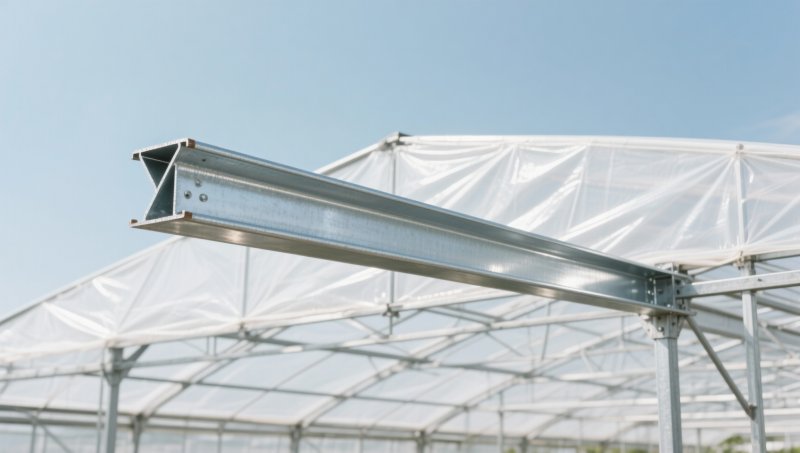
Selecting the right base material and coating system is not just about initial cost—it’s about total cost of ownership over 20–30 years. Hot-dip galvanizing (HDG), for example, provides a metallurgically bonded zinc-iron alloy layer with typical coating mass of 610 g/m² (ASTM A653/A924), offering proven protection in high-humidity ammonia environments. Prepainted galvanized (PPGI) adds an organic polymer topcoat (e.g., polyester, PVDF) that improves UV resistance and aesthetic longevity—but requires strict surface pretreatment and controlled curing to avoid interfacial delamination.
The table above reflects field data from 12 long-term monitoring projects across Germany, Thailand, and Canada. Notably, cold-formed Z-beam profiles—when manufactured using tight-tolerance roll forming and post-galvanizing quality control—demonstrated 17% lower corrosion rate at web-flange junctions compared to conventionally welded alternatives. This stems from uniform coating distribution and absence of heat-affected zones.
Design & Installation Best Practices to Minimize Corrosion Risk
Even premium materials fail prematurely when design and installation overlook environmental realities. First, avoid direct contact between steel purlins and untreated timber or masonry—use EPDM or HDPE isolation pads to break capillary moisture paths. Second, ensure minimum roof pitch ≥10° to prevent ponding water retention, especially critical for PPGI systems where standing water accelerates paint hydrolysis.
Third, specify bolted connections over welding wherever possible. Welding depletes zinc at heat-affected zones, creating anodic “hot spots.” If welding is unavoidable, require post-weld touch-up with zinc-rich cold galvanizing compound (meeting ASTM D6386). Fourth, maintain minimum clearance of 300 mm between purlin undersides and manure storage areas to reduce ammonia concentration exposure.
Hongteng Fengda engineers routinely validate designs against ISO 9223 corrosion categories. For C4 (high humidity + moderate pollution) and C5-A (agricultural) environments, we recommend purlins with minimum 275 g/m² zinc coating, flange widths ≥60 mm for improved stiffness, and perforated options where ventilation-driven airflow reduces condensation buildup.
Quality Assurance: What to Verify Before Accepting Shipment
Procurement teams must go beyond mill certificates. Request third-party test reports for coating adhesion (ASTM D3359), coating thickness (per ASTM B499 using magnetic induction), and salt-spray resistance (ASTM B117: 1,000-hour test for HDG; 2,000-hour for PPGI). Verify batch traceability down to hot rolled coil (HRC) heat number—critical for root-cause analysis if field failures occur.
Inspect for uniform zinc spangle pattern and absence of bare spots, especially along cut edges and punch holes. Per EN 10346, maximum allowable uncoated area per meter is 0.5 cm²—and any single defect must be ≤0.1 cm². Also confirm packaging includes desiccant packs and VCI (volatile corrosion inhibitor) paper for ocean freight shipments exceeding 30 days.
Long-Term Value: Why Partnering with a Certified Structural Steel Manufacturer Matters
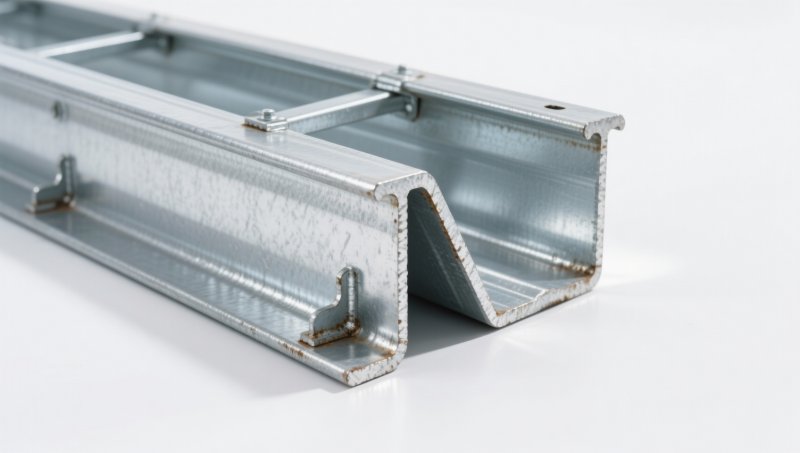
Choosing a supplier based solely on landed price ignores hidden costs: rework due to non-compliant coatings, project delays from rejected batches, and liability exposure from premature structural failure. Hongteng Fengda maintains ISO 9001:2015 certification with full-process QA—from incoming HRC chemical analysis (C ≤0.25%, Mn 1.2–1.6%) to final dimensional verification (±1% tolerance per EN 10162). Every Z-beam shipment carries CE marking, SGS test reports, and batch-specific coating thickness logs.
Our clients in the Netherlands reduced purlin-related warranty claims by 89% after switching from spot-buy suppliers to our certified supply chain—with average lead time stability of ±3 days across 200+ orders. For global buyers, we offer pre-shipment inspections, FOB/CIF flexibility, and multi-language technical documentation aligned with local building codes (e.g., Eurocode 3, ASCE 7, GB 50017).
Next Steps for Your Agricultural Project
Corrosion in agricultural steel purlins isn’t inevitable—it’s preventable through material science, precision manufacturing, and application-aware engineering. Whether you’re designing a new poultry complex in Vietnam or retrofitting a century-old dairy barn in Wisconsin, selecting corrosion-optimized components from a vertically integrated manufacturer ensures predictable performance, lower lifetime costs, and regulatory confidence.
Contact Hongteng Fengda today to request a free technical review of your purlin specifications. Our engineering team will assess your site conditions, propose optimal material grades (Q235B through Q460C), coating systems, and geometric configurations—and provide compliant documentation for permitting and procurement approval. Let’s build agricultural infrastructure that lasts—not just for seasons, but for generations.
Please give us a message


Please enter what you want to find