For operators and installers, understanding galvanized pipe electrical applications is essential for safe conduit protection, long service life, and compliant jobsite practices.
Galvanized steel pipe can shield wiring from impact, moisture, and corrosion, but poor selection, cutting, grounding, or installation can create serious risks.
This guide explains common electrical uses, practical precautions, and how reliable steel quality supports safer, more efficient conduit installation in demanding environments.
Where Galvanized Pipe Is Used in Electrical Work
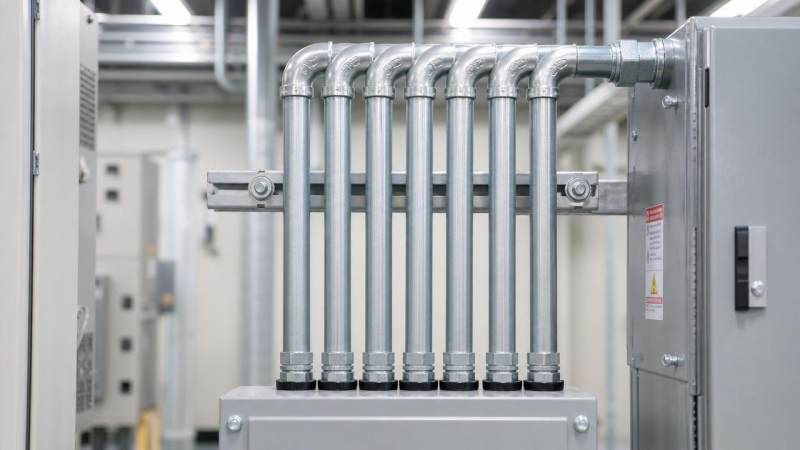
In electrical systems, galvanized steel pipe is commonly used as rigid metal conduit or protective sleeving for exposed wiring routes.
Operators usually see it in factories, warehouses, outdoor utility areas, parking structures, equipment rooms, and industrial buildings with high mechanical risk.
The main purpose is protection. Galvanized pipe helps prevent crushing, abrasion, accidental tool damage, rodent damage, and weather-related deterioration.
Compared with lightweight plastic raceways, galvanized conduit provides stronger impact resistance and better durability in harsh or traffic-exposed work zones.
It is especially useful where cables pass near machinery, forklifts, loading docks, service platforms, or exterior walls exposed to rain.
However, galvanized pipe electrical use should not be treated as simply installing any steel tube around wires.
Electrical conduit must be selected according to project code, conductor type, location, load conditions, and grounding requirements.
Using the wrong pipe size, coating condition, or fitting type can reduce protection and create hidden hazards during operation.
Why Operators Choose Galvanized Steel for Conduit Protection
The zinc coating on galvanized steel improves corrosion resistance, helping the pipe withstand humidity, condensation, and many outdoor environments.
This makes galvanized conduit valuable for facilities where wiring routes must remain stable for years with limited maintenance access.
Galvanized steel also offers excellent mechanical strength, which is important when conduit is installed at low levels or near moving equipment.
For operators, this strength reduces the chance of sudden cable exposure caused by dents, impacts, or accidental collisions.
Another advantage is continuity. Properly installed metallic conduit can support grounding and bonding functions when approved by applicable electrical codes.
This does not mean every galvanized pipe automatically provides safe grounding. Connections, fittings, locknuts, and bonding jumpers must be properly installed.
Galvanized pipe is also familiar to construction teams, making installation practices, inspection routines, and replacement planning easier to manage.
For international projects, sourcing from manufacturers following recognized standards can improve consistency across different work sites and contractors.
Key Installation Risks That Users Should Not Ignore
The biggest risk is assuming galvanized pipe is safe because it looks strong. Strength alone does not ensure electrical compliance.
Operators should confirm whether the pipe is intended and approved for electrical conduit use, not only general plumbing or structural purposes.
Pipe wall thickness, thread quality, internal smoothness, and coating integrity all influence whether conductors can be pulled safely.
Rough internal surfaces, burrs, or sharp cut ends can damage insulation when wires are pulled through long or angled runs.
Insulation damage may not be visible immediately, but it can later cause leakage current, short circuits, arcing, or equipment failure.
Another common risk is poor bonding. Loose couplings or painted contact surfaces can interrupt electrical continuity along the conduit path.
If the conduit is expected to function as an equipment grounding path, weak connections may increase shock and fault-clearing risks.
Water entry is also serious. Outdoor conduit routes require proper fittings, sealing, drainage consideration, and orientation to prevent trapped moisture.
Condensation inside conduit can gradually corrode steel, degrade insulation, and create reliability problems for control and power circuits.
Overfilling conduit is another frequent mistake. Excess conductors increase pulling stress, heat buildup, and future maintenance difficulty.
How to Select Galvanized Pipe for Electrical Applications
Selection starts with the environment. Indoor dry areas, outdoor exposed zones, coastal sites, and chemical facilities require different protection levels.
For routine industrial buildings, hot-dip galvanized rigid conduit is often chosen where stronger mechanical protection is required.
In corrosive environments, users should evaluate zinc coating thickness, additional protective coatings, and whether stainless or nonmetallic alternatives are better.
Pipe diameter must match conductor count, insulation type, bending plan, and pulling distance. Undersized conduit creates both safety and labor problems.
Installers should also consider future upgrades. Leaving reasonable capacity can reduce shutdown time when new circuits are added later.
Threaded connections should be clean, consistent, and compatible with approved couplings, boxes, bushings, locknuts, and grounding accessories.
When choosing a supplier, operators should ask for material standards, coating information, inspection records, and dimensional tolerances.
Reliable steel manufacturing reduces variation, helping crews avoid unexpected fitting problems, difficult threading, or inconsistent installation quality.
For broader building projects, corrosion-resistant steel materials may also support roofing, cladding, and enclosure needs around electrical systems.
For example, Color Coated Galvanized Steel Sheet PPGI can be used in industrial, residential, commercial, and public building applications.
Its aluminum-zinc steel base, weather resistance, and customizable RAL finishes make it suitable for panels, sheds, warehouses, and equipment-related structures.
Cutting, Threading, and Deburring: Small Steps That Prevent Big Failures
Many conduit failures begin during field preparation. Cutting galvanized pipe without deburring can leave sharp edges inside the raceway.
Before pulling conductors, installers should ream the cut end and remove metal chips, burrs, and coating fragments completely.
Threading must be controlled carefully. Poor threads may weaken connections, reduce engagement, and expose bare steel to corrosion.
After cutting or threading, damaged galvanized surfaces should be treated according to project requirements and local code guidance.
Operators should avoid using excessive force when assembling conduit. Over-tightening may distort fittings, while under-tightening can compromise bonding.
Plastic or insulated bushings may be required where conductors enter boxes, panels, or sharp transition points.
During wire pulling, lubrication, pulling tension, and bend radius should be managed to prevent stretching or insulation damage.
If conductors feel stuck, crews should stop and inspect the route instead of forcing the pull through hidden obstruction.
Grounding and Bonding: What Operators Need to Check
Grounding and bonding are among the most important safety concerns in galvanized pipe electrical installations.
A metallic conduit system may be part of the grounding path only when installed with approved methods and continuous electrical contact.
Operators should inspect couplings, locknuts, grounding bushings, bonding jumpers, and box connections after installation and during maintenance.
Paint, corrosion, loose threads, or missing hardware can increase resistance and reduce the effectiveness of fault current paths.
Where flexible sections, expansion joints, or nonmetallic fittings interrupt continuity, bonding jumpers may be necessary.
Never rely on appearance alone. A conduit run may look complete but still fail continuity testing or code inspection.
Testing should be performed by qualified personnel using appropriate instruments and procedures required by local electrical standards.
Clear labeling and documentation also help operators identify conduit function, circuit ownership, and grounding responsibilities during future repairs.
Moisture, Corrosion, and Outdoor Installation Concerns
Galvanizing improves corrosion resistance, but it does not make steel immune to all environments or installation mistakes.
Outdoor conduit should be installed to reduce water entry, avoid unnecessary low points, and protect openings from direct rain exposure.
In areas with temperature swings, condensation can form inside conduit even when external seals appear intact.
Drain fittings, breathable arrangements, or other approved methods may be needed where moisture accumulation is predictable.
Coastal, chemical, or high-humidity sites require closer inspection because salt and corrosive gases can attack zinc coatings faster.
Operators should inspect for white rust, red rust, loose fittings, damaged coatings, and water marks around boxes or conduit ends.
Maintenance teams should also check support spacing. Sagging conduit can collect water and increase stress on fittings and boxes.
When building envelope components are also exposed to harsh weather, compatible corrosion-resistant materials support overall facility durability.
Common Mistakes During Galvanized Conduit Installation
One frequent mistake is mixing incompatible components. Pipe, connectors, elbows, boxes, and fittings must match the intended conduit system.
Another mistake is using plumbing pipe as a substitute without confirming electrical approval. Similar appearance does not guarantee suitable performance.
Installers may also exceed permitted bends between pull points, making conductor pulling difficult and increasing insulation stress.
Improper support is another problem. Loose or widely spaced supports allow vibration, movement, and mechanical strain on terminations.
Some crews ignore corrosion at cut ends, especially when the installation is urgent. These exposed areas often become early failure points.
In outdoor work, failing to seal threaded entries or poorly orienting boxes can allow water to enter the raceway.
Another issue is overloading conduit with additional cables after commissioning. This can violate fill limits and complicate heat management.
Good supervision, checklists, and training reduce these mistakes and help operators maintain safer electrical infrastructure.
Inspection Checklist Before Energizing the System
Before energizing circuits, operators and installers should confirm that every conduit run matches drawings, code requirements, and actual site conditions.
Check that pipe size, routing, support spacing, fittings, boxes, and pull points are correct and securely installed.
Inspect all cut ends and threaded areas. Confirm that burrs are removed and corrosion protection is restored where required.
Verify that bushings or protective fittings are installed wherever conductors could contact sharp metal edges.
Confirm that grounding and bonding connections are tight, continuous, and tested according to the project’s inspection procedure.
Look for signs of moisture entry, poor sealing, damaged coating, crushed sections, or unsupported conduit near equipment.
Review conduit fill and pulling records where available, especially for long runs or circuits carrying significant loads.
Finally, ensure that labeling is clear enough for maintenance staff to identify circuit routes without unnecessary disassembly.
How Steel Quality Affects Electrical Installation Safety
Steel quality directly affects installation efficiency and long-term reliability. Poor dimensional control can cause fitting mismatch and threading difficulties.
Inconsistent wall thickness may weaken mechanical protection, especially where conduit is exposed to impact or vibration.
Uneven galvanizing can leave vulnerable areas that corrode early, increasing maintenance needs and potential electrical risks.
Smooth internal surfaces matter because conductors must pass through the conduit without scraping or insulation damage.
For global projects, buyers should work with manufacturers that understand ASTM, EN, JIS, GB, or other relevant standards.
Hongteng Fengda supplies structural steel products and customized steel solutions for construction, industrial, and manufacturing projects worldwide.
With stable production capacity and strict quality control, reliable suppliers help buyers reduce sourcing risks and protect project schedules.
For operators, dependable material quality means fewer installation surprises, easier inspection, and safer performance throughout service life.
When Galvanized Pipe May Not Be the Best Choice
Galvanized steel conduit is useful, but it is not the best answer for every electrical installation.
Highly corrosive chemical plants may require stainless steel, PVC-coated conduit, or special nonmetallic raceway systems.
Areas requiring frequent reconfiguration may benefit from cable tray, flexible conduit, or modular wiring methods instead.
Underground installations need special attention to soil conditions, coating protection, mechanical stress, and water exposure.
Light-duty indoor wiring may not need rigid galvanized pipe if code-approved alternatives provide sufficient protection at lower cost.
The right choice depends on hazard level, maintenance access, budget, code rules, and expected service life.
Operators should evaluate total risk, not only initial material price, because failures can cause shutdowns and safety incidents.
Consulting qualified electrical professionals before final selection helps avoid expensive rework and compliance problems.
Conclusion: Use Galvanized Pipe for Protection, Not as a Shortcut
Galvanized pipe electrical applications can provide strong conduit protection in industrial, construction, and outdoor environments when properly selected and installed.
Its value comes from mechanical strength, corrosion resistance, and potential grounding continuity within an approved electrical system.
However, safety depends on correct sizing, smooth preparation, sound fittings, moisture control, bonding integrity, and regular inspection.
Operators should avoid treating galvanized pipe as a universal substitute or relying only on its strong appearance.
When material quality, installation discipline, and code compliance work together, galvanized conduit can support safer and longer-lasting electrical infrastructure.
Please give us a message


Please enter what you want to find